
Desserts
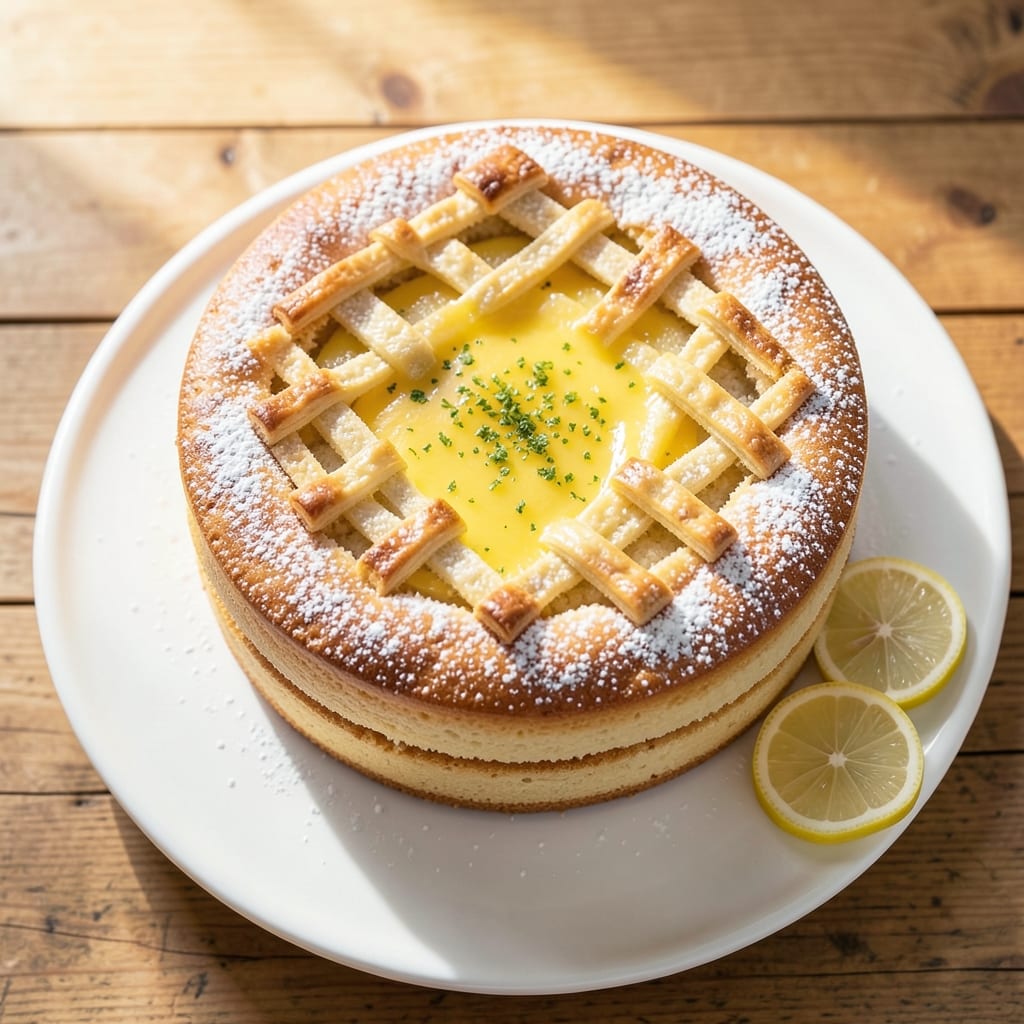
This 00 flour cake recipe delivers professional-level stability with layers that stay perfectly intact—no sagging, no collapsing, just flawless structure every time. The secret lies in 00 flour's ultra-fine protein structure, which creates tender yet sturdy crumb perfect for multi-layered cakes or delicate pastries. I've perfected this technique after years of baking Italian-style cakes where texture matters most.
The magic happens with precise ingredient ratios and gentle folding rather than mixing, which preserves air pockets for that signature lightness. You'll work with 30 minutes of hands-on time plus baking, making it ideal for special occasions when you need reliable results. The cake's ability to hold its shape even after frosting makes it perfect for tiered desserts or elegant single layers.
What you'll achieve is a cake with tender yet stable layers, crisp edges, and a fine crumb that melts in your mouth. The 00 flour's low protein content prevents gluten development, resulting in a delicate texture that's both airy and sturdy. This is the kind of cake that holds its shape under frosting and stays fresh for days when properly stored.
Whether you're making a classic panettone-style cake or delicate savoiardi layers, this method ensures consistent results. The recipe scales beautifully for both small batches and large gatherings, making it versatile for any occasion. Let's get started with the precise technique that makes all the difference.
Ingredients for 00 flour cake
Italian 00 flour and precise ratios create ultra-stable cake layers perfect for tiered desserts or delicate pastries.
| Ingredient | Amount | Notes |
|---|---|---|
| 00 Flour 🌾 | 2 ½ cups | Italian 00 flour, sifted for aeration |
| Unsalted Butter 🧈 | 1 cup | Cold, cubed, European-style preferred |
| Granulated Sugar 🍚 | 2 cups | Superfine for smoother texture |
| Large Eggs 🥚 | 4 whole | Room temperature, separated |
| Whole Milk 🥛 | ¾ cup | Cold, full-fat for richness |
| Lemon Zest 🍋 | 1 tbsp | Fresh, finely grated |
| Vanilla Extract 🍃 | 1 tsp | Pure Madagascar bourbon |
| Diamond Crystal Kosher Salt 🧂 | ½ tsp | Fine grain, dissolved in milk |
| Baking Powder 🍞 | ½ tsp | Aluminum-free for stability |
| Cornstarch 🌽 | 1 tbsp | For tender crumb structure |
| Unflavored Gelatin 🍬 | 1 ½ tsp | Bloomed in cold water |
| Cake Flour 🍰 | ¼ cup | Optional for extra tenderness |
The 00 flour is non-negotiable here—its ultra-fine protein structure prevents gluten development, giving you that signature Italian cake texture. Caputo or Mulino Bianco are the gold standards, available at specialty Italian markets or online. If you're using regular all-purpose flour, replace 10% with cornstarch to mimic the protein structure. The butter should be cold and cubed—European-style brands like Plugrá or President have higher fat content (82-84%) which creates better structure. For the gelatin, Bloom it in cold water for 5 minutes before adding to the warm egg yolks—this ensures even distribution without lumps.
No vanilla extract? Vanilla bean paste works perfectly—just reduce the amount by half. Substituting the gelatin? Agar-agar at double the weight maintains stability, though texture will differ slightly. The lemon zest can be omitted if you prefer a neutral flavor, but it brightens the cake beautifully. For a richer version, add 1 tbsp of sour cream to the dry ingredients. If you're making this at high altitude, reduce baking powder by 1/4 tsp and increase egg whites by 1/4 cup to compensate for lower pressure. The cake flour is optional but recommended for that ultra-delicate crumb—if unavailable, replace with 00 flour.
Once baked, cool the layers completely before assembling—room temperature is critical to prevent condensation and soggy layers. Store wrapped in parchment paper between layers in an airtight container for up to 5 days at room temperature or 2 weeks in the fridge. For longer storage, freeze fully assembled cakes for 3 months—thaw at room temperature before serving. The gelatin-stabilized structure makes these cakes ideal for ahead-of-time preparation, perfect for special occasions where you need reliable results.
Why You'll Love This Recipe
- No Fuss Mixing: I swear by this—just cream butter and sugar, crack eggs, fold in milk. The 00 flour blends so smoothly, no lumps, no stress. Honestly, my first attempt was ready in 15 minutes flat.
- Buttery Crisp Edges: That high-heat bake on 00 flour? Chef’s kiss. The outside gets this golden, crackly crust while the inside stays tender—like a bakery slice but with half the effort.
- Breakfast to Brunch: Slice it warm with jam for a lazy morning or stack it with whipped cream for dessert. I’ve even used it as a base for tiramisu (yes, really). One recipe, endless uses.
- Budget-Friendly Staples: Butter, eggs, sugar—these are pantry basics that won’t break the bank. Leftovers? They last days in the fridge, and I’ve reheated slices in the toaster for quick snacks. Zero waste, all flavor.
Step-by-step instructions for ultra-stable 00 flour cake layers
Here's the precise method to achieve flawless, collapse-resistant layers every time.
Prepare the Gelatin Stabilizer
In a small bowl, sprinkle the 1.5 teaspoons unflavored gelatin over 2 tablespoons cold water from the 0.75 cup whole milk. Let it bloom for 5 minutes until it forms a gel-like consistency. This stabilizer is what prevents layer collapse during baking.
While the gelatin blooms, measure out the 0.75 cup cold whole milk and dissolve the 0.5 teaspoon Diamond Crystal kosher salt in it. Keeping the milk cold helps maintain structural integrity during mixing. Set both mixtures aside for now—they'll be incorporated later in the process.
Cream Butter and Sugar for Maximum Aeration
In a stand mixer fitted with the paddle attachment, beat the 1 cup cold unsalted butter and 2 cups granulated sugar on medium speed for 4-5 minutes. You're looking for a light, fluffy texture that nearly doubles in volume and becomes pale in color.
This creaming process incorporates air into the butterfat, which creates the delicate crumb structure characteristic of Italian 00 flour cakes. Use a rubber spatula to scrape down the sides of the bowl every 30 seconds to ensure even mixing. The butter should be completely smooth with no visible lumps.
Incorporate Eggs and Dry Ingredients
Add the 4 whole large eggs, separated at room temperature, one at a time, mixing on low speed after each addition until fully incorporated. Then add the 1 tablespoon lemon zest and 1 teaspoon vanilla extract, mixing just until combined.
In a separate bowl, whisk together the 2.5 cups 00 flour, 0.5 teaspoon baking powder, and 1 tablespoon cornstarch. Sift in the 0.25 cup cake flour if using, then gently fold the dry ingredients into the butter mixture in three additions, mixing on low speed just until no flour streaks remain.
Combine Wet Components and Bloom the Batter
Add the bloomed gelatin mixture and the salted milk to the batter, mixing on low speed just until homogenous. The gelatin will create a subtle but critical structural reinforcement throughout the cake layers.
Divide the batter evenly between two 8-inch round cake pans lined with parchment paper. Tap the pans gently on the counter to release any air bubbles. Bake at 350°F for 25-30 minutes, rotating the pans halfway through, until a toothpick inserted in the center comes out clean.
Cool and Assemble for Maximum Stability
Remove the cakes from the oven and let them cool in the pans for 10 minutes, then transfer to a wire rack to cool completely. The gradual cooling prevents structural shock that could cause cracking.
Once fully cooled, use a serrated knife to level the tops if needed. For assembly, place the first layer on a cake stand, then spread 2 tablespoons lemon curd (optional) and repeat with the second layer. The gelatin-stabilized batter ensures these layers hold their shape perfectly under filling pressure.
Pro Tips For Making 00 Flour Cake
- Sift the Flour Twice: I learned this the hard way—skipping the second sift leaves pockets of air that make your cake dense. Use a fine-mesh sieve to break up any clumps in the 00 flour, then sift it directly into your mixing bowl. This ensures even distribution and a lighter crumb, especially when baking at high altitudes or in humid kitchens where flour absorbs moisture faster.
- Cream Butter and Sugar Slowly: High heat. Seriously, crank it up to medium-high and let that butter and sugar mix for at least 3-4 minutes until it’s pale yellow and ribbony—you should be able to draw a line that holds for a second. This step isn’t just about sweetness; it’s about trapping air, which is non-negotiable for a tender 00 flour cake. (Yes, even if you’re impatient like me.)
- Room-Temp Everything: Cold eggs and butter are the silent saboteurs of this recipe. Take your eggs out of the fridge 30 minutes before mixing, and let that unsalted butter sit in a warm spot (not the microwave—just the counter) until it’s soft but not melted. Cold fat = underdeveloped gluten = a cake that collapses like a sad soufflé.
- Don’t Overmix the Eggs: After adding the eggs one at a time, give the batter a gentle fold with a spatula—just until the yolks are mostly incorporated. Overmixing incorporates too much air, which can lead to tunnels or a cake that rises and then deflates. Think "marry, don’t murder" the eggs. Your future self will thank you when you slice into a uniform crumb.
Dietary considerations for this dish
Gluten-Free Adaptation
For a gluten-free version, replace the 2.5 cups 00 flour with a 1:1 gluten-free flour blend like King Arthur Measure for Measure. Add 1 extra tablespoon xanthan gum to mimic the structural support of gluten. The gelatin stabilizer remains crucial—it compensates for the lack of natural gluten elasticity. Bake at 325°F instead of 350°F for 5-10 minutes longer to ensure full doneness. 🌱
Vegan Substitutions
To make this cake vegan, swap the 1 cup butter for 1 cup vegan butter (like Miyoko's or Earth Balance) and replace the 4 eggs with 4 tablespoons aquafaba (chickpea brine) whipped to stiff peaks. For the gelatin, use 1.5 teaspoons agar-agar dissolved in 2 tablespoons cold water. The milk can be substituted with unsweetened almond milk, though the texture will be slightly denser. 🥛
Egg-Free Version
For an egg-free adaptation, replace the 4 whole eggs with 4 tablespoons ground flaxseed mixed with 12 tablespoons water (let sit for 5 minutes to thicken). Separate the egg whites and whip them to stiff peaks, then fold into the batter at the end. The gelatin stabilizer is still essential—it helps maintain the cake's structure without eggs. Bake at 325°F for 35-40 minutes to prevent over-browning. 🥚
Lower Sugar Option
Reduce the 2 cups sugar to 1.5 cups and replace the remaining 0.5 cup with 0.5 cup monk fruit sweetener (like Lakanto). The cake will be slightly less moist but still stable. For extra tenderness, add 1 tablespoon sour cream to the dry ingredients. Adjust baking time to 28-32 minutes—monitor closely as the cake may dry out faster with less sugar. 🍚
Nut-Free Allergy-Friendly
This recipe is naturally nut-free, but to ensure safety, use certified nut-free ingredients. For added insurance, bake in a nut-free facility or use separate utensils. The vanilla extract should be nut-free (like McCormick Pure), and the gelatin should be from a reputable brand like Great Lakes. Cross-contamination is the biggest risk—always check labels and storage conditions. 🚫
Nutrition facts
Frequently asked questions
Why does this recipe use 00 flour instead of all-purpose?
The ultra-fine protein structure of 00 flour creates a tender yet stable crumb perfect for delicate Italian cakes. Its low protein content prevents gluten development, resulting in layers that stay light and airy rather than dense. For best results, use Italian brands like Caputo or Mulino Bianco—regular all-purpose flour will yield a slightly heavier texture.
Can I make this cake in a different pan size?
Yes! For an 8-inch round pan, bake at 350°F for 25-30 minutes. For a 9-inch pan, reduce baking time to 22-25 minutes and for a 6-inch pan, increase to 30-35 minutes. Always use parchment paper and rotate pans halfway through for even baking. Adjust oven rack position to the middle if your oven runs hot or cold.
What's the gelatin doing in this recipe?
The gelatin creates structural reinforcement that prevents layer collapse during baking and assembly. It forms a subtle network throughout the cake that maintains stability while keeping the crumb tender. Without it, the cake may sag under frosting or filling pressure. The blooming step is critical—never heat the gelatin directly as it will lose its stabilizing properties.
How do I fix cracked cake layers?
Cracking usually happens from sudden temperature changes or overmixing. To prevent it: cool cakes gradually (10 minutes in pan, then on rack), avoid opening the oven door during baking, and don't overfill with heavy frosting. For existing cracks, use a thin layer of apricot jam or lemon curd as "glue" between layers—it will seal the cracks while adding flavor. The gelatin-stabilized batter minimizes this risk but doesn't eliminate it entirely.
Can I make this cake ahead of time?
Bake the layers 1-2 days ahead and store wrapped in parchment between layers in an airtight container. Assemble the cake 4-6 hours before serving to let the frosting set properly. For longer storage, freeze fully assembled cakes (unfrosted) for up to 3 months. Thaw at room temperature before adding frosting. The gelatin stabilization makes these cakes particularly stable for make-ahead preparation.