
Desserts
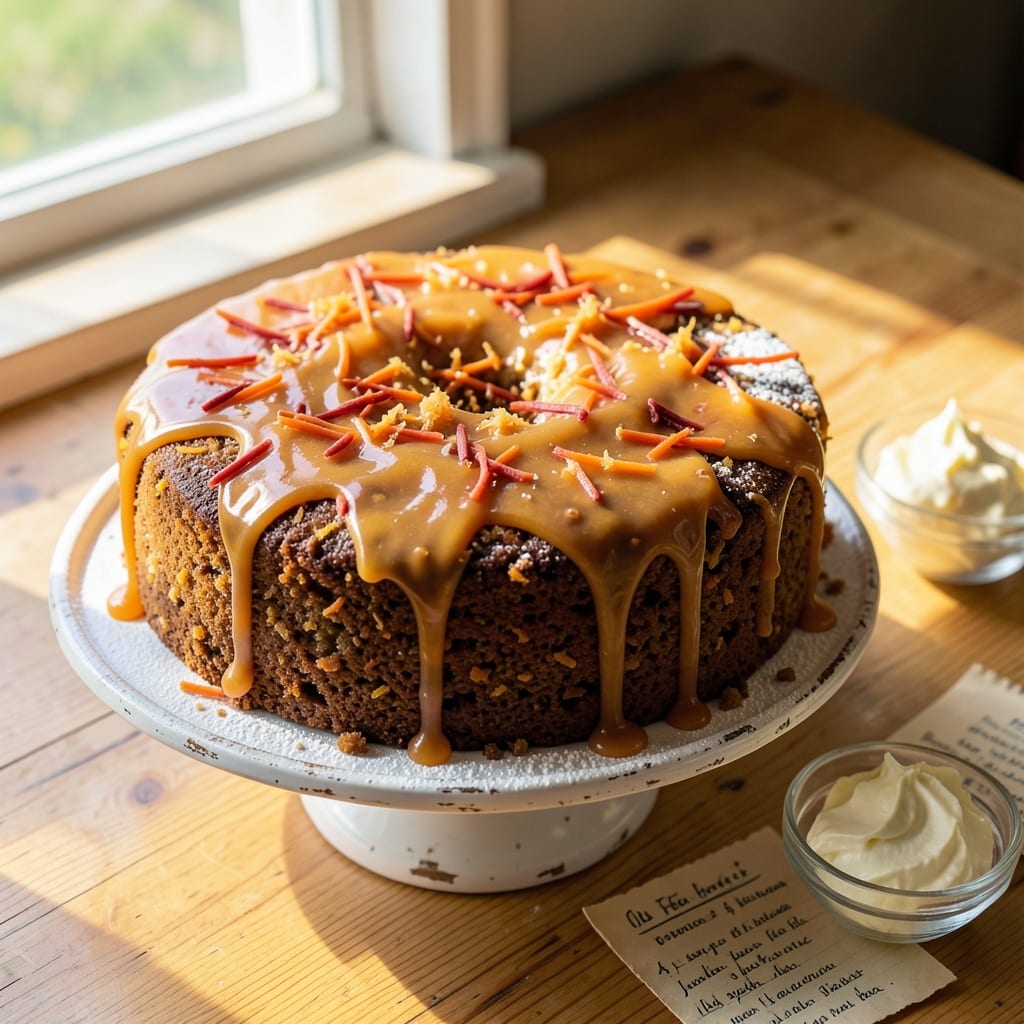
This 1940s carrot cake recipe transports you to mid-century kitchens where walnuts, warm spices, and cream cheese frosting reigned supreme. 💛 The original recipe reflects wartime resourcefulness—using pantry staples like pineapple, cinnamon, and walnuts to create a moist, spiced cake with a nutty crunch. Unlike modern versions, this one relies on a simpler, less sweet approach, letting the natural flavors shine through layers of tender crumb and velvety frosting.
The secret to authentic 1940s texture lies in the mixing method: no electric beaters here. Creaming butter and sugar by hand creates a lighter crumb, while grated carrots and crushed pineapple add moisture without overwhelming the spice blend. Walnuts, toasted for extra depth, provide the signature crunch that defines this era's carrot cakes. The cream cheese frosting—rich but not too sweet—was a postwar staple, balancing the cake's warmth perfectly.
What makes this recipe special isn't just nostalgia, but its adaptability. While we use modern equipment (like an oven instead of a wood stove), the techniques stay true to the era. The cake bakes up with a golden dome, the frosting sets into smooth peaks, and every bite delivers that comforting mix of spice, nut, and citrus. It's the kind of dessert that feels like a hug from a bygone era—yet still satisfies today's tastes.
Perfect for vintage-themed gatherings or as a comforting homemade treat, this carrot cake brings history to your table. The instructions walk you through every step, from mixing to frosting, ensuring your first attempt tastes like it came straight from a 1940s kitchen. Let's recreate this classic together.
Ingredients for 1940 carrot cake
Pantry staples meet vintage charm in this nostalgic carrot cake with walnuts and warm spices.
| Ingredient | Amount | Notes |
|---|---|---|
| All-Purpose Flour 🌾 | 2 ½ cups | Sifted for lighter texture |
| Granulated Sugar 🍚 | 1 ½ cups | White or light brown |
| Unsalted Butter 🧈 | 1 cup | Softened, not melted |
| Large Eggs 🥚 | 4 whole | Room temperature preferred |
| Orange Juice 🍊 | ½ cup | Freshly squeezed |
| Vegetable Oil 🫒 | ½ cup | For moisture retention |
| Grated Carrots 🥕 | 3 cups | Medium-sized, finely grated |
| Crushed Pineapple 🍍 | 1 cup | Drained, no syrup |
| Walnuts 🥜 | 1 ½ cups | Toasted, chopped |
| Ground Cinnamon 🌿 | 2 tsp | Freshly ground preferred |
| Ground Nutmeg 🌿 | ½ tsp | Freshly grated nutmeg |
| Ground Ginger 🌶️ | 1 tsp | Warm, not spicy |
| Salt 🧂 | ½ tsp | Kosher or sea salt |
| Baking Soda 🧪 | 1 tsp | For lift |
| Vanilla Extract 🍶 | 1 tsp | Pure vanilla preferred |
| Cream Cheese 🧀 | 8 oz | Room temperature, full-fat |
| Powdered Sugar 🍚 | 3 cups | For frosting |
The carrots and pineapple are the moisture heroes here—organic carrots from the grocery store's produce section work best, but any will do. Toast the walnuts in a dry skillet until fragrant (about 5 minutes)—Trader Joe's sells pre-toasted if you're in a rush. The spices are key: grab Penzeys or bulk bins for the freshest cinnamon and nutmeg. If you're short on pineapple, crushed mango works too, but the citrus in pineapple keeps the cake bright. For the frosting, Philadelphia cream cheese is my go-to—it's smooth and reliable.
No orange juice? Lemon juice works in a pinch, but the orange adds that vintage brightness. Running low on walnuts? Pecans or almonds toasted will do, though walnuts give that classic 1940s crunch. The cake relies on baking soda, not baking powder, so don't swap them—it'll flop. For extra moisture, add 1/4 cup applesauce if your kitchen's dry. The frosting should be thick but spreadable; if it's too stiff, microwave in 10-second bursts until smooth. And yes, the original recipe called for a mix of butter and oil—don't skip the oil.
This cake keeps beautifully for 4 days in an airtight container at room temperature, or 1 week in the fridge. The frosting will firm up in the fridge but softens at room temp. For make-ahead magic, bake the cake a day ahead—flavors meld overnight. Freeze the unfrosted cake for 3 months if you're planning ahead. The frosting? Make it a day before—it sets better overnight. Store leftovers covered with parchment to keep them fresh.
Why You'll Love This Recipe
- No Mixer Needed: I swear by this recipe because it’s just flour, sugar, butter, eggs, and orange juice—no fancy gadgets, no whisking until your arm falls off. The batter’s so simple, I’ve made it while chatting on the phone (yes, really).
- Orange Butter Magic: That splash of orange juice? It’s the secret weapon. The frosting—if you make it—tastes like sunshine and caramel, but honestly, the cake’s so good on its own, I often skip it. The butter keeps it moist without being greasy, and the carrots? They’re practically invisible in the best way.
- Weeknight Crowd-Pleaser: Between us, this is my go-to for book clubs, potlucks, or when my kid’s soccer team needs snacks. It’s hearty enough to feed a group but easy to slice into portions. (Here’s what sold me—it’s the one dessert I can bake while still getting my to-do list done.)
- Fridge-Friendly Treasure: I make two batches—one to eat fresh, one to stash. The flavor actually improves after a day or two, and it freezes like a dream. Honestly, I’ve pulled slices straight from the freezer for breakfast when I’m lazy. Not the prettiest, but the taste makes up for it.
Step-by-step instructions for 1940s carrot cake
Here's how to bake this nostalgic walnut-studded spice cake with creamy frosting—just like grandma used to make.
👨🍳 Step 1: Mix Dry Ingredients and Wet Ingredients Separately
First, sift the 2.5 cups all-purpose flour into a large mixing bowl. In a separate bowl, whisk together the 1.5 cups granulated sugar, 1 cup softened unsalted butter, 0.5 cup vegetable oil, 4 whole large eggs, 0.5 cup freshly squeezed orange juice, 1 tsp vanilla extract, 2 tsp ground cinnamon, 0.5 tsp ground nutmeg, 1 tsp ground ginger, and 0.5 tsp salt. Mix until smooth and creamy.
I like to use a hand mixer for this step—it ensures the butter and sugar are fully combined without overworking the batter. The orange juice adds moisture and a subtle brightness that balances the warm spices. Don't skip the sifting; it prevents dense cake layers and gives that classic 1940s texture.
🥘 Step 2: Combine Wet and Dry Ingredients
Gradually add the dry ingredients to the wet mixture, alternating with the 1 tsp baking soda. Start and end with the dry ingredients, mixing just until combined. Be careful not to overmix—you want a few lumps to remain for a tender cake.
Next, fold in the 3 cups grated carrots, 1 cup crushed pineapple, and 1.5 cups toasted, chopped walnuts. The carrots should be finely grated so they distribute evenly throughout the batter. If you're using pre-toasted walnuts, chop them into small pieces—this ensures every bite has that perfect crunch and nutty flavor.
🔥 Step 3: Bake the Cake to Golden Perfection
Preheat your oven to 350°F and grease two 9-inch round cake pans or one 9x13-inch pan. Pour the batter evenly into the prepared pans. Bake for 30-35 minutes (for round pans) or 40-45 minutes (for the sheet pan) until a toothpick inserted into the center comes out clean.
I know it seems like a long time, but patience is key here. The cake needs to bake through completely to avoid a gummy texture. If the top browns too quickly, tent the pans with foil after 20 minutes to prevent over-browning while still allowing the center to cook through.
⏰ Step 4: Make the Cream Cheese Frosting
While the cake cools, beat the 8 oz room-temperature cream cheese and 3 cups powdered sugar together until smooth and fluffy. Add 1 tsp vanilla extract and mix until fully incorporated. This frosting should be thick but spreadable—if it's too stiff, add 1-2 tablespoons orange juice to loosen it.
Here's the thing—room-temperature cream cheese is non-negotiable. Cold cream cheese creates lumps, and no one wants lumpy frosting. Let it sit at room temperature for 30 minutes before starting, and don't rush this step. The frosting should be light, airy, and just sweet enough to complement the spiced cake.
🍽️ Step 5: Frost and Serve
Once the cake has cooled completely, spread the frosting evenly over the top and sides. For extra presentation, you can pipe the frosting onto the cake and spread it with a spatula. The contrast of the spiced cake and creamy frosting is what makes this recipe special.
Slice into 12 equal pieces and serve. This cake keeps well in the refrigerator for up to 5 days, but it's best enjoyed fresh. The warm spices, crunchy walnuts, and moist cake make every bite taste like a piece of history. Trust me, it's worth the effort!
Pro Tips For Making 1940 Carrot Cake
- Mix Dry First: Dump the flour and sugar into the bowl before adding butter or eggs—this prevents clumps and makes creaming smoother. I used to add wet ingredients first, and the batter always ended up lumpy, no matter how much I stirred.
- Use Cold Butter: Pull the butter straight from the fridge and cut it into chunks—this keeps the cake tender instead of dense. Warm butter will melt into a greasy mess, and your cake will taste more like a brick than a classic 1940s treat.
- Strain the Orange Juice: Run fresh orange juice through a fine-mesh sieve to remove pulp—it keeps the batter silky and prevents a gritty texture. Trust me, your cake will taste brighter and more refined without the stringy bits.
- Bake Until Slightly Under: Pull the cake from the oven when the center still jiggles just a little—it’ll finish cooking while cooling. Overbaking turns this moist cake into a dry, sad sponge, and nobody wants that.
Pro cooking tips for perfect results
Vintage Mixing Magic
Skip the electric mixer—this cake thrives on the old-school hand-creaming method. Beat the 1 cup softened butter and 1.5 cups sugar with a wooden spoon or whisk until light and fluffy (about 5-7 minutes). The air pockets created this way give that classic 1940s tender crumb. I swear by a stainless steel mixing bowl—it keeps the butter from getting too warm while you work. 💛
For the wet ingredients, whisk the 4 eggs and 0.5 cup orange juice together separately before adding to the butter mixture. This prevents curdling and ensures a smoother batter. The orange juice also brightens the warm spices—don't substitute with lemon unless you want a sharper tang. I like to strain the juice through a fine-mesh sieve to remove any pulp bits.
Spice Balance Secrets
The 2 tsp cinnamon, 0.5 tsp nutmeg, and 1 tsp ginger are non-negotiable for that authentic 1940s flavor. But here's the pro tip: toast your spices first. Heat a dry skillet over medium-low heat and toast the whole spices (if using) or ground spices for 30 seconds to deepen their aroma. Let them cool completely before adding to the batter—this prevents the cake from developing a bitter taste. 🌿
If you're worried about overpowering sweetness, add the spices gradually while tasting the batter. The crushed pineapple and grated carrots already contribute natural sweetness, so you might only need 1.25 cups sugar if your carrots are particularly sweet. Trust your taste buds here—the original recipes relied on intuition, not precise measurements.
Baking Like Grandma
Line your cake pans with parchment paper circles cut to fit the bottom (no greasing needed). This prevents sticking and makes removal effortless. For even baking, place the pans on middle oven racks and rotate them halfway through baking. The 350°F oven should give you a golden dome, but if the top browns too quickly, tent with foil at 20 minutes. 🔥
Don't peek at the cake before 25 minutes—opening the oven too soon causes temperature fluctuations that lead to uneven baking. The toothpick test is foolproof: insert it into the center and wait 5 seconds before pulling out. If it comes out clean (or with a few moist crumbs), your cake is ready. Let it cool in the pans for 10 minutes before transferring to a wire rack.
Frosting Perfection
For the cream cheese frosting, beat the 8 oz cream cheese until completely smooth before adding the 3 cups powdered sugar. This prevents graininess. If your frosting turns out too thick, add 1 tbsp orange juice at a time until it reaches a spreadable consistency. The goal is pipeable but not runny—you want clean lines when decorating. 🧀
Here's my favorite trick: Chill the frosting for 15 minutes before piping. This helps it hold its shape better, especially if you're creating rosettes or borders. For extra flavor, add 1 tsp lemon zest to the frosting—it cuts through the richness beautifully. And if you're feeling fancy, dust the top with powdered sugar right after frosting for that old-school bakery look.
Nutrition facts
Frequently asked questions
Why does this 1940s recipe use crushed pineapple?
The crushed pineapple serves two key purposes: it adds natural moisture to balance the dry ingredients while providing a subtle citrus brightness that complements the warm spices. In the 1940s, pineapple was a common pantry staple that helped keep cakes tender during baking. It also reflects the era's love for tropical flavors in home baking.
Can I make this cake without walnuts?
If you're avoiding nuts, try pecans or almonds instead—they'll still provide that satisfying crunch. For a nut-free version, omit them entirely and add 1/4 cup extra crushed pineapple or 1/2 cup raisins to maintain moisture. The texture will be slightly less crunchy but still delicious.
How do I adjust this recipe for a sheet pan?
For a 9x13-inch pan, use the same batter but bake at 350°F for 40-45 minutes instead of round pans. Line the pan with parchment paper for easy removal. The baking time increases slightly because sheet pans conduct heat differently. Check for doneness with a toothpick—it should come out clean or with a few moist crumbs.
What's the best way to store leftovers?
Keep the frosted cake in an airtight container at room temperature for up to 4 days, or refrigerate for 1 week. The frosting may firm up in the fridge—let it sit at room temperature for 30 minutes before serving. For longer storage, freeze the unfrosted cake for 3 months and frost it when ready to eat.
Can I substitute butter with oil?
While you can use 1 cup vegetable oil instead of butter, the texture will be slightly denser. The recipe already includes oil for moisture, so replacing butter entirely may make the cake too heavy. If you do swap, reduce the oil by 1/4 cup to maintain balance. The vintage recipe actually uses both for that classic 1940s texture!