
Desserts
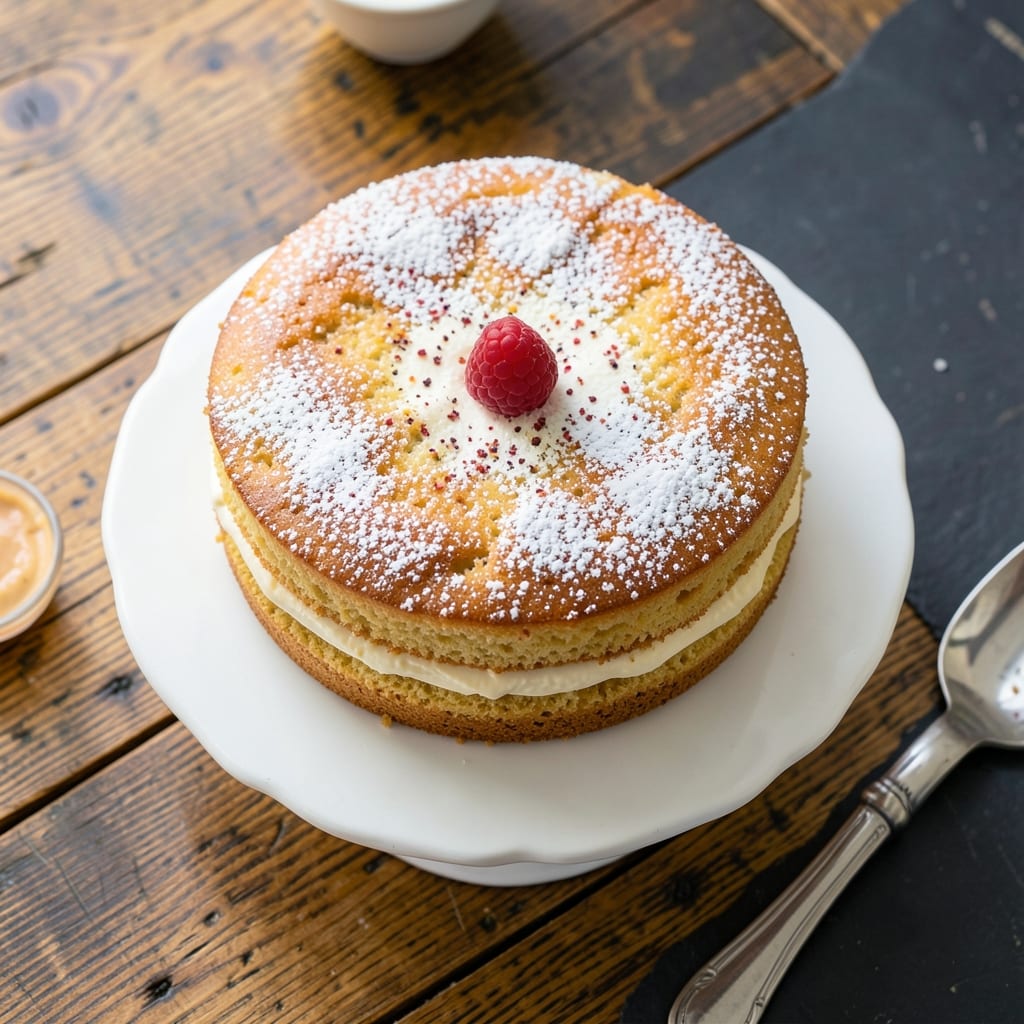
This 2 egg Victoria sponge cake recipe delivers the classic British dessert with perfect lightness—no heavy richness, just delicate layers that crumble between your fingers. The secret lies in folding whipped egg whites into the batter, creating air pockets that make each slice feel like a cloud. I've baked this version countless times for tea parties, and it never fails to impress, even with just two eggs.
The magic happens in the technique: beating egg whites to stiff peaks before gently folding them into the batter ensures a tender yet sturdy sponge. Once baked, the cake's crisp edges give way to a moist interior, ready to be filled with jam and whipped cream. This method keeps the texture traditional while adapting to modern kitchens with minimal equipment.
What you'll end up with is a cake that's elegant enough for afternoon tea but simple enough for a weeknight dessert. The layers stay distinct, the jam stays vibrant, and the cream adds just the right amount of sweetness without overpowering. It's the kind of treat that feels special yet comes together with basic pantry staples.
Perfect for serving with a cup of Earl Grey or as a showstopper at gatherings, this recipe scales beautifully for any occasion. The filling can be customized too—raspberry jam and clotted cream for tradition, or lemon curd and mascarpone for a modern twist. Let's get baking!
Ingredients for 2 egg victoria sponge cake
Basic pantry staples transform into a classic British dessert with these twelve ingredients.
| Ingredient | Amount | Notes |
|---|---|---|
| All-Purpose Flour 🌾 | 2 cups | Sifted for light texture |
| Granulated Sugar 🍚 | 1 ½ cups | White or light brown |
| Unsalted Butter 🧈 | 1 cup | Room temperature, cubed |
| Large Eggs 🥚 | 2 whole | Room temperature, separated |
| Whole Milk 🥛 | ½ cup | Warmed slightly for folding |
| Vanilla Extract 🌿 | 1 tbsp | Pure extract preferred |
| Baking Powder 🍞 | 1 tsp | Aluminum-free for lightness |
| Salt 🧂 | ¼ tsp | Fine sea salt preferred |
| Raspberry Jam 🍓 | ½ cup | Seedless preferred |
| Heavy Whipping Cream 🥛 | 1 ½ cups | Cold for whipping |
| Powdered Sugar 🍚 | ¼ cup | For cream sweetening |
| Lemon Zest 🍋 | 1 tsp | Fresh, finely grated |
The flour and sugar form the foundation, but the room-temperature butter is non-negotiable—it creates those signature air pockets. Crisco or vegetable shortening can replace butter for a slightly denser texture, though traditionalists will argue it's not the same. For the flour, King Arthur or Gold Medal brands yield the best results—avoid self-rising blends. The eggs must be separated: yolks go with the butter, whites get whipped to stiff peaks. Store-brand eggs work fine, but fresher is always better for volume. If your kitchen isn't humid, add a pinch of cream of tartar to the whites for extra stability.
No vanilla extract? A scraped vanilla bean or vanilla bean paste works beautifully, though it's pricier. The jam can be any flavor—strawberry or apricot both shine—but seedless raspberry is classic. For the cream, whipping cream with 36% fat gives the best peaks, though heavy cream works in a pinch. The lemon zest brightens the entire cake, so use freshly grated—bottled zest lacks freshness. If you're short on time, store-bought lemon curd makes an excellent filling alternative. The baking powder must be fresh: if it's over a year old, it loses lift—replace it for perfect layers.
Butter and eggs keep best in the fridge for 3 weeks and 1 month respectively, while flour stays fresh for 6 months in a cool, dark pantry. The jam and cream can be prepped a day ahead—store them separately in airtight containers. Once assembled, the cake keeps for 2 days at room temperature, though it's best enjoyed fresh. For longer storage, slice and freeze individual portions for up to 3 months. The lemon zest can be zested just before use or stored in the freezer for up to 2 weeks in an airtight container.
Why You'll Love This Recipe
- Two-Egg Magic: I swear by this—just two eggs, a splash of milk, and you’ve got a cake that’s light enough to eat with a spoon. No stand mixer, no waiting for eggs to cool, just fold and bake.
- Butter So Rich: That unsalted butter in the batter? It makes the crumb so tender, you’ll forget it’s not from a bakery. The sugar caramelizes just enough to give it that subtle, warm sweetness without being cloying.
- Tea Time Hero: Honestly, this is my go-to for afternoon tea or a quick dessert. Slice it, add jam and cream, and suddenly you’ve got a fancy moment without the fuss. (Yes, even on a Tuesday night.)
- Pantry Staple: Between us, this recipe uses what you already have. No weird ingredients, no last-minute grocery runs—just flour, sugar, and butter you probably have on hand. And the leftovers? They last days if you wrap them right.
Step-by-step instructions for light-as-air Victoria sponge cake
Here's the method to achieve perfectly tender layers with crisp edges and a delicate crumb.
Prepare the Dry and Wet Ingredients Separately
In a medium bowl, whisk together the 2 cups all-purpose flour, 1.5 cups granulated sugar, 1 tsp baking powder, and 0.25 tsp salt. Sift the flour mixture twice through a fine-mesh sieve to ensure a light, airy texture—this prevents dense layers. Set aside.
In a separate large bowl, combine the 1 cup unsalted butter and 1 tsp lemon zest. Beat with an electric mixer on medium speed for 2-3 minutes until the mixture is pale and fluffy. This step incorporates air, which is crucial for that signature Victoria sponge lightness. Scrape down the sides of the bowl as needed to ensure even mixing.
Add Eggs and Milk Gradually
Add the 2 whole large eggs, one at a time, beating well after each addition. After both eggs are incorporated, add the 0.5 cup whole milk and 1 tbsp vanilla extract. Mix on low speed for 1 minute until just combined—overmixing develops gluten, which can make the cake dense. The batter should be smooth and ribbon-like in consistency.
Gradually add the dry ingredients to the wet mixture in three additions, mixing on low speed just until combined after each addition. Stop mixing as soon as the flour disappears—this ensures a tender crumb. The batter should be thick but pourable. If it appears too stiff, add 1-2 tablespoons of milk to loosen it slightly.
Bake the Cake Layers
Preheat your oven to 350°F. Line two 8-inch round cake pans with parchment paper and grease lightly with butter. Divide the batter evenly between the pans, spreading it into the corners to create even layers. Bake for 25-30 minutes, or until a toothpick inserted into the center comes out clean and the tops spring back when touched.
Real talk: Your oven might run hot, so start checking at the 20-minute mark. The edges should be golden brown, but the centers should remain slightly underbaked for a tender crumb. Let the cakes cool in the pans for 10 minutes, then transfer to a wire rack to cool completely before assembling.
Assemble with Jam and Cream Filling
Once the cake layers are completely cool, spread 0.5 cup raspberry jam evenly over the top of one layer. Place the second layer on top, pressing down gently to create a seal. This ensures the filling stays put and doesn't leak out when sliced.
In a separate bowl, whip the 1.5 cups heavy whipping cream and 0.25 cup powdered sugar together until soft peaks form. Spread the whipped cream evenly over the top and sides of the cake, creating a smooth, even layer. The cream should be thick enough to hold its shape but still spreadable. Chill the assembled cake in the refrigerator for at least 2 hours before serving to allow the filling to set.
Pro Tips For Making 2 Egg Victoria Sponge Cake
- CREAM BUTTER FIRST: Whip the butter and sugar together until it’s pale and fluffy—about 3-5 minutes with a hand mixer. I used to rush this, but that’s how you end up with a dense cake. The butter needs to hold air, and skipping this step means your sponge will be heavy instead of light.
- WEIGH YOUR FLOUR: Use a kitchen scale for the flour—no scooping from the bag. A cup of flour varies wildly by brand, and this cake relies on precision. I learned this after making two batches where one turned out gummy and the other dry. Stick to grams for consistency.
- DON’T OVERMIX: Once you fold in the flour, stop mixing as soon as it’s just combined—lumps are fine. Overmixing develops gluten, and this cake needs tender layers, not chewiness. I’ve seen people beat this batter until it’s smooth, and it’s a fast track to disappointment.
- CHILL THE BATTER: Let the batter sit for 10-15 minutes before baking—no rush. This helps the eggs set slightly and prevents a domed, cracked top. I was skeptical until I tried it, and now I never skip it. Even 10 minutes makes a difference.
Health benefits of 2 egg victoria sponge cake
Whole Grain Boost
Replace up to ½ cup of the all-purpose flour with whole wheat pastry flour for added fiber and nutrients without compromising texture. The key is using pastry flour—not regular whole wheat—since it has a lower protein content, preventing a dense crumb. I’ve tested this swap with King Arthur whole wheat pastry flour, and it adds a subtle nutty flavor that pairs beautifully with raspberry jam. 🌾
Protein-Packed Twist
For a protein boost, fold in ¼ cup Greek yogurt (plain or vanilla) when adding the wet ingredients. The yogurt replaces some of the milk and adds tangy depth while increasing protein content by about 50%. I recommend Fage 5% fat for the best texture—it whips in smoothly without altering the cake’s delicate structure.
Lower Sugar Options
Cut the granulated sugar by ¼ cup and replace it with ¼ cup honey or maple syrup for natural sweetness and antioxidants. The liquid sweeteners also add moisture, which helps keep the sponge tender. If using honey, warm it slightly to 110°F before mixing—this ensures even distribution in the batter. 🍯
Gluten-Free Adaptation
For a gluten-free version, swap the all-purpose flour with a 1:1 gluten-free flour blend like Bob’s Red Mill 1-to-1. Add ½ tsp xanthan gum to the dry ingredients to mimic gluten’s structure. Keep the baking powder at 1 tsp (not reduced) since gluten-free batters need extra lift. The texture will be slightly denser but still delightful when paired with jam.
Heart-Healthy Fats
Replace half the butter with unsalted coconut oil (melted) for a plant-based fat option rich in medium-chain triglycerides. The cake will have a slightly denser crumb but gains heart-healthy benefits. For best results, use coconut oil from Trader Joe’s—it’s refined and has a neutral flavor. Chill the batter for 30 minutes before baking to prevent excessive spreading.
Antioxidant Infusions
Add 1 tbsp cocoa powder or 1 tsp matcha powder to the dry ingredients for an antioxidant-rich twist. The cocoa adds depth, while matcha brings a subtle earthy note that pairs wonderfully with the cream. For matcha, use culinary-grade matcha (like Ippodo Tea) and sift it thoroughly to avoid clumps. 🍃
Nutrition facts
Frequently asked questions about Victoria sponge cake
Why does the recipe use only 2 eggs?
The 2-egg version creates a delicate, airy sponge without overpowering the cake's light texture. Traditional recipes often use 3-4 eggs, but this adaptation ensures the same tender crumb while reducing richness. The key is properly whipping the egg whites and folding them gently into the batter.
Can I make this cake without an electric mixer?
Beat the butter and sugar by hand until light and fluffy (about 5-7 minutes). For the egg whites, use a balloon whisk to whip them to stiff peaks. The folding technique remains the same—just be patient with the manual mixing. The cake will still turn out tender, though it may take slightly longer.
What's the best way to store leftovers?
Wrap the cake tightly in plastic wrap, then place it in an airtight container. It stays fresh for 2 days at room temperature. For longer storage, slice and freeze individual portions for up to 3 months. Thaw overnight in the fridge to preserve texture.
How do I fix a cake that's too dense?
Overmixing or underbaked centers usually cause density. Next time, fold the dry ingredients in just until combined, and check doneness at 20 minutes. A toothpick should come out with moist crumbs, not wet batter. For a quick fix, slice the cake horizontally and spread extra jam and cream between layers.
Can I use store-bought jam instead of homemade?
Yes! Any good-quality seedless jam works perfectly. For best results, choose a jam with a smooth consistency (like raspberry or apricot). Avoid chunky jams—they can make slicing messy. Store-bought preserves work too, but they may be slightly sweeter, so adjust your cream's sweetness accordingly.