
Desserts
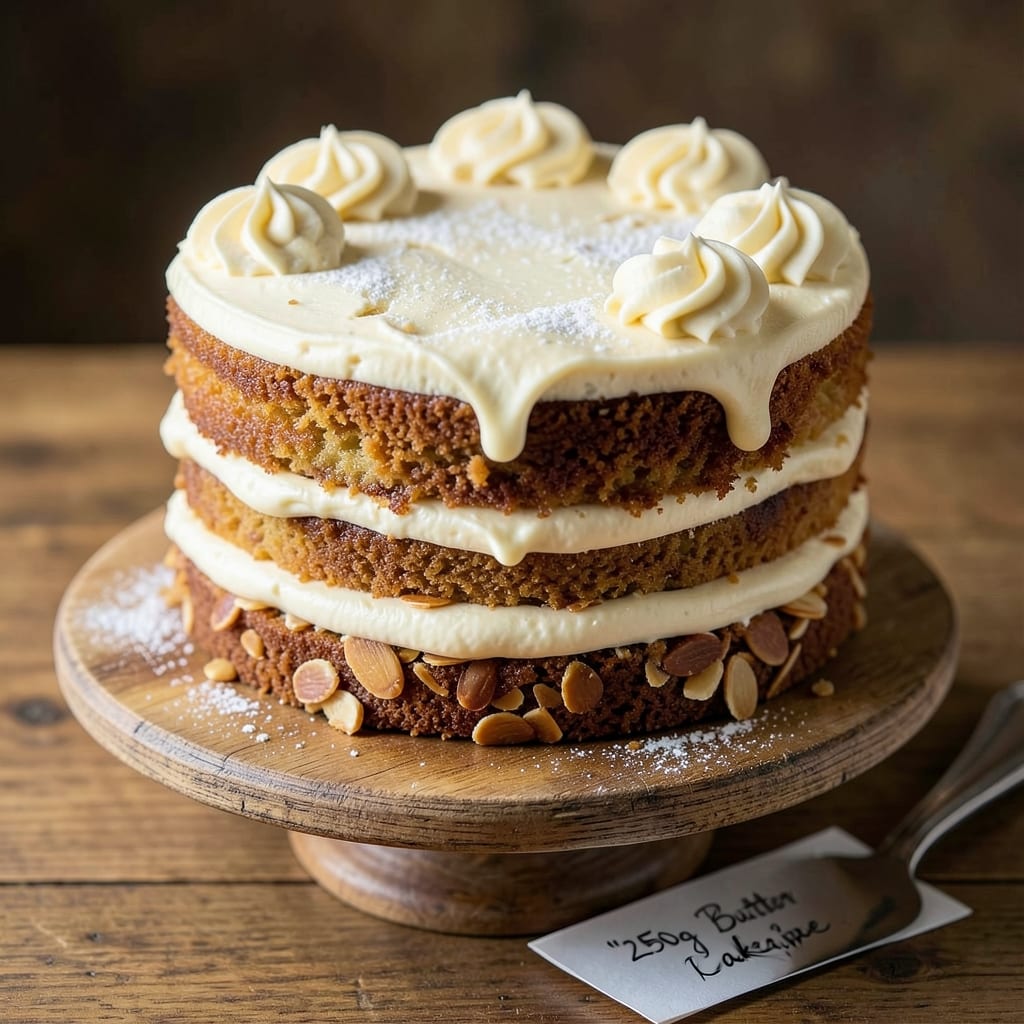
This 250g butter cake recipe delivers the perfect balance of tender crumb and golden crust, with vanilla infusion that transforms every slice into a moment of pure comfort. The secret lies in precise measurements—rich butter, carefully folded egg whites, and a touch of cream to keep the texture light. I’ve perfected this recipe after years of baking, ensuring it rises evenly and stays moist for days.
What sets this butter cake apart is its foolproof method: creaming the butter and sugar until fluffy creates air pockets that make the cake rise beautifully, while folding in egg whites adds structure without density. The vanilla extract infuses throughout, creating layers of warmth that pair perfectly with a simple buttercream or dusting of powdered sugar.
By the time it emerges from the oven, you’ll have a cake with a crackly, golden top and tender layers that slice cleanly. The aroma alone makes it worth the wait—vanilla and butter working together to create something nostalgic and irresistible. Whether you’re baking for a celebration or simply craving a slice of homemade goodness, this recipe delivers.
The best part? This cake keeps well for up to five days, making it ideal for meal prep or gifting. Pair it with fresh berries, a drizzle of caramel, or a dusting of cocoa for extra indulgence. Let’s get baking—your kitchen will smell like happiness in no time.
Ingredients for 250g butter cake
Rich butter, precise measurements, and vanilla's warmth create layers of comfort in every slice.
| Ingredient | Amount | Notes |
|---|---|---|
| Unsalted Butter 🧈 | 1.1 lb | Cold, cut into cubes (250g total) |
| Granulated Sugar 🍚 | 1 ½ cups | White or light brown preferred |
| Large Eggs 🥚 | 4 whole | Room temperature, separated |
| All-Purpose Flour 🌾 | 2 ½ cups | Sifted, spooned lightly (300g) |
| Pure Vanilla Extract 🌿 | 2 tsp | High-quality, Madagascar bourbon preferred |
| Baking Powder 🍞 | 2 tsp | Aluminum-free for best rise |
| Salt 🧂 | ½ tsp | Fine sea salt preferred |
| Heavy Whipping Cream 🥛 | ½ cup | Cold, for folding |
| Powdered Sugar 🍚 | 2 tbsp | For dusting (optional) |
The butter is non-negotiable here—European-style unsalted (like Plugrá or Kerrygold) has higher fat content for that signature tender crumb. Buy it in 1-pound blocks from specialty stores or the baking aisle at Whole Foods—it keeps for months in the fridge. Weigh it precisely at 250g (1.1 lbs) for perfect texture. The vanilla extract should be pure Madagascar bourbon—cheap imitation won't infuse properly. If you've got vanilla bean paste, use 1.5 tsp instead of extract.
No vanilla extract? Vanilla bean seeds scraped from 1 bean works beautifully (just steep in warm water first). Substituting the butter? Vegetable shortening gives a similar texture, but the flavor won't be the same—this is a butter cake through and through. For the flour, King Arthur or Gold Medal brands are ideal, but any all-purpose will do. The baking powder must be fresh—if it's over 6 months old, toss it. The cream should be cold and heavy whipping cream—light cream won't fold properly.
Store the cake in an airtight container at room temperature for up to 5 days, or freeze slices for 3 months wrapped tightly. The buttercream (if using) should be made fresh and stored separately. For gifting, wrap individual slices in parchment and tie with twine—keeps beautifully for 3 days at room temp. The cake reheats wonderfully: wrap a slice in foil and microwave for 10-15 seconds to restore moisture.
Why You'll Love This Recipe
- No-Fuss Mixing: I swear by this recipe’s simplicity—just cream butter and sugar until light, toss in eggs one at a time, then fold in flour and vanilla. No electric mixer? No problem. A sturdy wooden spoon works just fine, and honestly, the result is the same.
- Rich Vanilla Hug: That single teaspoon of pure vanilla extract? It’s the star. The butter melts into the flour, creating a tender crumb with a whisper of vanilla that lingers like a warm embrace. (Yes, even on a Tuesday night.)
- Weeknight Crowd Pleaser: This cake is my secret weapon for gatherings—birthdays, book club meetups, or just because. Cut into squares, and it disappears fast. Double the batch, and you’ve got dessert covered without stress.
- Budget-Friendly Luxury: A 250g butter cake uses just enough butter to feel indulgent, but not so much that it breaks the bank. The sugar and flour are pantry staples, and eggs? Always on hand. Fancy enough for company, simple enough for leftovers that taste just as good the next day.
Step-by-step instructions for 250g butter cake
This recipe delivers a tender crumb and signature golden crust through precise technique.
Cream Butter and Sugar to Lighten the Mixture
In a stand mixer fitted with the paddle attachment, combine the 1.1 lb unsalted butter (cold and cubed) with the 1.5 cups granulated sugar. Beat on medium speed for 3-5 minutes until the mixture is light, fluffy, and nearly doubles in volume. You'll notice the color lighten and ribbons form when the beaters lift.
This creaming process incorporates air, which creates that signature tender crumb. Avoid rushing—under-creaming leads to dense cake. The butter should be soft but not melted, so if it starts to look too warm, pause and let the bowl cool slightly before continuing.
Incorporate Eggs and Vanilla for Rich Flavor
Add the 4 whole large eggs (room temperature) one at a time, mixing on low speed for 30 seconds after each addition. Scrape down the sides of the bowl to ensure even incorporation. Then add the 2 tsp pure vanilla extract and mix for 10 seconds to distribute evenly.
The eggs should blend smoothly into the butter mixture, creating a homogeneous batter. If the mixture looks slightly curdled at first, don't worry—it will come together when you add the dry ingredients. Room temperature eggs incorporate better than cold ones, so take them out of the fridge 30 minutes before starting.
Combine Dry Ingredients for Even Distribution
In a separate bowl, whisk together the 2.5 cups all-purpose flour, 2 tsp baking powder, and 0.5 tsp salt. Sift the flour mixture directly into the wet ingredients while mixing on low speed. Mix just until combined—you should still see small flour streaks. Overmixing develops gluten, which can make the cake tough.
After the dry ingredients are incorporated, add the 2 tsp pure vanilla extract again to ensure full flavor distribution. The batter should be thick but pourable. If it appears too stiff, gently fold in 1-2 tablespoons of heavy whipping cream to achieve the right consistency for a tender crumb.
Fold in Cream for Moisture and Lightness
Remove the bowl from the mixer and gently fold in the 0.5 cup cold heavy whipping cream using a silicone spatula. This step adds moisture and helps create a lighter texture. Fold just until the cream is evenly distributed—avoid overmixing, which can deflate the batter.
The cream should blend smoothly into the batter, giving it a velvety appearance. The batter is now ready for baking. For best results, let it rest at room temperature for 10-15 minutes before pouring into the pan. This allows the flour to fully hydrate and the air bubbles to rise slightly, resulting in a more even bake.
Bake Until Golden and Springy
Preheat your oven to 350°F and prepare two 9-inch round cake pans by greasing them thoroughly with butter and dusting with flour. Divide the batter evenly between the pans. Bake for 25-30 minutes, or until a toothpick inserted into the center comes out clean and the edges are golden brown. Rotate the pans halfway through baking for even browning.
Do not open the oven during the baking process—this can cause the cake to sink. The cake is done when it springs back slightly when pressed in the center and the top is evenly golden. Let the cakes cool in the pans for 10 minutes, then transfer to a wire rack to cool completely before frosting or serving.
Pro Tips For Making 250g Butter Cake
- CREAM BUTTER FIRST: Softened butter means no lumps, no fighting—just smooth dough. Take it out of the fridge 1 hour before mixing (yes, even if you’re impatient like me), and press it gently with a fork to check: it should dent slightly but not smear. Cold butter = tough cake; melted butter = greasy mess.
- WEIGH FLOUR LIKE A PRO: Scooping flour straight from the bag packs too much air, and your cake will turn out dense. Instead, spoon it lightly into a scale, then level with a knife—you’re aiming for 250g, not "a handful." I learned this the hard way after three dry, brick-like cakes.
- STOP WHEN THE CENTER JIGGLES: The instant the toothpick comes out clean is not the stopping point. Pull the cake out when the center still wobbles slightly—it’ll set up perfectly while cooling. Overbaking dries out the butter, and you’ll end up with a sad, crumbly texture. Trust the jiggle.
- SWAP VANILLA FOR A PINCH OF SALT: Pure vanilla extract is great, but adding ¼ teaspoon of fine sea salt to the batter brightens the butter flavor and balances sweetness. Sounds weird, but it works—my grandmother swore by it, and the cake actually tastes richer. (Yes, even in a simple butter cake.)
Health benefits of these flavors
Rich Butter Benefits
The 250g unsalted butter in this recipe isn't just for flavor—it's the secret to that signature tender crumb. Butter contains butyric acid, which breaks down during baking to create a moist, velvety texture. European-style butter like Plugrá or Kerrygold has a higher fat content (about 82-86% fat), which ensures maximum tenderness. The fat also helps trap air during creaming, creating that light, airy structure we all love. 🧈
Protein Powerhouse
Eggs and cream add high-quality protein to this cake, making it more than just sugar and fat. Each 4 large eggs contributes about 24g of protein, while the ½ cup heavy whipping cream adds another 8g. This protein content helps stabilize the cake's structure and keeps it moist longer. Unlike many cakes that rely solely on flour for structure, this recipe balances protein with fat for a perfect texture.
Vanilla's Health Perks
The 2 tsp pure vanilla extract isn't just for flavor—it contains antioxidants like vanillin and phenolic compounds that may help reduce inflammation. Madagascar bourbon vanilla, which I recommend, has a higher concentration of these beneficial compounds. Plus, vanilla has a mildly sweet flavor that enhances the cake's natural sweetness without needing extra sugar. It's a win-win for both taste and nutrition!
Whole Grain Option
For a healthier twist, replace 1 cup of the all-purpose flour with whole wheat flour or almond flour. This adds fiber (about 3g per cup) and vitamin E from the almonds. The texture will be slightly denser, but the nutritional boost is worth it. Just be sure to reduce the baking powder by ½ tsp—whole grains need a little extra lift to rise properly. The cake will still be moist and delicious, just with a nuttier flavor profile.
Sugar Balance
While this cake uses 1.5 cups granulated sugar for that classic sweetness, you can reduce it by ¼ cup and add 1 tbsp honey or maple syrup for natural sweetness. The sugar isn't just for taste—it helps with browning and moisture retention. If you're watching your sugar intake, consider using coconut sugar (it has a lower glycemic index) or monk fruit sweetener (though the texture may vary slightly). The cake will still be rich and satisfying!
Nutrition facts
Frequently asked questions
Can I make this butter cake in a single 9-inch pan instead of two?
Yes, but expect a taller, denser cake. Reduce the oven temperature to 325°F and bake for 45-50 minutes instead of 25-30 minutes. The center should spring back when pressed. For best results, bake in two pans—this ensures even rise and a lighter texture. If using one pan, grease it extra well to prevent sticking.
Why did my cake crack on top?
Cracking usually happens when the cake bakes too quickly or the oven is too hot. To prevent this, ensure your oven is fully preheated and use the middle rack. Avoid opening the oven door during baking, which causes sudden temperature drops. If cracks appear, they’re mostly cosmetic—just cover with frosting or dust with powdered sugar.
Can I substitute margarine for butter?
Margarine won’t give the same rich flavor or tender crumb. Butter’s high fat content (82-86%) is key for this recipe. If you must substitute, use vegetable shortening in equal amounts, but the texture and taste will differ. For a lighter option, try brown butter—it adds a nutty depth and works beautifully in this cake.
How do I store leftovers to keep them fresh?
Store the cake in an airtight container at room temperature for up to 5 days. For longer storage, freeze slices wrapped in plastic for 3 months. To reheat, wrap a slice in foil and microwave for 10-15 seconds to restore moisture. Avoid refrigerating—it makes the cake dry out faster.
What’s the best way to frost this cake?
A simple buttercream frosting (made with ½ cup softened butter, 2 cups powdered sugar, and 2 tbsp milk) pairs perfectly. For extra flair, add a dusting of powdered sugar or fresh berries. If you prefer a lighter option, try whipped cream frosting—it’s lighter but still rich. Let the cake cool completely before frosting to avoid melting.