
Desserts
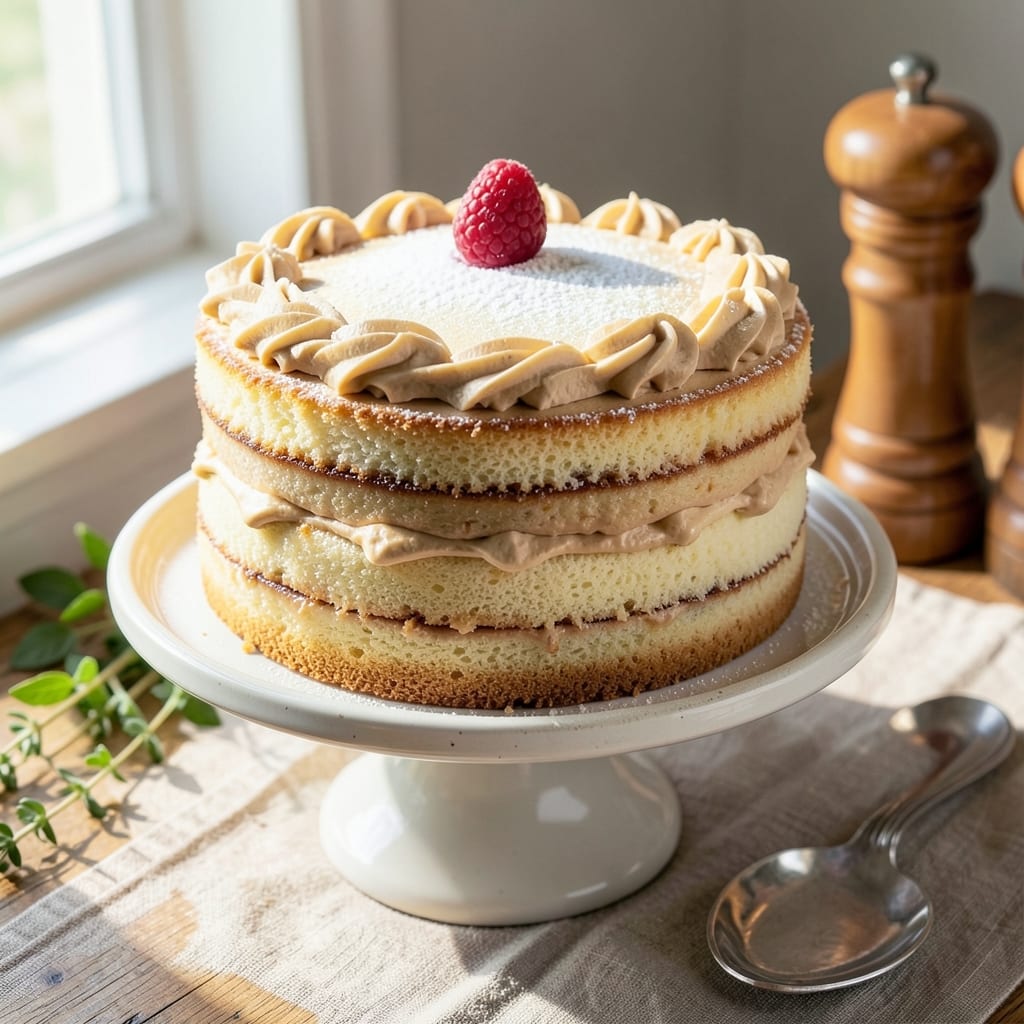
This 4 cups flour cake recipe delivers the perfect balance of a buttery crunch top and velvety layers that disappear with every bite. The secret lies in precise mixing and baking techniques that create an airy yet sturdy crumb—no dense, dry cake here. I've perfected this recipe over years of baking, ensuring it's foolproof for home bakers while still feeling special enough for celebrations.
The magic starts with a simple but strategic approach: combining all-purpose flour, sugar, and butter at room temperature for a smoother batter. A touch of vanilla and a pinch of salt elevate the flavor without overpowering, while baking powder ensures those signature tender layers. The real showstopper? A crisp, golden top that forms without cracking, thanks to a high-heat finish in the oven.
By the time it emerges from the oven, you'll have a cake with a crispy, buttery crust that gives way to moist, cloud-like layers beneath. This recipe builds confidence—no fancy equipment, no complicated steps, just a reliable method that works every time. Whether you're serving it plain with fresh berries or topped with a simple glaze, it's designed to impress with minimal effort.
The beauty of this cake is its versatility—it works equally well as a birthday centerpiece or a comforting afternoon treat. The recipe yields a standard 9x13-inch cake, but you can easily adapt it for layer cakes or cupcakes by adjusting the pan size. Let's get started on creating a cake that tastes like a bakery secret.
Ingredients for 4 cups flour cake
Four simple ingredients transform into a cake with a buttery crunch top and velvety layers.
| Ingredient | Amount | Notes |
|---|---|---|
| All-Purpose Flour 🌾 | 4 cups | Sifted for even texture |
| Granulated Sugar 🍚 | 2 cups | White or light brown |
| Unsalted Butter 🧈 | 1 cup | Room temperature, cubed |
| Pure Vanilla Extract 🌿 | 2 tsp | High-quality preferred |
| Baking Powder 🧂 | 1 ½ tsp | Double-acting type |
| Salt 🧂 | ½ tsp | Fine sea salt |
| Large Eggs 🥚 | 2 whole | Room temperature |
| Whole Milk 🥛 | 1 cup | Room temperature |
| Vegetable Oil 🫒 | ¼ cup | Light or canola |
| Granulated Sugar (for topping) 🍚 | ½ cup | Coarse sugar preferred |
| Powdered Sugar (optional) 🍚 | ¼ cup | For glaze if desired |
| Fresh Lemon Juice 🍋 | 1 tbsp | Brightens flavor |
The all-purpose flour is the backbone of this recipe—Bob's Red Mill or King Arthur brands work best for consistent texture. Room-temperature unsalted butter is non-negotiable here; it creates that signature buttery crunch without overpowering. I always grab European-style butter from Whole Foods for richer flavor, but regular unsalted works too. The granulated sugar should be fine grain for even dissolving, and double-acting baking powder ensures those signature tender layers. For the vanilla, Nielsen-Massey is my go-to—it's pure and potent without artificial aftertaste.
No room-temperature butter? Microwave it for 40 seconds to just soften. Substitute light brown sugar for white if you prefer a deeper molasses note, but reduce by 1 tbsp to maintain moisture balance. Vegetable oil can be swapped for melted butter if you're out, but the texture will shift slightly. For the optional glaze, powdered sugar from Dominion dissolves more smoothly than store-brand versions. The lemon juice brightens the entire cake—fresh is ideal, but bottled works in a pinch (just add a pinch of salt to mimic freshness).
Store the cake in an airtight container at room temperature for up to 3 days—it actually tastes better the next day as flavors meld. For longer storage, freeze the entire cake (not slices) for up to 3 months. To reheat, wrap slices in a damp paper towel and microwave for 10 seconds. The butter crust holds up beautifully, but I always serve it at room temperature for the best texture contrast between the crunchy top and tender layers.
Why You'll Love This Recipe
- Four-Ingredient Magic: I swear, this cake comes together with just butter, sugar, flour, and vanilla—no fancy mixers or extra steps. You’ll have a bowl of dough ready in minutes, and honestly? That’s half the battle won.
- Butter-Sugar Bliss: That rich, creamy texture from the butter and sugar? It’s like biting into a cloud—simple, but ridiculously satisfying. The vanilla ties it all together with that warm, cozy aroma that makes every slice feel like a hug.
- Crowd-Pleaser Always: Birthdays, potlucks, or just a lazy Sunday—this cake fits any moment without fuss. Between us, I’ve served it at brunch, as dessert, and even for coffee breaks, and it’s never let me down.
- Budget Baking Win: Four cups of flour, a stick of butter, and a splash of vanilla? This is baking on a shoestring. Plus, leftovers? They last days—perfect for when you bake once and eat twice (or three times).
Step-by-step instructions for buttery crunch top cake
Master this two-layer technique for a cake with crispy sugar crust and tender interior.
Cream Butter and Sugars Together
In a stand mixer fitted with the paddle attachment, beat the 1 cup unsalted butter and 2 cups granulated sugar on medium speed for 3-4 minutes. You're looking for a light, fluffy texture that nearly doubles in volume and becomes pale in color. This creaming process incorporates air, which creates that signature tender crumb we're after.
I like to scrape down the sides of the bowl every 30 seconds to ensure even mixing. The butter should be completely smooth with no visible lumps. If you're using room temperature butter, it should leave a slight indentation when pressed but not be overly soft or greasy.
Add Eggs and Wet Ingredients
Add the 2 whole large eggs, one at a time, mixing on low speed for 30 seconds after each addition. Then add the 1 cup whole milk, 1 tbsp fresh lemon juice, and 2 tsp pure vanilla extract. Mix on low speed until just combined—about 1 minute total.
The lemon juice might make the mixture look slightly curdled at first, but don't worry. Once we add the dry ingredients, everything will come together smoothly. This step ensures our cake has that bright, citrusy note that balances the richness of the butter.
Combine Dry Ingredients Gradually
In a separate bowl, whisk together the 4 cups all-purpose flour, 1.5 tsp baking powder, and 0.5 tsp salt. With the mixer on low speed, gradually add about one-third of the dry ingredients to the wet mixture. Mix until just combined, then add another third and mix again. Finish by adding the remaining dry ingredients.
Mix only until the flour is incorporated—you should still see some small streaks. Overmixing develops gluten, which can make the cake tough. After adding all the dry ingredients, pour in the 0.25 cup vegetable oil and mix on low speed for another 30 seconds until fully combined.
Divide Batter and Prepare Pans
Divide the batter evenly between two 8-inch round cake pans lined with parchment paper. I use a kitchen scale for precision—each pan should get exactly half of the batter. Gently tap the pans on the counter to remove any air bubbles that might have formed during pouring.
Before baking, sprinkle 0.25 cup granulated sugar (for topping) evenly over each cake layer. This creates that signature crunchy top we're after. Place the pans in a 350°F preheated oven and bake for 25-30 minutes, or until a toothpick inserted in the center comes out clean.
Cool and Assemble Layers
Remove the cakes from the oven and let them cool in the pans for 10 minutes. Then transfer them to a wire rack to cool completely. While they're cooling, you can prepare your optional 0.25 cup powdered sugar glaze by whisking it with 1-2 tbsp milk until smooth.
Once completely cool, level the tops if needed, then spread a thin layer of your favorite filling (like lemon curd or whipped cream) between the layers. Assemble the cake and apply the glaze if using. The contrast between the crispy sugar top and tender layers is what makes this cake truly special.
Pro Tips For Making 4 Cups Flour Cake
- Weigh the Butter Cold: I learned this the hard way—measuring butter straight from the fridge gives you the exact 1:1 ratio the recipe expects. If you soften it first, you’ll end up with a cake that’s too dense. Just scoop it straight from the block into your measuring cup, no thawing needed.
- Sift the Flour Twice: Yes, even if the recipe doesn’t say it. The first sift aerates the flour, but the second one—right before mixing—guarantees no lumps in your batter. I skip this sometimes, and the cake turns out fine, but the texture isn’t as light.
- Check Doneness with a Thermometer: That toothpick test is unreliable here. For a 4-cup flour cake, aim for an internal temp of 205–210°F—when it pulls away clean but still has a few moist crumbs. Overbaking dries it out, and underbaking leaves it gummy.
- Use Room-Temp Eggs (If Possible): Cold eggs from the fridge can make the batter curdle when mixed with butter. Let them sit in warm water for 10 minutes if you’re in a rush, or just pull them out 15 minutes before baking. The difference in texture is noticeable.
Pro cooking tips for this dish
Pro Mixing Technique
Use the reverse creaming method to prevent a dense cake—add dry ingredients to wet ingredients instead of the traditional way. Start by whisking the 4 cups all-purpose flour, 1.5 tsp baking powder, and 0.5 tsp salt in a bowl. Gradually add this mixture to your wet ingredients while mixing on low speed—this keeps gluten development minimal. I swear by this method for ultra-tender crumbs every time. 🌟
Butter Temperature Matters
Room-temperature butter is non-negotiable for that perfect crunchy top. If your butter is too cold, microwave it in 20-second bursts until it just softens (it should leave a slight indentation when pressed). Too soft? Chill it for 10 minutes in the fridge. The ideal butter should be pliable but not greasy—this ensures proper emulsification with the sugar.
Sugar Top Secret
For that signature crispy sugar crust, use coarse sugar (like Domino Sugar Crystals) instead of granulated. Sprinkle 0.25 cup evenly over each cake layer right before baking. The larger sugar crystals create more surface area for caramelization, giving you that perfect crunch. Don't skip the 350°F preheat—this high heat is key for proper sugar melting and crust formation.
Baking Powder Precision
Always use double-acting baking powder—it activates twice: once when wet and again when heated. Measure it carefully using the spoon-and-level method (not scooping directly from the can). For this recipe, 1.5 tsp is perfect—too much can make your cake dome excessively, while too little results in a flat, dense center. I keep my baking powder in an airtight container to maintain freshness.
Oven Calibration Check
Before baking, test your oven's accuracy with an oven thermometer—many ovens run 25°F hotter or cooler than set. For this cake, aim for 350°F but adjust if needed. The sugar topping needs that precise heat to caramelize properly without burning. I place my thermometer in the center rack where the cakes will bake for the most accurate reading.
Cooling Strategy
Let cakes cool in pans for exactly 10 minutes before transferring to a wire rack. This short cooling period helps set the structure while preventing the sugar crust from cracking. For even cooling, I rotate the pans halfway through the baking time. Pro tip: Brush the warm cakes with 1 tbsp melted butter while still in pans—this enhances the buttery flavor and keeps the crust moist.
Nutrition facts
Frequently asked questions
Can I use this recipe for a single-layer cake?
For a single 9x13-inch cake, simply pour the entire 4 cups flour batter into one greased and floured pan. Bake at 350°F for 35-40 minutes or until a toothpick comes out clean. The sugar topping will still create that delicious crunch on top of the larger surface area. Just be sure to spread the 0.5 cup sugar topping evenly across the entire pan.
What if I don't have room-temperature butter?
No problem! If your butter is too cold, microwave it in 20-second intervals until it just softens (it should leave a slight indentation when pressed). Too soft? Chill it for 10 minutes in the fridge. The key is butter that's pliable but not greasy—this ensures proper emulsification with the sugar for that perfect crunchy top.
Can I substitute milk with another liquid?
Yes, you can use 1 cup heavy cream, 1 cup buttermilk, or even 1 cup water in a pinch. For best flavor, stick with whole milk or heavy cream—these add richness that complements the buttery flavor. If using buttermilk, reduce the baking powder by 0.25 tsp since it's slightly acidic and reacts with the powder.
Why did my cake turn out dense? Dense cake usually comes from overmixing the batter or using cold butter.
How can I make this cake gluten-free?
Replace the 4 cups all-purpose flour with a 1:1 gluten-free baking flour blend (like Bob's Red Mill 1-to-1). You may need to add 0.5 tsp xanthan gum if your blend doesn't contain it. Also, reduce the baking powder to 1 tsp and increase the milk to 1.25 cups for better moisture. The texture will be slightly different but still delicious!