
Desserts
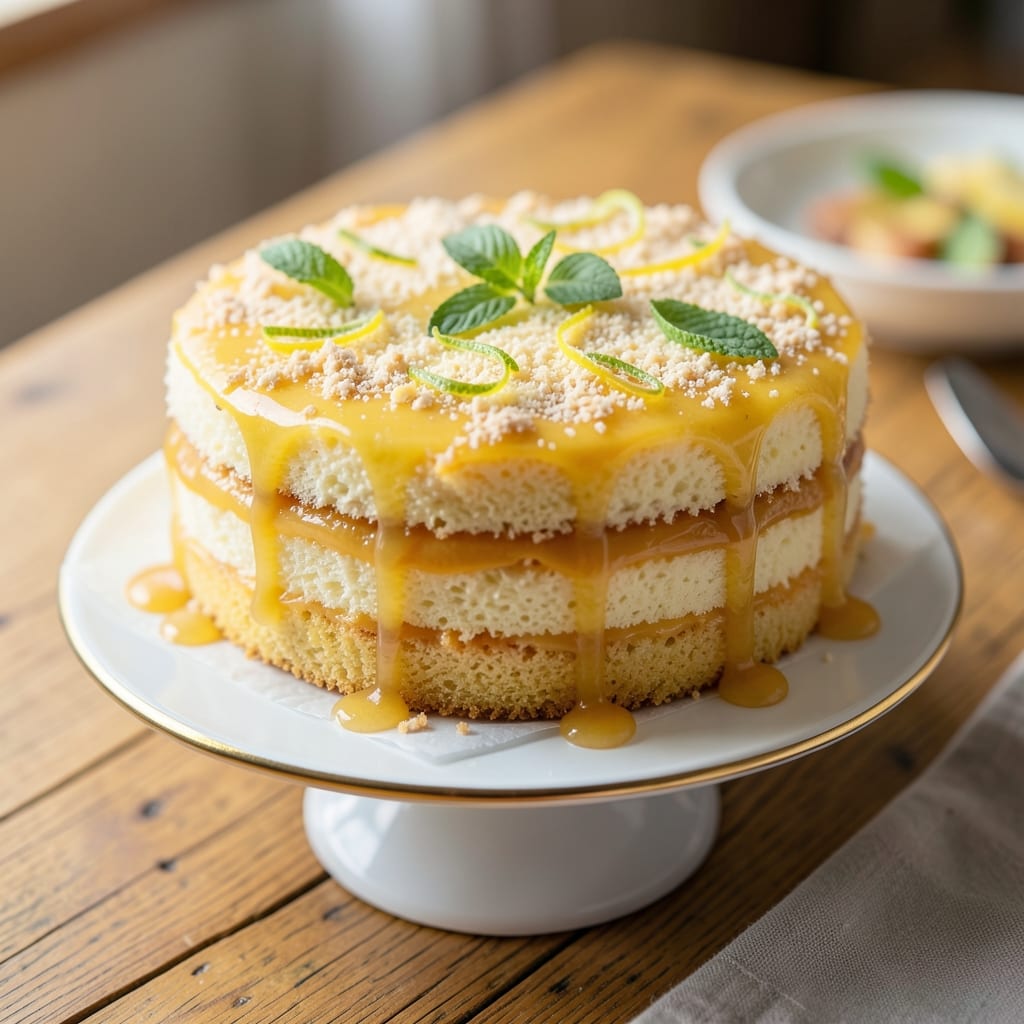
A 4-inch lemon cake recipe delivers the perfect balance of bright citrus and tender crumb—ideal for special occasions or a refreshing treat. The secret lies in a moist, buttery base infused with fresh lemon zest and juice, creating layers of zesty flavor that shine through every bite. This recipe ensures a tender crumb that stays moist for days, paired with a tangy cream cheese frosting that complements the citrus perfectly.
What makes this cake truly special is its simplicity and foolproof technique. With just a few key ingredients—flour, sugar, eggs, and fresh lemons—you’ll achieve a cake that’s light yet rich, with a subtle citrus aroma that fills your kitchen. The cream cheese frosting adds a velvety contrast, balancing the sharpness of the lemon while keeping the cake from feeling too heavy.
Baking time is minimal, and the result is a cake that’s as beautiful as it is delicious. The bright yellow layers and smooth frosting make it perfect for celebrations, but its simplicity means you can enjoy it anytime. Whether you’re serving it at a brunch or keeping it for a quiet afternoon, this cake is sure to impress.
The best part? This recipe scales easily—you can make a single 4-inch cake for a personal treat or adjust the measurements for a larger batch. The frosting can be customized with additional lemon zest or a touch of vanilla for extra depth. Let’s get started on creating your perfect lemon cake.
Ingredients for 4 inch lemon cake
Bright citrus meets buttery richness in this perfect 4-inch lemon cake with velvety cream cheese frosting.
| Ingredient | Amount | Notes |
|---|---|---|
| All-Purpose Flour 🌾 | 1 ½ cups | Sifted for light texture |
| Granulated Sugar 🍚 | 1 ¼ cups | White or light brown |
| Unsalted Butter 🧈 | 1 cup | Softened to room temp |
| Large Eggs 🥚 | 2 whole | Room temperature preferred |
| Fresh Lemon Zest 🍋 | 2 tbsp | From 2 large lemons |
| Fresh Lemon Juice 🍋 | ½ cup | From 4-5 lemons |
| Baking Powder 🧂 | 2 tsp | Diamond Crystal preferred |
| Salt 🧂 | ½ tsp | Fine sea salt |
| Vanilla Extract 🌿 | 1 tsp | Pure vanilla preferred |
| Whole Milk 🥛 | ½ cup | Room temperature |
| Cream Cheese 🧀 | 8 oz | Room temperature, full-fat |
| Powdered Sugar 🍚 | 2 cups | Sifted for smooth frosting |
| Heavy Whipping Cream 🥛 | ½ cup | Cold for whipping |
| Lemon Extract 🍋 | ½ tsp | Optional for extra zing |
The lemons make or break this cake, so grab the juiciest ones you can find—Trader Joe's or local farmers markets are my go-tos. You'll want about 4-5 lemons total: 2 for zest and 4-5 for juice. Organic lemons have thinner skins, making zesting easier. For the butter, don't skip the room-temperature step—it mixes smoother and creates that perfect tender crumb. If you're using Diamond Crystal baking powder (which is less baking soda than other brands), you're golden—it's what most professional bakers use for light, airy cakes.
No fresh lemons? Lemon extract or bottled lemon juice works in a pinch, but you'll lose that bright, fresh flavor. For the frosting, cream cheese at room temperature is non-negotiable—it whips so much better. If you're short on powdered sugar, mix equal parts granulated sugar and cornstarch (sifted) as a substitute. The vanilla extract can be imitation, but pure vanilla adds that extra depth of flavor. For extra zing, add a splash more lemon juice to the frosting—trust me, it's worth it.
This cake keeps beautifully for 4-5 days wrapped at room temperature, but honestly, it's best enjoyed fresh. The frosting can be made a day ahead and stored in the fridge, then whipped back to fluffiness before serving. For a special touch, dust the top with a little extra powdered sugar or a sprinkle of lemon zest right before serving. If you're making this for a crowd, double the recipe—it scales perfectly for a 6-inch cake or cupcakes.
Why You'll Love This Recipe
- No Mixer Needed: I swear by this recipe because it’s all about the whisk—no stand mixer, no fuss. Just butter, sugar, eggs, and a little elbow grease until it’s light and fluffy. Honestly, the texture comes from folding the flour in just right, and that’s something anyone can nail in 10 minutes.
- Zest That Pops: That bright, tangy lemon zest? It’s the star. The buttercream (made with the same butter and sugar from the cake) balances it perfectly—creamy but not heavy, with a finish that’s fresh and just sweet enough. Between us, it’s the kind of flavor that makes people ask, “What’s in this?”
- Portion Control Perfection: Four-inch layers mean you’re never stuck with a whole cake that won’t last. It’s ideal for a single serving with coffee or tea, a small dessert after dinner, or even a quick lunchbox treat. (Yes, even on a Tuesday night.)
- Pantry Staples Only: You’re using flour, sugar, butter, eggs—stuff you already have. No specialty ingredients, no last-minute grocery runs. The cake keeps well for days, so you can bake once and enjoy it all week. Plus, the leftovers? Still taste like a fresh-baked treat.
Step-by-step instructions for lemon cake with cream cheese frosting
This bright, citrusy cake delivers perfect layers every time—juicy, tender crumb and velvety frosting that'll make your taste buds dance.
👨🍳 Step 1: Whisk Dry Ingredients for Light Texture
In a medium bowl, sift together the 1.5 cups all-purpose flour, 2 teaspoons baking powder, and 0.5 teaspoon salt. I like to give this a good whisk to break up any flour lumps—this ensures your cake will have that perfect airy crumb. Set aside for now.
In a separate bowl, combine the 1.25 cups granulated sugar, 2 tablespoons fresh lemon zest, and 1 teaspoon vanilla extract. The lemon zest will infuse the dry ingredients with bright citrus flavor right from the start. Gently stir until everything is evenly distributed—you want those zest particles to be well incorporated so every bite gets that zesty punch.
🍳 Step 2: Cream Butter and Eggs for Fluffy Layers
In a large mixing bowl, beat the 1 cup softened unsalted butter on medium speed until light and fluffy—about 3-4 minutes. This step is crucial because properly creamed butter incorporates air, which creates those beautiful, tender layers in your cake. Scrape down the sides of the bowl with a rubber spatula to ensure even mixing.
Add the 2 whole large eggs, one at a time, beating well after each addition. The mixture should become pale and thick. Then, gradually pour in the 0.5 cup fresh lemon juice and mix until just combined. Here's where the magic happens—the lemon juice will react with the baking powder later to create lift, while the zest we mixed earlier infuses the batter with that signature citrus aroma.
🥘 Step 3: Combine Wet and Dry Ingredients Gently
With the mixer on low speed, gradually add the dry ingredient mixture to the wet ingredients in three additions. Mix just until combined—about 20-30 seconds—being careful not to overmix. Overmixing develops gluten, which can make your cake tough instead of tender. You're looking for a smooth, slightly thick batter that holds its shape when you lift the spoon.
Finally, pour in the 0.5 cup whole milk and mix for another 10-15 seconds until the batter is completely smooth. The milk helps hydrate the flour and creates that perfect moist crumb. At this point, your batter should be thick but pourable—like a slightly heavy pancake batter. Give it one final stir with a spatula to ensure everything is evenly incorporated.
🔥 Step 4: Bake in a 4-Inch Pan for Perfect Rise
Preheat your oven to 350°F and grease a 4-inch round cake pan generously with butter or baking spray. Line the bottom with parchment paper for easy removal. Pour the batter into the prepared pan and smooth the top with a spatula. Tap the pan gently on the counter 2-3 times to release any air bubbles that might have formed.
Bake for 35-40 minutes, or until a toothpick inserted into the center comes out clean. I know it's tempting to open the oven door early, but resist! The cake needs that steady heat to rise properly. The edges should be golden brown, and the top should spring back when gently pressed with your finger. If the top browns too quickly, tent the cake with aluminum foil after 20 minutes to prevent over-browning.
⏰ Step 5: Cool and Prepare Cream Cheese Frosting
Remove the cake from the oven and let it cool in the pan for 10 minutes. Then transfer it to a wire rack to cool completely. While it cools, prepare the frosting by beating the 8 ounces cream cheese and 2 cups powdered sugar together until smooth and creamy. Add the 0.5 cup cold heavy whipping cream and 0.5 teaspoon lemon extract (if using) and beat until light and fluffy—about 2-3 minutes. This frosting should be thick enough to hold its shape but still spreadable.
Once the cake is completely cool, spread the frosting evenly over the top and sides. The contrast between the warm, citrusy cake and the cool, tangy frosting is what makes this dessert truly special. For a professional finish, I like to use a small offset spatula to create clean edges. Let the frosting set for 10 minutes before slicing—this gives it time to firm up slightly so it doesn't slide off when you serve.
Pro Tips For Making 4 Inch Lemon Cake
- Cream Butter Properly: Use a stand mixer or hand mixer to beat the butter and sugar until it’s light and fluffy—about 3-4 minutes. I learned this the hard way: under-creaming means dense cake, and overdoing it risks turning it into buttercream. Stop when the mixture holds soft peaks and looks like pale, airy ribbon.
- Sift the Flour Twice: Don’t just dump the flour—sift it before adding to the dry ingredients, then sift it again when folding it in. This keeps the lemon zest evenly distributed and prevents lumps, which ruin the texture. (Yes, it’s extra work, but your cake’s crumb will thank you.)
- Don’t Overbake the Cake: Pull the cake out when the center springs back slowly to gentle pressure—about 2-3 minutes before the recipe’s suggested time. Overbaking dries out the lemon flavor and makes it crumbly. If you’re unsure, check at 25 minutes and let it rest 10 minutes before testing.
- Zest First, Juice Later: Use a fine grater for the zest—it’s more consistent than a zester—and save the juice for after baking. Fresh zest packs more flavor, but adding juice too early can make the batter too wet. (Pro move: Roll the zest in a tiny bit of sugar to mellow its bitterness before mixing.)
Flavor customization for these flavors
Citrus Variations
Swap lemons for orange zest and juice (from 2 oranges) to create a bright, slightly floral twist. Use 1.5 tbsp orange zest and 0.5 cup orange juice while reducing the lemon zest to 1 tbsp—this keeps the cake moist but adds a sweeter, more complex flavor. For a tropical vibe, try lime zest and juice (from 3 limes) with 1 tbsp honey in the batter for a tangy-sweet balance. 🍊
Spiced Enhancements
Add ½ tsp ground cardamom or ¼ tsp cinnamon to the dry ingredients for warmth. I love a pinch of fresh ginger (about ½ tsp grated) in the batter for a zesty kick that pairs perfectly with the lemon. For frosting depth, fold in 1 tsp lemon curd or ½ tsp orange blossom water—both add layers of complexity without overpowering.
Moisture Boosters
Boost moisture by replacing ½ cup milk with ½ cup Greek yogurt or ½ cup buttermilk—both add protein and tang. For extra richness, swap ½ cup butter for ½ cup brown butter (cool slightly before mixing). If your kitchen is dry, add 1 tbsp sour cream to the batter for a velvety texture. These tweaks keep the cake tender even in humid climates. 💧
Frosting Customizations
For a lighter frosting, replace ½ cup heavy cream with ½ cup whipped cream (whipped to stiff peaks) and 1 tbsp lemon curd. For a glaze instead of frosting, mix ½ cup powdered sugar with 2 tbsp lemon juice and 1 tbsp honey, then drizzle over the cooled cake. A white chocolate ganache (melt 4 oz white chocolate with ¼ cup heavy cream) adds a luxurious touch.
Dairy-Free Options
Use 8 oz dairy-free cream cheese (like Kite Hill) and ½ cup coconut cream (chilled overnight) for the frosting. Replace milk with ½ cup almond milk or oat milk in the batter, and use ½ cup coconut oil (softened) instead of butter. The texture stays tender, though the frosting will be slightly lighter—balance with an extra ½ tsp lemon zest for brightness. 🌱
Nutrition facts
Frequently asked questions
Can I make this lemon cake in a different pan size?
Yes! For a 6-inch cake, increase all ingredients by 1.5x (about 50% more). For cupcakes, use 1.5 cups batter per 24 cupcakes (bake at 350°F for 18-20 minutes). Always adjust baking time—smaller pans bake faster, while larger ones need extra time. A cake tester is your best friend for checking doneness!
Why did my cake sink in the middle?
This usually happens from overmixing the batter, opening the oven too early, or underbaking. Mix just until combined (about 20-30 seconds after adding dry ingredients), and bake until a toothpick comes out clean. If your kitchen is humid, tent the cake with foil after 20 minutes to prevent over-browning while the center sets.
How can I make this cake gluten-free?
Replace the all-purpose flour with a 1:1 gluten-free baking flour blend (like Bob's Red Mill) and add ½ teaspoon xanthan gum to the dry ingredients. For the frosting, ensure your cream cheese is gluten-free certified. The texture will be slightly denser, but the zesty lemon flavor will still shine through!
Can I prepare the frosting ahead of time?
Make the frosting up to 2 days ahead and store it in an airtight container in the fridge. Before using, let it sit at room temperature for 30 minutes and rewhip for 1-2 minutes to restore fluffiness. The cake itself keeps well for 4-5 days at room temperature, but frost it fresh for the best texture.
What's the best way to store leftovers?
Wrap the frosted cake tightly in plastic wrap and store at room temperature for up to 3 days. For longer storage, refrigerate (up to 1 week) and let it sit at room temperature for 10 minutes before serving. Freezing isn't recommended for this cake—it can dry out the texture. Enjoy it fresh for the best experience!