
Desserts
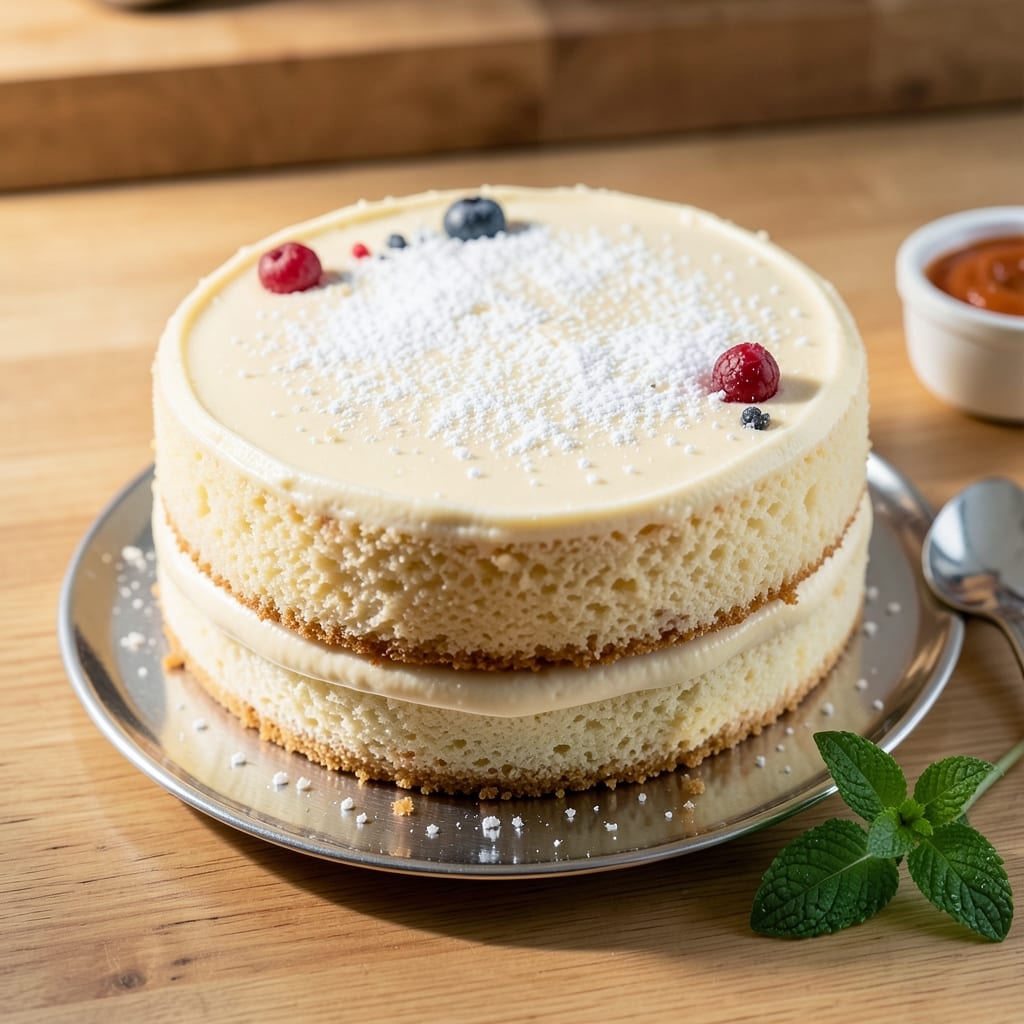
This 6-inch eggless vanilla cake recipe delivers the same light, fluffy layers you love—without a single egg. ✨ The secret lies in a simple yet effective substitution that creates airy texture while keeping the cake tender and moist. Perfect for dietary needs or when eggs aren't available, this recipe proves you don't need traditional ingredients to achieve bakery-quality results.
What sets this cake apart is the foolproof method that ensures perfect rise and even layers every time. We'll use a common pantry staple to replace eggs, yet the final result remains impossibly light—no dense crumb here. The vanilla flavor shines through, offering that classic comfort without compromise, and the recipe scales easily for single-layer cakes too.
By the time you pull this cake from the oven, you'll have golden layers with a delicate crumb that melts in your mouth. The frosting options are endless—whether you prefer buttercream, cream cheese, or a simple dusting of powdered sugar. Each slice delivers that familiar vanilla sweetness with none of the heaviness.
Ideal for birthdays, celebrations, or just treating yourself, this cake is versatile enough for any occasion. The recipe includes tips for adjusting sweetness, testing doneness, and creating perfectly smooth layers—no baking degree required. Let's get started on your egg-free masterpiece.
Ingredients for 6 inch eggless vanilla cake
Simple pantry staples transform into impossibly light vanilla layers—no eggs required.
| Ingredient | Amount | Notes |
|---|---|---|
| All-Purpose Flour 🌾 | 1 ½ cups | Sifted for best texture |
| Granulated Sugar 🍚 | 1 cup | White or raw cane |
| Light Brown Sugar 🍚 | ½ cup | Packed firmly |
| Unsalted Butter 🧈 | ¾ cup | Cold, cubed, room temp |
| Non-Dairy Milk 🥛 | ¾ cup | Almond or soy preferred |
| Pure Vanilla Extract 🌿 | 2 tsp | High-quality, no imitation |
| Baking Powder 🧂 | 2 tsp | Freshly opened |
| Baking Soda 🧂 | ½ tsp | Pure, not baking powder |
| Salt 🧂 | ½ tsp | Fine sea salt |
| White Vinegar 🍶 | 1 tbsp | For egg substitution |
| Ground Flaxseed 🌾 | 1 tbsp | For egg substitution |
| Vegetable Oil 🫒 | ¼ cup | Light, neutral flavor |
The flaxseed and vinegar combo is the secret weapon here—mix them first to create a gel-like binder that mimics egg's structure. Bob's Red Mill flaxseed is my go-to for consistency, but any organic brand works. For the butter, cold cubes (not melted) ensure tender crumb—don't skip this. The non-dairy milk? Almond or soy adds richness without dairy, but oat milk works too if that's what you've got. Measure your sugars precisely—pack the brown sugar firmly to avoid under-moistening the batter.
No flaxseed? Chia seeds at double the amount (2 tbsp) work too, but the texture becomes slightly gummier. Short on vinegar? Lemon juice at half the amount is a decent swap, though flavor shifts slightly. The baking powder and soda must be freshly opened—old leaveners cause flat cakes. For vanilla, imitation-free extracts (like Nielsen-Massey) make all the difference. Prefer cake flour? Swap all-purpose for 1 cup minus 2 tbsp plus 2 tbsp cornstarch—just sift it well to avoid lumps.
Store batter at room temp for up to 24 hours if prepping ahead, but bake immediately for best texture. The cake keeps 3 days wrapped at room temp or 1 week refrigerated. For freezing, slice first—thaw overnight in the fridge to preserve moisture. Leftovers? Toast them lightly—they taste like fresh-baked. The frosting options are endless, but vegan buttercream (made with coconut oil) pairs perfectly.
Why You'll Love This Recipe
- No Eggs, No Stress: Honestly, mixing this batter feels like cheating—just fold, pour, bake. The non-dairy milk keeps it light without the fuss of whisking egg whites or worrying about overmixing.
- Butter-Sugar Magic: That combo of brown and granulated sugar? It’s the secret to a cake that’s tender but not dry, with just enough caramel depth to make you want seconds. The butter makes every slice rich without being heavy.
- Weeknight Hero: Slice it warm for breakfast, pack it in lunchboxes, or serve it with coffee—it’s my go-to when I need something reliable. The 6-inch size means it’s perfect for one or two, no leftovers to stress over.
- Budget-Friendly Luxury: Uses pantry staples you already own, and the non-dairy milk stretches it further than a traditional recipe. Tastes like a bakery treat but costs a fraction of the price. (Yes, even on a Tuesday night.)
Step-by-step instructions for light eggless vanilla cake
Here's how to bake a tender, fluffy 6-inch cake without eggs—every layer will rise perfectly.
👨🍳 Step 1: Create the Flaxseed Egg Substitute
In a small bowl, whisk together the 1 tablespoon ground flaxseed and 1 tablespoon white vinegar. Let this mixture sit for 5 minutes—you'll see it thicken into a gel-like consistency that mimics the binding properties of eggs. This is your secret to a light, airy crumb without dairy or eggs.
I like to test the consistency by tilting the bowl—it should hold its shape for a few seconds before slowly dripping. If it's too runny, add another ½ teaspoon flaxseed. This step is critical because the flax "egg" needs time to fully activate before mixing with other ingredients.
👨🍳 Step 2: Whisk Dry Ingredients for Perfect Texture
In a medium bowl, sift together the 1½ cups all-purpose flour, 2 teaspoons baking powder, ½ teaspoon baking soda, and ½ teaspoon salt. Gently whisk to combine, making sure to break up any flour lumps. This step prevents dense layers by ensuring even distribution of leavening agents.
I always sift the flour first—it aerates the mixture and creates a lighter texture. Add the 1 cup granulated sugar and ½ cup light brown sugar to the dry ingredients and whisk again until completely combined. The brown sugar adds moisture and a subtle caramel note that complements the vanilla beautifully.
🍳 Step 3: Cream Butter and Sugars for Maximum Rise
In a separate large bowl, combine the ¾ cup unsalted butter (cold, cubed) and ¼ cup vegetable oil. Use a hand mixer on medium speed for 1-2 minutes until the butter is completely melted and the mixture is smooth. Add the 1 cup granulated sugar and ½ cup light brown sugar, then beat on high speed for 3-4 minutes until pale and fluffy.
This creaming process incorporates air into the batter, which is essential for that light, cloud-like texture. You'll know it's ready when the mixture nearly doubles in volume and leaves faint ribbons when the beaters are lifted. Don't rush this step—properly creamed butter and sugar create the cake's signature tenderness.
🥘 Step 4: Alternate Wet and Dry Ingredients Gently
With the mixer on low speed, add the flaxseed mixture in 3 additions, mixing just until combined after each addition. Then alternate adding the dry ingredients in 3 parts with the ¾ cup non-dairy milk in 3 parts, beginning and ending with the dry ingredients. Mix on low speed just until the batter comes together—overmixing develops gluten and makes the cake tough.
Here's where it gets tricky: the batter should be thick but pourable. If it's too thick, add 1 tablespoon non-dairy milk at a time until it reaches a smooth, velvety consistency. Fold in the 2 teaspoons pure vanilla extract by hand using a silicone spatula—this prevents deflating the air bubbles we worked so hard to create.
⏰ Step 5: Bake in a 6-Inch Pan for Even Rise
Preheat your oven to 350°F and grease a 6-inch round cake pan thoroughly with butter or oil, then dust with flour. Pour the batter into the prepared pan and smooth the top with a spatula. Bake for 35-40 minutes until a toothpick inserted in the center comes out clean and the edges pull away slightly from the pan.
I always check for doneness at the 30-minute mark—every oven runs differently. The cake should spring back slowly when gently pressed in the center, and the top should be golden brown with a slight crack in the middle. If the top browns too quickly, tent the pan with foil after 20 minutes to prevent over-browning while allowing the center to cook through.
🍰 Step 6: Cool Gradually for Perfect Slices
Remove the cake from the oven and let it cool in the pan for 10 minutes. Then transfer it to a wire rack to cool completely. This gradual cooling prevents cracking and ensures clean slices. I like to run a thin knife around the edges before removing it from the pan—this helps release the cake without breaking it.
The cake will shrink slightly as it cools, but it should still maintain its height and springiness. For the best texture, let it cool completely before frosting. If you're making layers, repeat the process with the remaining batter in a second pan, then stack with your favorite filling between layers.
Pro Tips For Making 6 Inch Eggless Vanilla Cake
- Mix Butter and Sugars First: I used to toss everything in the bowl at once, but creaming the butter with both granulated and brown sugar (about 3 minutes with a mixer) makes the cake tender and rich—no one will guess it’s eggless. The brown sugar adds moisture, so don’t skip it.
- Weigh Your Flour Like a Pro: Scooping flour from the bag packs it down, and that’s how you end up with a dense cake. Spoon it into a measuring cup, then level it off—this 6-inch cake is delicate enough that extra flour will ruin the texture. (Yes, even if you’re impatient like me.)
- Bake Until the Center Springs Back: The cake’s done when a toothpick comes out clean and the edges pull away from the pan. I learned this the hard way—overbaking dries it out, but underbaking leaves it gummy. Pull it at 325°F (163°C) and check every 2 minutes after the expected time.
- Use Cold Non-Dairy Milk: Warm milk activates the flour’s starches too soon, making the cake gummy. Pop the carton in the fridge for 10 minutes before measuring—it blends smoother and keeps the crumb light. (Bonus: Cold milk also prevents butter separation.)
Troubleshooting this recipe
Dense or Gummy Texture
If your cake turns out dense or gummy, the flaxseed mixture likely didn't activate properly. Always let the flaxseed and vinegar sit for 5-10 minutes to thicken fully—this mimics egg's binding properties. Overmixing the batter can also develop gluten, making the cake tough. Mix just until combined, using a silicone spatula for the final fold of vanilla extract. 💛
Flat or Sunken Center
A flat or sunken center usually means the leavening agents (baking powder/soda) weren't fresh or the oven temperature wasn't accurate. Test your oven with an oven thermometer—aim for 350°F (ovens often run hot). Sift your dry ingredients thoroughly and measure baking powder/soda precisely. If the cake still sinks, your pan might not be large enough—try a 6.5-inch pan for better rise.
Cracked Top or Dry Crust
Cracked tops happen when the cake cools too quickly or the oven runs too hot. Tent the pan with foil after 20 minutes if the top browns too fast. For dry crusts, ensure your butter is cold (not melted) and don't overbake—pull the cake when a toothpick comes out with a few moist crumbs. Brush the warm cake with simple syrup (¼ cup sugar + 2 tbsp water) to add moisture.
Batter Too Thin or Runny
If your batter is too thin, the flaxseed mixture may have been too watery or you added too much milk. Measure your flaxseed precisely (use a scale for accuracy) and let it thicken fully. If the batter is still too thin, add 1 tablespoon more flour at a time until it reaches a thick, pourable consistency—like heavy cream. Avoid adding too much, or the cake may be dry.
Uneven Baking or Raw Center
Uneven baking often means the oven wasn't preheated long enough or the cake pan wasn't properly greased. Preheat your oven for 15 minutes before baking and grease the pan thoroughly with butter or oil, then dust with flour. For a raw center, check doneness at 30 minutes—every oven varies. If the edges cook faster, rotate the pan halfway through baking for even heat distribution.
Flaxseed Taste Too Strong
The flaxseed flavor shouldn't be noticeable, but if it is, reduce the amount to ½ tablespoon and use 1½ tablespoons vinegar instead. Alternatively, swap flaxseed for 1 tablespoon chia seeds + 3 tablespoons water (let sit for 10 minutes). For a milder taste, add ½ teaspoon extra vanilla extract to balance the nuttiness.
Nutrition facts
Frequently asked questions
Can I substitute the flaxseed with something else?
Yes! For 1 tablespoon flaxseed, try 1 tablespoon chia seeds + 3 tablespoons water (let sit for 10 minutes) or ¼ cup unsweetened applesauce. If using applesauce, reduce other liquids by 2 tablespoons to keep the batter balanced. For a neutral taste, ½ cup mashed banana works too—just add ½ teaspoon extra vanilla to complement the flavor.
How do I adjust this recipe for a 2-layer cake?
Double the batter and bake in two 6-inch pans simultaneously for even cooking. Let both cakes cool completely before stacking with your favorite filling (like vanilla buttercream or jam). For stability, place a ¼-inch thick layer of frosting between layers, then chill for 30 minutes before adding the final outer frosting.
Why does my cake turn out dry?
Dry cakes often happen from overbaking or using too much flour. Always pull the cake when a toothpick comes out with a few moist crumbs (35-40 minutes at 350°F). For extra moisture, brush warm layers with simple syrup (¼ cup sugar + 2 tbsp water) before frosting. If your batter seems too thick, add 1 tablespoon milk at a time—never flour.
Can I make this cake gluten-free?
Swap the 1.5 cups all-purpose flour for 1.5 cups gluten-free 1:1 baking flour (like Bob's Red Mill or King Arthur). Add ½ teaspoon xanthan gum if your blend doesn't contain it. Sift the flour thoroughly to prevent lumps, and let the batter rest for 10 minutes before baking to help gluten-free flours hydrate properly.
How long can I store the baked cake?
Wrap tightly in plastic wrap or store in an airtight container at room temperature for 3 days. For longer storage, refrigerate for 1 week or freeze for 2 months. To serve from frozen, thaw overnight in the fridge—never at room temperature. For best texture, bring to room temp before slicing. The frosting may soften when thawed, so re-chill briefly before serving.