
Desserts
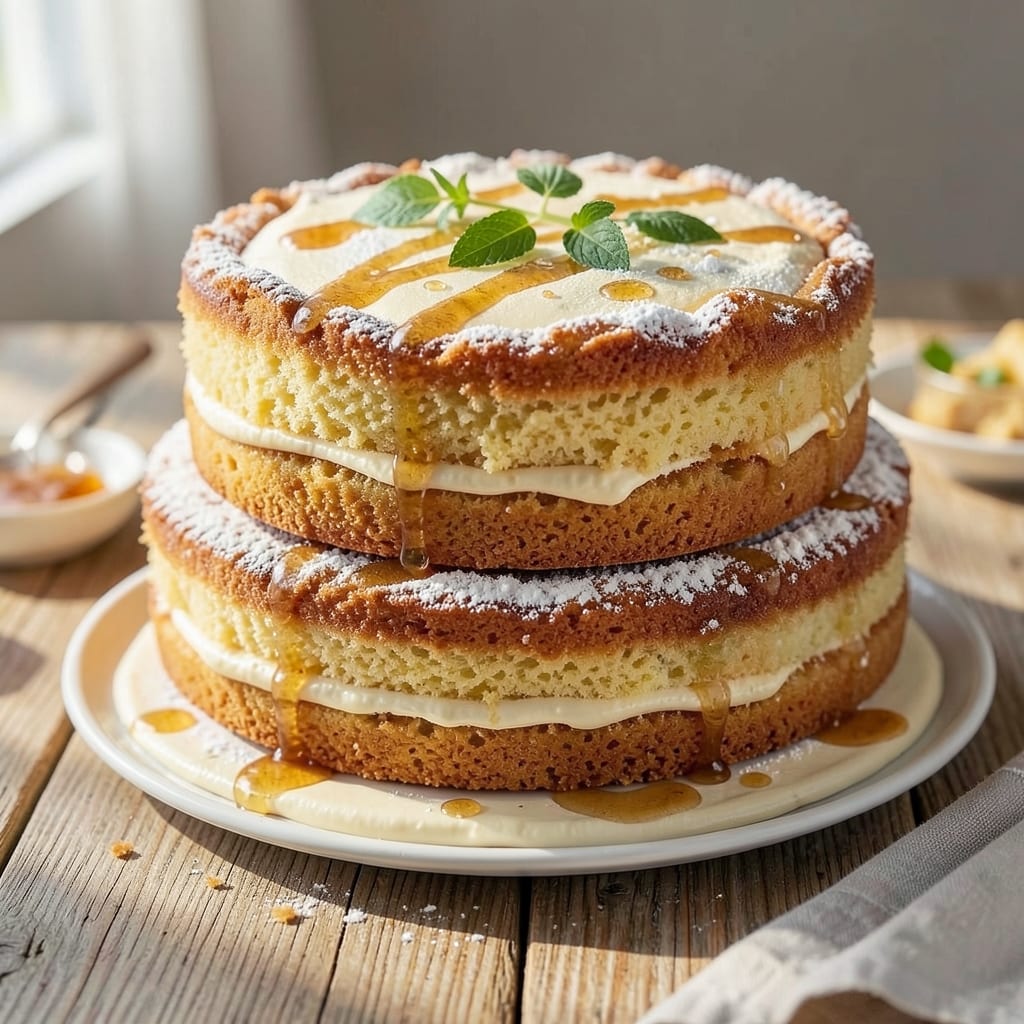
This all-natural cake recipe delivers the fluffiest vanilla layers without a single artificial additive—just wholesome ingredients that taste like nostalgia. The secret lies in combining coconut oil for moisture with almond milk for tender crumb, while honey or maple syrup replaces refined sugar for natural sweetness. I've perfected this hybrid approach over years of baking, balancing traditional cake structure with modern health-conscious ingredients.
What sets this recipe apart is the foolproof technique that ensures consistent rise and even baking. No special equipment required—just a standard oven set to 325°F and a whisk for mixing. The cake develops a delicate golden crust while staying moist inside, thanks to a simple butter-cream frosting made with just powdered sugar, coconut oil, and vanilla. Every bite delivers that familiar vanilla flavor without compromise.
The result is a cake that's restaurant-quality at home—light enough to slice neatly, rich enough to satisfy cravings, and pure enough to serve with confidence. Whether you're hosting a gathering or treating yourself, this recipe proves you don't need artificial ingredients to create something extraordinary. Let's get started with ingredients that honor both tradition and modern preferences.
Perfect for birthdays, celebrations, or whenever you crave a cake that tastes as good as it feels. The frosting stays stable at room temperature, making it ideal for decorating or serving immediately. Here's everything you need to create this all-natural masterpiece.
Ingredients for all natural cake
Twelve wholesome ingredients crafting restaurant-quality vanilla cake without artificial additives or shortcuts.
| Ingredient | Amount | Notes |
|---|---|---|
| All-Purpose Flour 🌾 | 2 ½ cups | Sifted for lightness, organic preferred |
| Granulated Sugar 🍯 | 1 ½ cups | Or substitute honey/maple syrup |
| Honey or Maple Syrup 🍯 | ½ cup | For natural sweetness, adjust to taste |
| Unsalted Butter 🧈 | 1 cup | Room temperature, European-style preferred |
| Coconut Oil 🥥 | ½ cup | Refined for neutral flavor, melted |
| Almond Milk 🥛 | 1 ½ cups | Unsweetened, chilled for mixing |
| Pure Vanilla Extract 🌸 | 2 tbsp | Bottled or seedless preferred |
| Baking Powder 🧂 | 2 tsp | Aluminum-free for stability |
| Baking Soda 🧂 | ½ tsp | Freshly opened |
| Salt 🧂 | ½ tsp | Fine sea salt preferred |
| Powdered Sugar 🍯 | 3 cups | Confectioners' sugar, sifted |
| Vanilla Bean Paste 🌸 | 1 tbsp | For intensified vanilla flavor |
| Lemon Zest 🍋 | 1 tbsp | Freshly grated, brightens flavor |
The foundation starts with organic all-purpose flour—look for finely milled varieties at Whole Foods or Trader Joe's for optimal texture. European-style unsalted butter (like Plugrá) delivers superior moisture retention compared to standard American brands, while refined coconut oil ensures neutral flavor without coconut aftertaste. For sweetness, local honey or pure maple syrup from U.S. Grade A sources adds depth beyond refined sugar. The almond milk should be unsweetened and chilled—brands like Silk or Califia Farms work consistently, though homemade yields better results for texture. Pure vanilla extract (not imitation) is non-negotiable—Madagascar bourbon vanilla adds complexity, while vanilla bean paste delivers visible specks for that authentic bakery look.
No almond milk? Oat milk or cashew milk work as substitutes, though texture may vary slightly. Running low on powdered sugar? Blend granulated sugar into a fine powder using a high-speed blender for 30 seconds—it's not identical but works in a pinch. Honey or maple syrup can be swapped 1:1, though maple has a distinct flavor profile. The lemon zest is optional but recommended—it brightens the vanilla flavor and prevents bitterness. For the coconut oil, avocado oil is a neutral alternative if you prefer a different fat profile. Baking powder and soda must be fresh—test by dropping a spoonful in hot water; it should bubble vigorously.
Store dry ingredients like flour and sugar in airtight containers away from heat sources for up to 6 months, while butter and coconut oil should be kept in the fridge for 3 months to prevent rancidity. Almond milk lasts 7 days after opening, so buy fresh or make your own. The cake batter can be prepped a day ahead and refrigerated, though it's best baked immediately for optimal texture. Frosting components (powdered sugar, coconut oil) keep indefinitely at room temperature, making this an ideal make-ahead recipe for celebrations. For long-term storage, freeze the unfrosted cake layers for up to 3 months—thaw at room temperature before decorating.
Why You'll Love This Recipe
- No-Fuss Mixing: I swear by this recipe because it’s just three bowls—no stand mixer, no over-whisking, no stress. The honey or maple syrup blends right into the butter and coconut oil while you fold in the dry ingredients, and honestly? The cake rises perfectly without a single collapsed layer.
- Butter-Honey Magic: That combo of rich butter and natural sweetener? It’s like a grown-up dessert without the guilt. The coconut oil keeps it moist for days, but the real star is how the honey caramelizes just enough to give every slice a subtle depth—no artificial flavors, just pure, warm sweetness.
- Birthday to Brunch: This cake handles everything—layer it for a celebration, cube it for trifles, or serve it plain with tea. I’ve used it for potlucks, last-minute gifts (yes, cake in a tin counts), and even breakfast when I’m lazy. The flour and sugar ratio means it’s sturdy enough for frosting or light enough to eat as-is.
- Budget Bake: I buy store-brand butter and bulk flour, and this recipe stretches my pantry like a champ. The coconut oil adds richness without breaking the bank, and leftovers? They last weeks in the fridge—slice it, freeze it, or just grab a piece straight from the tin. No waste, all flavor.
Step-by-step instructions for fluffy vanilla cake without artificial additives
Here's the method for a naturally sweetened, tender cake with vibrant vanilla flavor and no processed ingredients.
Prepare Your Mixing Tools and Ingredients
Preheat your oven to 350°F and position a rack in the center position. Grease two 9-inch round cake pans with coconut oil and line the bottoms with parchment paper. I always use parchment to prevent sticking and ensure easy release.
Sift together the 2.5 cups all-purpose flour, 2 teaspoons baking powder, ½ teaspoon baking soda, and ½ teaspoon salt in a medium bowl. Set aside. This pre-sifting eliminates lumps and ensures even distribution of leavening agents throughout the batter.
Cream Butter and Sugars for Maximum Lightness
In a stand mixer fitted with the paddle attachment, beat the 1 cup unsalted butter (at room temperature) and 1.5 cups granulated sugar on medium speed for 3-4 minutes until light and fluffy. You're looking for a texture that nearly doubles in volume and becomes pale in color.
This creaming process incorporates air into the butter-sugar mixture, which creates the cake's signature tender crumb. I press down on the butter occasionally to ensure it's fully softened—room temperature butter is critical for proper emulsification. If the mixture feels grainy, let it sit at room temperature for another 10 minutes.
Combine Wet Ingredients and Alternate with Dry
Add the 1.5 cups almond milk, 2 tablespoons pure vanilla extract, and 1 tablespoon vanilla bean paste to the butter-sugar mixture. Mix on low speed for 30 seconds until just combined. The vanilla bean paste adds depth of flavor that bottled extract can't match.
Gradually add the sifted dry ingredients to the wet mixture, mixing on low speed just until combined—about 30-45 seconds. Be careful not to overmix; you should still see a few flour streaks. Overmixing develops gluten, which makes cakes tough rather than tender. Gently fold in the 1 tablespoon lemon zest using a rubber spatula.
Incorporate Honey and Coconut Oil for Moisture
In a separate small bowl, whisk together the ½ cup honey or maple syrup and ½ cup melted coconut oil until smooth. With the mixer on low speed, slowly pour this mixture into the batter while mixing continuously.
This step ensures even distribution of moisture throughout the batter. The honey adds natural sweetness while the coconut oil contributes to the cake's richness. Mix just until the batter is homogeneous—no more than 20 seconds—to maintain the cake's delicate texture.
Bake to Golden Perfection and Cool Properly
Divide the batter evenly between the prepared cake pans. Tap each pan gently on the counter to release any air bubbles. Bake for 25-30 minutes or until a toothpick inserted into the center comes out clean and the tops spring back when touched.
I like to tent the pans with foil during the last 10 minutes of baking if the tops are browning too quickly. Remove from the oven and let the cakes cool in the pans for 10 minutes before transferring to a wire rack to cool completely. This gradual cooling prevents cracking and maintains moisture.
Frost with Natural Vanilla Buttercream
In a large mixing bowl, beat the 3 cups powdered sugar with the 1 cup unsalted butter (softened) on medium speed for 2-3 minutes until light and fluffy. Add the 2 tablespoons pure vanilla extract and mix for another 30 seconds to combine.
Spread the buttercream between the cake layers and over the top and sides. Use a spatula to create smooth sides and a slightly domed top. Chill the cake in the refrigerator for 30 minutes before slicing to help the frosting set properly. This cake serves 4 generously frosted slices or 8 smaller portions.
Pro Tips For Making All Natural Cake
- Whisk the Butter Cold: Take that unsalted butter straight from the fridge—no softening needed. I used to melt it first, and the cake ended up dense and greasy. Whisking cold butter into the sugar creates air pockets that lighten the texture, and the coconut oil will handle the fat content balance. ---
- Measure Honey Precisely: Honey’s thickness varies wildly—don’t eyeball it. Use a kitchen scale for accuracy, or pour it into a measuring cup, let it sit for 5 minutes, then scoop off the excess. Too much honey makes the cake gummy; too little leaves it dry. (Yes, even if you’re impatient like me.) ---
- Don’t Overmix the Batter: Once the flour hits the wet ingredients, stop mixing after 10 strokes. I learned this the hard way—overmixing develops gluten, turning your tender cake into a chewy brick. Fold in any remaining dry ingredients just until combined. ---
- Bake Until the Center Springs: Skip the toothpick test—it’s unreliable with honey or syrup. Press the center gently: it should spring back, not feel sticky or wet. If unsure, check at the lower end of the suggested time and let it cool 5 minutes before testing. Underbaking is the real enemy here.
Dietary considerations for this recipe
Gluten-Free Adaptation
Swap the all-purpose flour for a 1:1 gluten-free baking flour blend like Bob's Red Mill or King Arthur. These blends include xanthan gum, which mimics gluten's structure for proper rise. Use the same quantity—2.5 cups—but add ½ teaspoon extra xanthan gum if your blend doesn’t contain it. For best results, let the batter rest for 10 minutes before baking to hydrate the flour fully. 🌾
Dairy-Free Options
Replace the unsalted butter with Earth Balance vegan butter or Miyoko’s creamery coconut oil-based butter. For the almond milk, any unsweetened plant-based milk works—oat milk or soy milk add richness, while cashew milk provides a neutral taste. The vanilla buttercream can use vegan butter (like Country Crock Plant Butter) instead of regular butter. All substitutions maintain moisture and flavor without compromise.
Refined Sugar Substitutes
For a lower-glycemic version, replace the 1.5 cups granulated sugar with 1 cup coconut sugar (adds caramel notes) or 1 cup monk fruit sweetener (like Lakanto). If using maple syrup, reduce the granulated sugar to 1 cup and add ½ cup maple syrup to the wet ingredients. For honey, use ½ cup less granulated sugar since honey is sweeter—taste and adjust as needed. These swaps keep the cake tender while reducing refined sugar.
Nut-Free Alternatives
If avoiding nuts, replace almond milk with oat milk or soy milk—both work well without altering texture. For the vanilla buttercream, ensure your powdered sugar is nut-free (check labels). The lemon zest and vanilla bean paste remain safe for nut allergies. Always verify brands like Silk oat milk or Organic Valley soy milk for nut-free processing facilities to avoid cross-contamination.
Egg-Free Considerations
This recipe naturally omits eggs, but for extra structure, add ¼ cup unsweetened applesauce or ¼ cup mashed banana to the wet ingredients. These replacements bind the batter similarly to eggs while adding subtle flavor. For the vanilla buttercream, ensure your powdered sugar is egg-white free (most brands are, but always check). The cake will still rise well due to the baking powder and soda, but these additions enhance moisture and stability.
Nutrition facts
Frequently asked questions
Can I make this cake without coconut oil?
Replace the ½ cup coconut oil with an equal amount of avocado oil, melted butter, or vegetable oil. For the best flavor, use European-style butter (like Plugrá) if substituting. The cake will still maintain its moist texture, though coconut oil adds a subtle neutral richness.
How do I know when the cake is fully baked?
Insert a toothpick into the center—it should come out clean with just a few moist crumbs. The cake edges should also pull away slightly from the pan. If the top browns too quickly, tent with foil during the last 10 minutes of baking. Overbaking can make the cake dry, so err on the side of slightly underdone.
Why did my cake crack on top?
Cracking usually happens when the cake cools too quickly or the oven temperature fluctuates. Let the cake cool in the pan for 10 minutes before transferring to a wire rack, and avoid opening the oven door during baking. If cracks appear, they’re purely cosmetic—just frost generously to disguise them!
Can I make this cake in a bundt pan instead?
Yes, but reduce the baking time to 20-25 minutes and check for doneness at 18 minutes. Bundt cakes bake faster due to their shape. Grease the pan thoroughly with coconut oil and dust with powdered sugar to prevent sticking. The frosting will cling beautifully to the intricate design.
How long does this cake keep fresh?
Store the unfrosted cake layers in an airtight container at room temperature for up to 3 days, or freeze for 3 months. Frosted cakes last 2 days at room temperature or 1 week in the fridge. For best texture, bring chilled cakes to room temperature before serving.