
Desserts
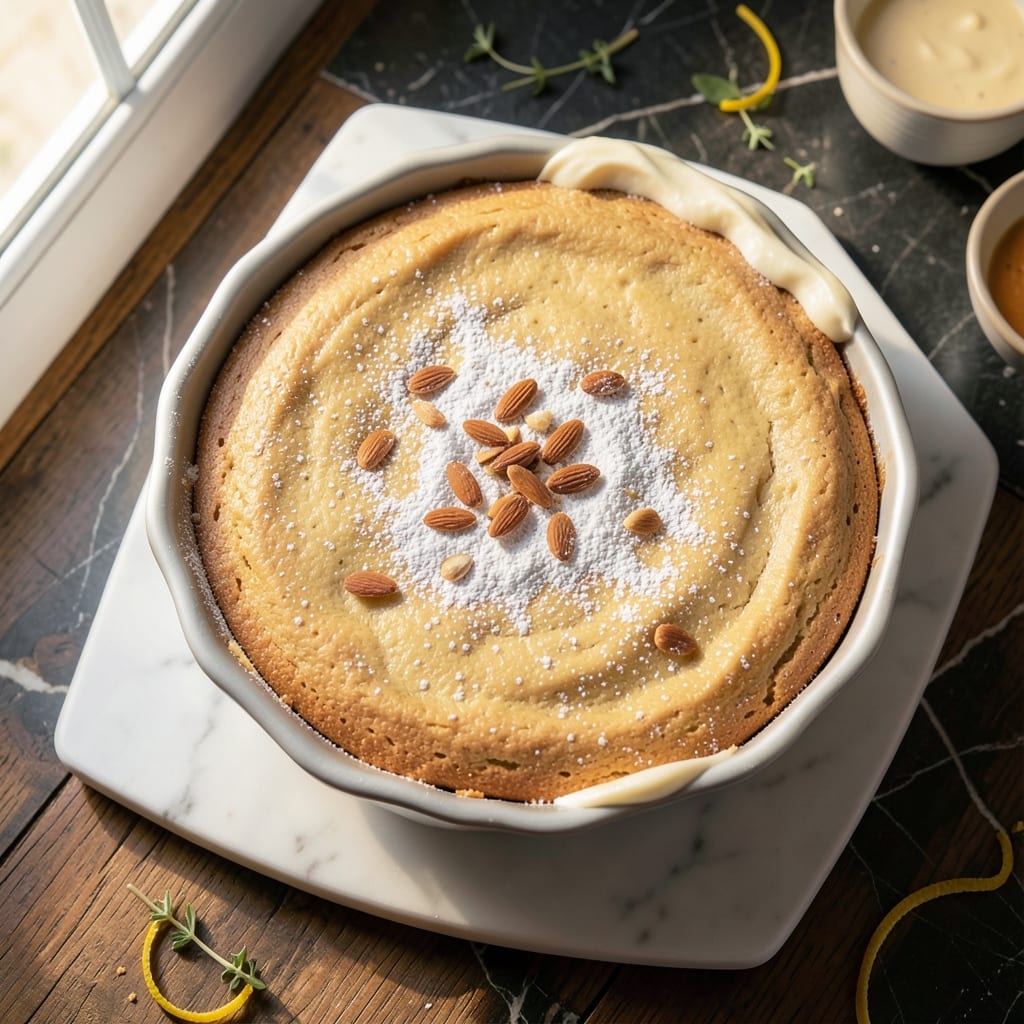
This almond cake pan recipe delivers a perfect balance of buttery crust and nutty swirls in every slice—no fancy equipment required. The secret lies in a rich batter infused with finely ground almonds and a touch of vanilla, all baked to golden perfection in a 9-inch round pan at 350°F. What sets this apart is the way the almonds caramelize slightly during baking, adding depth that store-bought cakes simply can't match.
The process couldn't be simpler: mix your dry ingredients, fold in melted butter and eggs, then pour into a greased pan. Baking takes just 30 minutes, resulting in a cake with a tender crumb and subtle almond flavor that lingers. The real magic happens when you slice into that warm, fragrant cake—each bite reveals a harmonious blend of buttery richness and nutty sweetness.
For an extra touch of elegance, brush the top with a simple glaze or dust with powdered sugar. This cake pairs beautifully with tea, coffee, or even as a standalone dessert. The recipe scales easily, so you can bake one for a special occasion or double it for a crowd—every slice will be a testament to your baking skills.
Whether you're a beginner or an experienced baker, this almond cake is a foolproof way to impress. The key is patience—letting the batter rest before baking ensures a moist, even texture. Once you try it, you'll never go back to store-bought again.
Ingredients for almond cake pan
Buttery richness meets nutty depth in this foolproof almond cake—just 12 ingredients for perfect slices every time.
| Ingredient | Amount | Notes |
|---|---|---|
| All-Purpose Flour 🌾 | 2 cups | Sifted for light texture |
| Almond Flour 🥜 | 1 ½ cups | Finely ground for smooth batter |
| Granulated Sugar 🍚 | 1 ½ cups | White or light brown |
| Unsalted Butter 🧈 | 1 cup | Melted, full-fat preferred |
| Large Eggs 🥚 | 3 whole | Room temperature for even mixing |
| Pure Vanilla Extract 🌿 | 1 tbsp | High-quality for best flavor |
| Baking Powder 🍞 | 1 ½ tsp | Freshly opened for lift |
| Salt 🧂 | ½ tsp | Fine sea salt preferred |
| Almond Slices 🥜 | 1 cup | Thinly sliced for swirls |
| Powdered Sugar 🍚 | ½ cup | For dusting finished cake |
| Milk 🥛 | ½ cup | Whole milk for richness |
| Lemon Zest 🍋 | 1 tbsp | Freshly grated for brightness |
The almond flour is where the magic happens. Bob's Red Mill or King Arthur brands work best—they're finely ground and consistent. If you can't find almond flour, blend whole almonds in a food processor until ultra-fine (about 2 minutes), but sift it well to avoid grittiness. The butter? Full-fat only—low-fat changes the texture. Melt it gently over low heat or microwave it in 20-second bursts. For the almond slices, Trader Joe's has pre-sliced ones that save time, but if you're feeling fancy, thinly slice your own from a whole almond. Look for vibrant, moist almonds—they'll caramelize beautifully during baking.
No almond flour? Substitute with 1 cup extra all-purpose flour plus 1/2 cup ground walnuts—it won't be identical, but you'll still get that nutty flavor. Out of vanilla extract? 1 tsp vanilla sugar works in a pinch (just add it to the dry ingredients). The lemon zest can be skipped, but if you do, add 1/4 tsp extra vanilla to keep things bright. For a richer cake, replace half the milk with heavy cream. And if you're worried about the cake being too dense, whisk the eggs separately before folding them in—this adds lightness. The baking powder is non-negotiable here—old baking powder won't rise properly, so check the expiration date.
This batter keeps best in the fridge for up to 24 hours—just let it sit at room temp for 30 minutes before baking. The cake itself stays moist for 3 days at room temperature, wrapped tightly in plastic. For longer storage, freeze slices individually on parchment paper, then transfer to a bag. Thaw at room temperature for 15 minutes before serving. Pro tip: Brush warm slices with melted butter right after baking—it makes every bite even more decadent. And if you're making it ahead for a party, bake it the day before—flavors develop overnight.
Why You'll Love This Recipe
- No Fussy Mixing: I swear by this recipe because it’s just a few bowls and a whisk—no stand mixer, no overmixing. The almond flour keeps it tender, and the butter-egg combo makes it rise like magic without a lick of effort.
- Rich Without Overpowering: That buttery crumb? Pure comfort. But the almond flour gives it a subtle nuttiness that doesn’t scream "dessert"—just a cake that’s weirdly satisfying with coffee or even breakfast toast.
- Weeknight or Celebration: Same batter, endless uses. Bake it for a lazy Sunday brunch, slice it for a potluck, or pack it in lunchboxes—it holds up like a champ. Honestly, I’ve even used the leftovers as a base for French toast.
- Budget-Friendly Luxury: Almond flour might sound fancy, but you only need a cup, and the rest of the ingredients are pantry staples. Plus, it keeps for days, so one batch stretches further than you’d think—no sad, stale cake here.
Step-by-step instructions for almond cake pan recipe
Here's how to create a luscious almond cake with a buttery crust and nutty swirls.
Prepare the Buttery Crust Layer
In a medium bowl, combine the 1 cup unsalted butter and 1.5 cups granulated sugar. I always use room-temperature butter for this step—it mixes more smoothly and creates a finer texture. Use a hand mixer or stand mixer with the paddle attachment to beat on medium speed for 3-4 minutes until the mixture is light and fluffy, nearly doubling in volume.
Add the 3 whole large eggs, one at a time, mixing well after each addition. Then stir in the 1 tbsp pure vanilla extract and 1 tbsp lemon zest. The zest adds a bright citrus note that cuts through the richness of the butter and almonds. Mix until fully combined, scraping down the sides of the bowl as needed to ensure everything incorporates evenly.
Combine Dry Ingredients for the Base
In a separate large bowl, whisk together the 2 cups all-purpose flour and 1.5 cups almond flour. I like to sift the all-purpose flour first to prevent lumps and ensure a light texture. Add the 1.5 tsp baking powder and 0.5 tsp salt, whisking to distribute evenly throughout the flours.
With the mixer on low speed, gradually add the dry ingredients to the butter mixture. Mix just until combined—you should still see small streaks of flour. Overmixing develops gluten, which can make the cake dense. Once fully incorporated, pour in the 0.5 cup milk and mix until smooth. The batter should be thick but pourable, like a well-made cake batter.
Create the Nutty Swirl Layer
In a small bowl, combine the 1 cup almond slices with 0.5 cup powdered sugar. The powdered sugar helps the almonds stick together and adds a delicate sweetness. Using your hands, gently press the almond slices into a flat layer, about ¼-inch thick. This will form the swirl in the center of your cake.
Place the almond mixture in the center of your 9-inch round cake pan. Then, carefully pour the batter around the edges, creating a ring that leaves the center open for the almond swirl. Use a spatula to gently press down the batter around the almond layer, ensuring good contact for even baking.
Bake to Golden Perfection
Preheat your oven to 350°F and place a rack in the center position. Bake the cake for 45-50 minutes, or until a toothpick inserted into the center comes out clean. The edges should be golden brown, and the top should have a slightly domed appearance. If the top browns too quickly, tent the cake with aluminum foil after 30 minutes to prevent over-browning.
Once baked, remove the cake from the oven and let it cool in the pan for 10 minutes. Then, carefully invert the cake onto a wire rack to cool completely. The almond swirl should hold its shape, creating a beautiful centerpiece. Serve warm or at room temperature, dusted with additional powdered sugar if desired.
Pro Tips For Making Almond Cake Pan
- MEASURE ALMOND FLOUR RIGHT: Spoon it directly from the bag into your measuring cup—don’t scoop. Almond flour packs tighter than regular flour, and you’ll end up with a dry, dense cake if you overfill. Tap the cup gently on the counter to level it off, then sift it with the all-purpose flour to keep the texture light.
- CREAM BUTTER AND SUGAR LONG: Don’t rush this step—beat the butter and sugar for at least 3 minutes until it’s pale and fluffy. I used to cut corners here, and the cake turned out flat and greasy. The extra time incorporates air, which is what makes this cake rise properly.
- DON’T OVERMIX THE BATTER: Once you add the wet ingredients, mix just until combined—about 10-12 strokes. Overmixing develops gluten, and your cake will turn out tough instead of tender. If you’re worried about streaks, fold in the almond flour gently with a spatula.
- BAKE UNTIL THE CENTER HITS 205°F: The cake will look set before it’s fully done—insert a skewer or toothpick in the center. If it comes out with a few moist crumbs but no wet batter, it’s ready. Pulling it too soon makes it gummy, and no one wants that.
Essential equipment for perfect results
Pan Selection Guide
A 9-inch round cake pan is ideal for this recipe—it creates the perfect proportions for slicing and serving. I recommend using a light-colored metal pan (like Wilton Perfect Results or All-Clad Stainless Steel) for even heat distribution. Dark pans can over-brown the edges before the center is fully baked. If you only have a dark pan, reduce the oven temperature by 25°F to prevent burning. Avoid non-stick pans for this recipe—they don’t conduct heat as well, which can lead to uneven baking. 🌟
Greasing Essentials
Grease your pan thoroughly with ½ cup melted butter, then dust with 2 tbsp all-purpose flour (tap out excess). This creates a non-stick barrier that prevents sticking without absorbing too much batter. For extra insurance, I line the pan with parchment paper cut to fit the bottom—just don’t forget to poke a few holes in it to allow steam to escape. If you’re using a springform pan, grease the sides too to ensure easy release. A well-greased pan is the secret to that perfect, clean slice every time.
Oven Prep Tips
Always preheat your oven to 350°F for at least 15 minutes before baking—this ensures even cooking from the start. Place a baking sheet on the rack below your cake pan to catch any drips. For convection ovens, reduce the temperature by 25°F and add 5 minutes to the baking time. If your oven runs hot, tent the cake with aluminum foil after 30 minutes to prevent over-browning. I also recommend using an oven thermometer to verify your oven’s accuracy—many home ovens can be 25-50°F off! 🔥
Alternative Pans
No 9-inch round pan? A 9x9-inch square pan works too—just reduce baking time by 5-7 minutes since it bakes slightly faster. For a bundt pan, increase the batter by 15% and bake for 40-45 minutes. If you’re using a loaf pan, the almond swirl won’t work, but you can fold ½ cup chopped almonds into the batter instead. Always adjust baking times based on your pan’s material—glass takes longer than metal, so check for doneness 5-10 minutes early.
Cooling and Release
Let the cake cool in the pan for 10 minutes before transferring to a wire rack—this prevents cracking. For a springform pan, run a thin knife around the edges to loosen it before releasing. If the cake sticks despite greasing, place the pan in the freezer for 5 minutes to firm up the butter, then try releasing again. A cooling rack is a game-changer—it allows air to circulate evenly, ensuring your cake doesn’t get soggy at the bottom. Pro tip: Brush the warm cake with 1 tbsp melted butter while it’s still in the pan for extra moisture. ✨
Nutrition facts
Frequently asked questions
Can I use a different pan size for this almond cake?
A 9-inch round pan is ideal, but a 9x9-inch square pan works too—just reduce baking time by 5-7 minutes. For a bundt pan, increase batter by 15% and bake for 40-45 minutes. Always adjust based on pan material—glass takes longer than metal, so check for doneness 5-10 minutes early.
Why does my almond cake turn out dense?
Overmixing the batter develops gluten, making the cake dense. Mix dry ingredients just until combined, and avoid overbeating the butter-sugar mixture. Also, ensure your baking powder is fresh—old powder loses lift. For extra lightness, whisk eggs separately before folding them in.
Can I make this cake without almond flour?
Yes! Substitute with 1 cup extra all-purpose flour plus ½ cup ground walnuts for a similar nutty flavor. If you can't find almond flour, blend whole almonds in a food processor until ultra-fine (about 2 minutes) and sift well to avoid grittiness. The texture won’t be identical, but it’ll still taste delicious.
How do I store leftover almond cake?
Wrap the cake tightly in plastic and store at room temperature for 3 days. For longer storage, freeze slices individually on parchment paper, then transfer to a bag. Thaw at room temperature for 15 minutes before serving. Pro tip: Brush warm slices with 1 tbsp melted butter to keep them moist.
Can I bake this cake in a convection oven?
Yes, but reduce the oven temperature by 25°F and add 5 minutes to the baking time. Convection ovens circulate hot air more efficiently, which can cause faster browning. Always use an oven thermometer to verify accuracy—many home ovens are 25-50°F off!