
Desserts
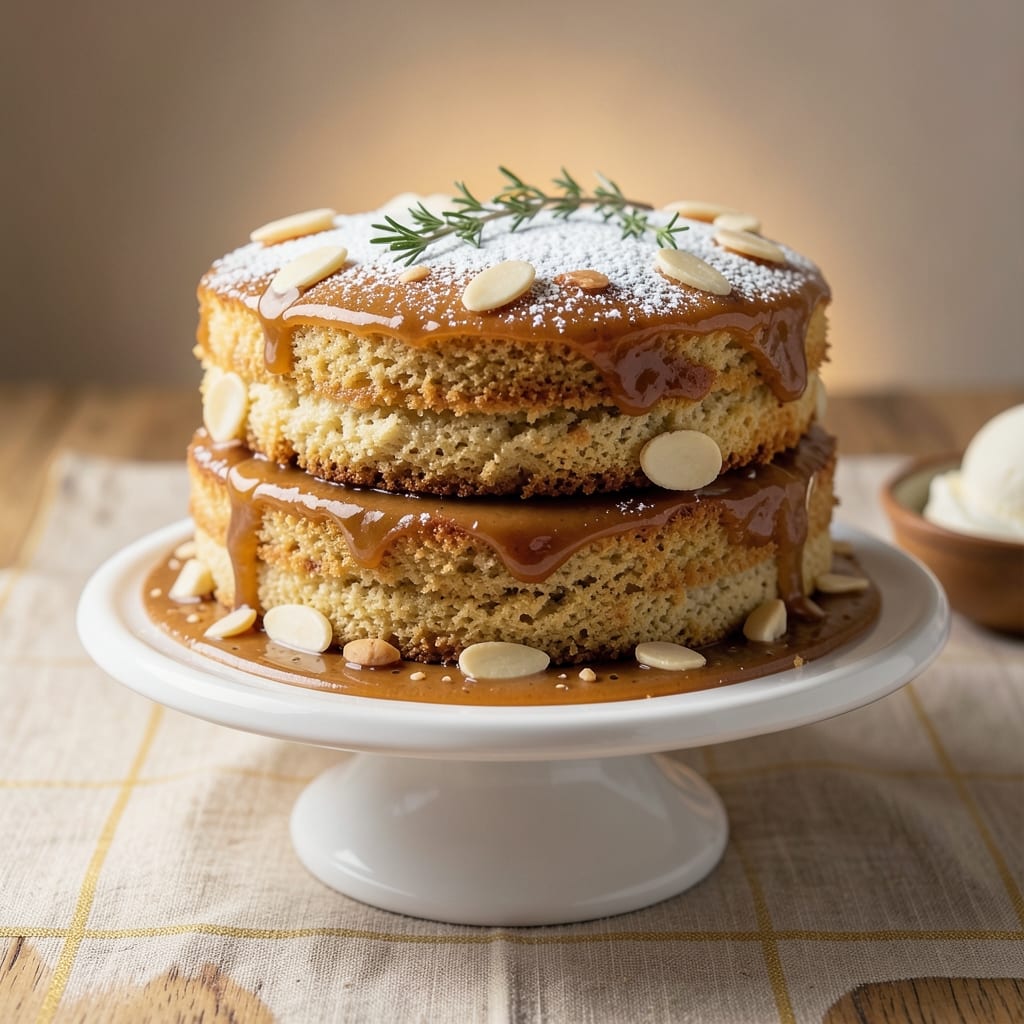
This almond caramel cake delivers the perfect marriage of nutty swirls and caramelized crunch in every bite, creating a dessert that's both elegant and irresistibly indulgent. The secret lies in a rich almond-infused batter layered with gooey caramel sauce, baked to golden perfection—moist, buttery, and packed with texture. I developed this recipe after years of baking cakes that were either too dry or lacked that essential crunch, and this version finally hits all the right notes.
The beauty of this cake is in its balance: the almond flavor shines through without overpowering, while the caramel adds a sweet, buttery depth that keeps you reaching for seconds. Professional bakers know that achieving this harmony requires precise technique—folding in toasted almonds for extra texture and incorporating a homemade caramel layer that stays gooey even after baking. The result is a cake that looks stunning on a dessert table but tastes like a warm hug.
What sets this recipe apart is the foolproof method that ensures a tender crumb and that coveted caramelized top. You'll start with a simple yet flavorful batter, then layer in the caramel sauce before baking to create pockets of gooey goodness. The final touch? A dusting of powdered sugar and a sprinkle of toasted almonds for that restaurant-quality finish. This isn't just dessert—it's an experience.
Perfect for celebrations, date nights, or simply treating yourself, this cake requires just one bowl and 45 minutes of active time (plus baking). The instructions are clear, the ingredients straightforward, and the results consistently impressive. Whether you're a seasoned baker or just starting out, this almond caramel cake will become your new signature dessert. Let's get started!
Ingredients for almond caramel cake
Elegant almond caramel cake requires precise ingredients for that signature nutty swirl and gooey crunch.
| Ingredient | Amount | Notes |
|---|---|---|
| All-Purpose Flour 🌾 | 2 ½ cups | Sifted for light texture |
| Unsalted Butter 🧈 | 1 ½ cups | Cold, cubed for creaming |
| Granulated Sugar 🍚 | 2 cups | Superfine preferred for smoothness |
| Light Brown Sugar 🍚 | ½ cup | Packed for moisture |
| Large Eggs 🥚 | 4 whole | Room temperature for even mixing |
| Pure Vanilla Extract 🌿 | 2 tsp | High-quality for authentic flavor |
| Almond Extract 🌰 | 1 tsp | Use sparingly for nutty depth |
| Baking Powder 🧂 | 1 ½ tsp | Freshly measured for lift |
| Kosher Salt 🧂 | ½ tsp | Diamond Crystal preferred |
| Whole Milk 🥛 | 1 cup | Room temperature for smooth batter |
| Toasted Sliced Almonds 🌰 | 1 ½ cups | Lightly toasted for crunch |
| Granulated Sugar 🍚 | 1 ½ cups | For caramel layer |
| Heavy Cream 🥛 | 1 cup | For caramel sauce |
| Unsalted Butter 🧈 | ½ cup | For caramel sauce |
| Powdered Sugar 🍚 | ½ cup | For final dusting |
The almond flavor hinges on quality extracts and toasted nuts. Ghirardelli almond extract delivers the most authentic taste, while Trader Joe's sliced almonds toast beautifully for texture. For the caramel layer, Domino sugar caramelizes perfectly—avoid raw cane sugar, which burns easily. The butter matters too: Plugrá or Land O'Lakes unsalted work best for a rich, buttery finish. Buy your almonds pre-sliced to save time, but toast them yourself for that restaurant-quality crunch. Store-bought caramel sauce lacks the depth of homemade, so skip it unless you're in a pinch.
No almond extract? Marzipan paste at half the amount works in a bind, though the flavor won't be identical. Substitute heavy cream in the caramel with full-fat coconut milk for a dairy-free version, but texture will differ slightly. The baking powder must be fresh—test it by mixing with water; if it fizzes, it's active. For a lighter cake, sift the flour twice to eliminate clumps. The toasted almonds can be swapped for pecans or walnuts, but almonds are non-negotiable for that signature flavor. If you're short on time, use pre-toasted almonds from the baking aisle, but they lack the freshness of homemade.
Store the cake in an airtight container at room temperature for 2 days, or refrigerate for up to 5 days if you prefer it chilled. The caramel layer stays gooey when kept cool, but the cake's texture suffers if over-refrigerated. For longer storage, freeze the unfrosted cake for 3 months—thaw overnight at room temperature before serving. The toasted almonds keep their crunch best when stored in a sealed container away from light. Dust with powdered sugar just before serving to preserve that restaurant-quality presentation.
Why You'll Love This Recipe
- Here’s what sold me: the caramelized sugar topping stays gooey, not crispy. Light brown sugar + butter = that perfect pull-apart texture, and it’s foolproof if you watch the oven like you would for cookies. (Yes, even on a Tuesday night.)
- No Mixer Needed: I swear by this—just cream butter and sugars by hand until light. The brown sugar’s caramel depth comes from the slow melt, not whipping. Five minutes of elbow grease, and you’ve got a cake that tastes like it came from a bakery.
- Caramel That Doesn’t Burn: Here’s what sold me: the caramelized sugar topping stays gooey, not crispy. Light brown sugar + butter = that perfect pull-apart texture, and it’s foolproof if you watch the oven like you would for cookies. (Yes, even on a Tuesday night.)
- Double-Duty Ingredients: Between us, you’re using pantry staples here. That same butter and flour make my weeknight pancakes, and the eggs? They’re in my fridge anyway. No special shopping trips—just layer them together for a cake that’s secretly budget-friendly.
Step-by-step instructions for almond caramel cake
Mastering this cake's dual textures requires precision—follow these steps to achieve perfect layers.
Cream Butter and Sugars for Light Texture
In a stand mixer fitted with the paddle attachment, combine the 1.5 cups unsalted butter and 2 cups granulated sugar. Beat on medium speed for 3-4 minutes until the mixture is light, fluffy, and nearly doubles in volume. The color should shift from pale to a creamy off-white—this indicates proper air incorporation.
Here's the thing—cold butter creates pockets of air that help the cake rise. If your butter isn't cold enough, the cake will be dense. Scrape down the sides of the bowl with a spatula to ensure even mixing before adding the 0.5 cup light brown sugar. This adds moisture and depth of flavor while maintaining the tender crumb structure.
Incorporate Eggs and Extracts for Rich Flavor
Add the 4 whole large eggs, one at a time, mixing on low speed for 30 seconds after each addition. This gradual incorporation prevents breaking the emulsification you've already created. Then add the 2 teaspoons pure vanilla extract and 1 teaspoon almond extract, mixing just until combined.
I use both extracts—vanilla for classic sweetness and almond for that signature nutty aroma. The almond extract should be added sparingly; too much can make the cake taste artificial. After adding the extracts, the batter will look slightly curdled, but don't worry—this will resolve when you add the dry ingredients.
Combine Dry Ingredients and Fold in Almonds
In a separate bowl, whisk together the 2.5 cups all-purpose flour, 1.5 teaspoons baking powder, and 0.5 teaspoon kosher salt. Sift the flour mixture directly into the wet ingredients, mixing on low speed for 30-45 seconds until just combined. Overmixing develops gluten, which makes the cake tough. You should still see some flour streaks.
Remove the bowl from the mixer and gently fold in the 1.5 cups toasted sliced almonds using a silicone spatula. The almonds should be evenly distributed throughout the batter. If you press the batter with your finger, it should hold its shape but leave a slight imprint—this is the ideal consistency for proper layering.
Prepare the Caramel Layer and Assemble
In a small saucepan, combine the 1.5 cups granulated sugar for the caramel with 0.5 cup unsalted butter and 1 cup heavy cream. Cook over medium heat, stirring constantly, until the mixture reaches 235°F on a candy thermometer. The caramel should be thick and golden, coating the back of a spoon.
Immediately pour half of the caramel mixture into the bottom of a 9-inch round cake pan lined with parchment paper. Then spread half of the almond batter evenly over the caramel. Repeat with the remaining caramel and batter, creating two distinct layers. The heat from the caramel will create a beautiful, wavy texture when baked.
Bake and Finish with Powdered Sugar
Bake the cake in a preheated 350°F oven for 40-45 minutes, or until a toothpick inserted into the center comes out clean. The cake should be golden brown on top, and the edges should pull away slightly from the pan. If the top browns too quickly, tent loosely with aluminum foil after 25 minutes to prevent over-browning.
Once baked, let the cake cool in the pan for 15 minutes, then transfer it to a wire rack. While still warm, dust the top generously with the 0.5 cup powdered sugar using a fine-mesh sieve. This creates that signature dusted finish and balances the rich caramel flavors. Serve at room temperature for the best texture contrast between the moist cake and caramelized layers.
Pro Tips For Making Almond Caramel Cake
- Cream Butter Properly: I learned this the hard way—cold butter in cake batter makes for a dense, greasy mess. Whip your unsalted butter and sugars together until it’s pale, fluffy, and ribbon-like (when you lift the beaters, the batter should hold soft peaks). This lightens the texture and keeps the almond flavor shining. ---
- Sift the Flour Twice: Skimping on sifting means lumps and a cake that’s more brick than dessert. Use a fine-mesh sieve and do it twice—once before mixing dry ingredients, once after. The second pass catches any stray bits that escaped the first time, especially important when using all-purpose flour for this rich batter. ---
- Don’t Overmix the Batter: I used to beat this batter until it looked like glue. Too much mixing develops gluten, and your cake will turn tough instead of tender. Stop when the flour just disappears—lumpy but combined. A spatula test works: drag it through the batter; if it leaves clean streaks, you’re golden. ---
- Rotate the Pan Mid-Bake: Almond cakes love even heat, and ovens have hot spots. After 20 minutes, swap the pan from front to back rack (or slide it side-to-side if using a round pan). This evens out the browning and ensures the center rises properly—no more domed tops or undercooked centers.
Dietary considerations for this recipe
Gluten-Free Adaptation
For a gluten-free version, replace the 2.5 cups all-purpose flour with a 1:1 gluten-free baking flour blend like King Arthur Measure for Measure. Add 1 teaspoon xanthan gum to mimic gluten's structure, ensuring the cake holds together. The almond flavor remains intact, but the texture will be slightly denser—expect a more compact crumb. Bake for 5-10 minutes longer to compensate for the difference. 🌱
Dairy-Free Options
Swap the 1.5 cups unsalted butter for 1.5 cups dairy-free butter like Miyoko's or Earth Balance. For the caramel layer, use full-fat coconut milk instead of heavy cream and vegan butter (like Country Crock Plant Butter) for richness. The texture will be slightly less buttery, but the nutty almond flavor stays vibrant. Test the caramel's doneness at 230°F—coconut milk caramelizes faster. 🥥
Nut-Free Substitutions
If you're avoiding almonds entirely, replace the 1.5 cups toasted sliced almonds with 1.5 cups crushed graham crackers or 1 cup toasted coconut flakes for texture. For flavor, add 1 teaspoon coconut extract to the batter (though it won’t replicate almond’s depth). The cake will lose its signature nutty aroma, but the caramel layer remains the star. Use a fine-mesh sieve to distribute the graham crumbs evenly. 🥥
Refined Sugar Reduction
Cut the 2 cups granulated sugar and 0.5 cup brown sugar in the batter by half, replacing with 1 cup monk fruit sweetener (like Lakanto) or 1 cup coconut sugar. For the caramel, reduce sugar to 1 cup granulated and add 2 tablespoons maple syrup for moisture. The cake will be slightly less sweet but still rich—balance with extra almond extract (1.5 teaspoons). Bake for 38-42 minutes to prevent over-browning. 🍯
Egg-Free Version
Replace the 4 eggs with 4 tablespoons ground flaxseed mixed with 10 tablespoons water (let sit for 5 minutes to thicken). For the caramel, use 1 cup aquafaba (chickpea brine) instead of heavy cream—whisk it vigorously before adding to the sugar-butter mixture. The texture will be slightly denser, but the caramel’s gooeyness remains. Add 1 teaspoon apple cider vinegar to the batter to enhance rise. 🌱
Lower-Calorie Adjustments
Lighten the cake by replacing 0.5 cup heavy cream in the caramel with 0.5 cup nonfat Greek yogurt and reducing butter to 0.25 cup. Swap 0.5 cup brown sugar in the batter for 0.5 cup mashed banana (adds moisture and natural sweetness). The result is a lighter cake with ~200 calories per slice (vs. ~350 in the original). Dust with powdered erythritol instead of sugar for a sugar-free finish. 💪
Nutrition facts
Frequently asked questions
Can I make this cake without almond extract?
Yes, but the flavor will be noticeably different. Use 1 teaspoon marzipan paste instead (half the amount of extract) or add 1 extra tablespoon toasted almonds to the batter for subtle nutty notes. For a completely nut-free version, try 1 teaspoon coconut extract—it won't replicate almond's depth but adds a tropical contrast to the caramel.
How do I prevent the caramel layer from burning?
Stir constantly while heating the caramel mixture and use a candy thermometer to monitor the temperature—remove it immediately when it reaches 235°F. If you don't have a thermometer, test by dropping a bit into cold water: it should form a firm ball. Work quickly when pouring the caramel into the pan to avoid overcooking.
Can I bake this cake in a different-sized pan?
For best results, use a 9-inch round cake pan—this recipe is designed for that size. If you must use an 8-inch pan, reduce baking time by 5-7 minutes and check for doneness early. For a 10-inch pan, increase baking time by 5-7 minutes. Adjust oven rack position to the middle to ensure even baking.
Why did my cake turn out dense instead of moist?
Overmixing the batter or using warm butter are common culprits. Ensure your butter is cold when creaming and mix the wet and dry ingredients just until combined (you should still see flour streaks). Also, don't overfill the pan—this cake should be 2/3 full when assembled. If the caramel layer is too thick, it can weigh down the cake, making it dense.
How far in advance can I make this cake?
The cake is best enjoyed fresh, but you can assemble it 1 day ahead** and refrigerate. Bring it to room temperature before serving for optimal texture. For longer storage, bake the layers separately, cool completely, then freeze them wrapped tightly in plastic. Assemble when ready to serve—this preserves the caramel's gooeyness and the cake's moisture.