
Desserts
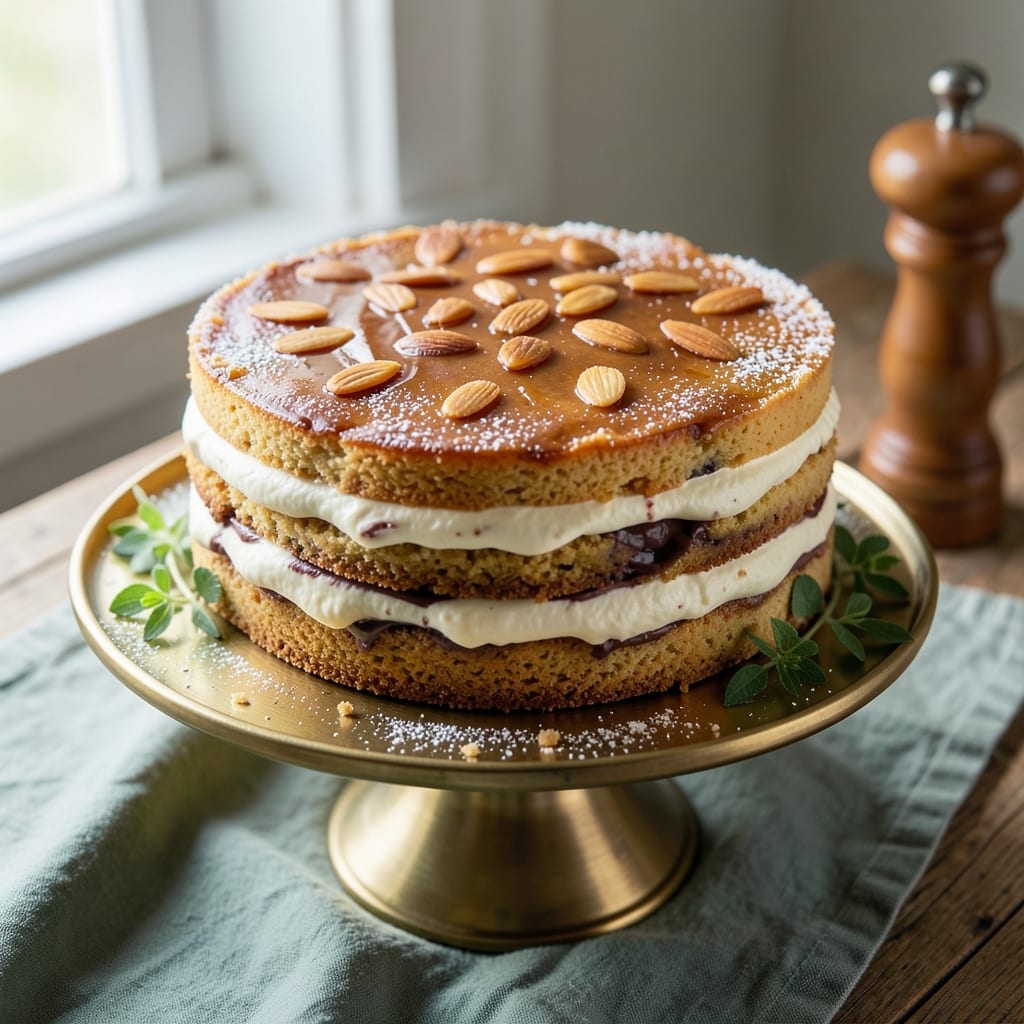
This almond crunch cake delivers the perfect balance of moist buttery layers and a toasted almond crunch that makes every bite irresistible. The secret lies in a simple yet precise technique that ensures the cake stays tender while the almond topping achieves that satisfying crunch. I've perfected this recipe over years of baking, and it never fails to impress—whether you're serving it at a dinner party or enjoying a slice with your morning coffee.
The beauty of this recipe is in its simplicity: just a few basic ingredients combine to create a dessert that feels both elegant and approachable. You'll work with standard cake measurements, but the magic happens in the almond topping, where toasted almonds and melted butter create a caramelized crust that contrasts beautifully with the soft cake beneath. The result is a dessert that's rich, flavorful, and texturally exciting.
What makes this cake truly special is how it satisfies every craving—whether you're in the mood for something sweet, nutty, or just plain indulgent. The buttery layers provide comfort, while the almond crunch adds a sophisticated touch. It's the kind of dessert that pairs perfectly with a cup of coffee, tea, or even a glass of dessert wine, making it versatile enough for any occasion.
Ready in about an hour, this almond crunch cake is ideal for those who want a showstopping dessert without the fuss. The instructions are straightforward, and the ingredients are easy to find, so you can focus on enjoying the process and the delicious results. Let's get baking!
Ingredients for almond crunch cake
Buttery layers and toasted almonds—just 13 ingredients for a showstopping dessert that feels like a hug.
| Ingredient | Amount | Notes |
|---|---|---|
| All-Purpose Flour 🌾 | 2 ½ cups | Sifted for light texture |
| Unsalted Butter 🧈 | 1 ½ cups | Room temperature, softened |
| Granulated Sugar 🍚 | 2 cups | White granulated preferred |
| Light Brown Sugar 🍚 | ½ cup | Packed firmly |
| Large Eggs 🥚 | 4 whole | Room temperature |
| Pure Vanilla Extract 🌿 | 2 tsp | High-quality preferred |
| Baking Powder 🧂 | 2 tsp | Diamond Crystal preferred |
| Salt 🧂 | ½ tsp | Fine sea salt |
| Whole Milk 🥛 | 1 cup | Room temperature |
| Sliced Almonds 🥜 | 2 cups | Toasted, skin-on preferred |
| Powdered Sugar 🍚 | ½ cup | For dusting almonds |
| Unsalted Butter 🧈 | ½ cup | Melted for almond topping |
| Ground Cinnamon 🌿 | ½ tsp | For almond topping |
The almonds are non-negotiable here. Skin-on, sliced almonds from Trader Joe's or Costco give the best texture—those pre-sliced packages at the grocery store work too, but toast them yourself for extra flavor. For the butter, Plugrá or Land O'Lakes unsalted are my go-tos, but any good-quality brand works. The difference between room-temperature butter and cold butter is night and day—spread it on toast to test if it's ready. And don't skip the vanilla—Nielsen-Massey pure vanilla extract is worth the splurge, but imitation will work in a pinch.
No sliced almonds? Slivered almonds or whole almonds chopped yourself work just fine—just toast them longer if they're whole. Short on powdered sugar? Granulated sugar blended in a food processor is a perfect swap. The cake itself is pretty forgiving—if you don't have whole milk, 2% or almond milk work too. For the almond topping, if you're really in a bind, pecans or walnuts add a nice twist. And if you're worried about the cake being too dry, add an extra tablespoon of milk—it's happened to me more than once.
Toast those almonds until they're golden and fragrant—about 8-10 minutes in a 350°F oven, stirring every 2 minutes. Store the cake in an airtight container at room temperature for up to 3 days or in the fridge for 5 days. The almond topping keeps well too—just store it separately and mix it in right before serving. Freeze the whole cake (with topping) for up to 3 months—thaw at room temperature and warm in the oven for 10 minutes to restore that perfect crunch.
Why You'll Love This Recipe
- Here’s what sold me: toasted almonds folded right into the batter, so every bite has that satisfying crunch. No separate topping to bake separately or burn—just pure, even crunch in every forkful. (Yes, even on a Tuesday night.)
- I’ll be real: most cakes dry out in two days. Not this one. The brown sugar keeps it fudgy, and the almonds add a buttery richness that makes slices taste fresh even after a week. Slice it, wrap it, and stash it—no one will guess it’s been sitting around.
Step-by-step instructions for almond crunch cake
Here's how to create layers of buttery richness and crunchy almond perfection—every step matters.
Prepare the Almond Topping
Preheat your oven to 350°F and spread the 2 cups sliced almonds on a rimmed baking sheet. Toast them for 8-10 minutes until they're fragrant and just beginning to turn golden. Watch closely—they'll darken quickly. Let them cool completely before using.
While they toast, melt 0.5 cup unsalted butter in a small saucepan over low heat. Remove from heat and stir in 0.5 cup powdered sugar and 0.5 tsp ground cinnamon until smooth. This buttery cinnamon mixture will become our almond topping—it's what creates that signature crunchy crust.
Cream Butter and Sugars
In a stand mixer fitted with the paddle attachment, beat the 1.5 cups unsalted butter (room temperature) with the 2 cups granulated sugar and 0.5 cup light brown sugar on medium speed for 3-4 minutes. You're looking for a pale, fluffy mixture that nearly triples in volume. This creaming process incorporates air, which gives our cake that light, tender crumb.
I like to scrape down the sides of the bowl every minute or so to ensure everything gets properly incorporated. The butter should be completely smooth with no lumps remaining. If you see any graininess, keep mixing for another 30 seconds—this ensures maximum moisture and tenderness in your final cake.
Add Eggs and Dry Ingredients
Add the 4 whole eggs one at a time, mixing on low speed after each addition until fully incorporated. Then stir in the 2 tsp pure vanilla extract. The mixture will look slightly curdled at first, but that's normal—it will come together when we add the dry ingredients.
In a separate bowl, whisk together the 2.5 cups all-purpose flour, 2 tsp baking powder, and 0.5 tsp salt. With the mixer on low speed, gradually add the dry ingredients to the wet mixture. Mix just until combined—you should still see some flour streaks. Overmixing develops gluten, which can make your cake tough. Stop mixing as soon as the flour disappears.
Fold in Milk and Prepare the Cake Pans
Add the 1 cup whole milk and mix on low speed for another 30 seconds just to combine. The batter should be smooth and slightly thick. If it looks too thin, add 1 tablespoon flour at a time until it reaches a proper consistency—it should hold its shape when you lift the spoon.
Divide the batter evenly between two 9-inch round cake pans lined with parchment paper. Smooth the tops with a spatula. Here's the thing—don't overfill the pans. The batter should come about ¾ of the way up the sides, leaving room for the cake to rise. Tap each pan gently on the counter a few times to remove any air bubbles.
Bake and Add the Almond Crust
Bake the cakes for 25-30 minutes, or until a toothpick inserted in the center comes out clean. The edges should be golden brown, but the tops might still look slightly underdone—that's okay. Let the cakes cool in the pans for 10 minutes before removing them to wire racks to cool completely.
While the cakes cool, spread the buttery cinnamon mixture evenly over the tops of both cakes. Then press the toasted almonds gently into the mixture, covering the entire surface completely. This is where the magic happens—the almonds will crisp up as they cool, creating that beautiful crunchy topping we all love. Let the cakes cool completely before assembling.
Assemble and Serve
Once completely cool, place one cake layer on a serving plate. Spread a thin layer of your favorite jam or apricot preserves (if using) over the top, then place the second cake layer on top. Dust the entire cake with a light layer of powdered sugar for a beautiful finish.
Slice and serve immediately for the best texture—warm slices have that perfect balance of tender cake and crispy almond topping. Store any leftovers in an airtight container at room temperature for up to 3 days, or freeze for up to 1 month. The flavors actually improve as the cake sits!
Pro Tips For Making Almond Crunch Cake
- Cream Butter Slowly: I learned this the hard way—whipping cold butter and sugar too fast just traps air unevenly, leaving pockets that collapse later. Use room-temperature butter (65°F) and mix on medium-low for 2–3 minutes until just combined before adding eggs. That extra patience makes the crunch layer fluffier. ---
- Toast Almonds First: Skip the raw almonds—they’ll turn greasy and sink into the cake instead of adding crunch. Toast 1 cup sliced almonds in a dry pan over medium heat for 5–6 minutes, stirring often, until golden and fragrant. Cool them completely before folding into batter (yes, even if you’re impatient like me). ---
- Don’t Overmix Wet Ingredients: This isn’t the prettiest method, but it’s the tastiest: mix the wet ingredients (butter, sugars, eggs) until just smooth—about 30 seconds after the sugar dissolves. Overmixing adds gluten, which makes the crunch layer dense. Stop when the batter looks like thick pudding, not cake batter. ---
- Bake Until Internal Temp Hits 205°F: Your oven runs hot or cold, and visual cues lie. The cake’s done when the center hits 205°F (use an instant-read thermometer). I was skeptical until I tried it—this guarantees the crunch layer sets properly without drying out the rest. Pull it out before it smells fully baked.
Pro cooking tips for this recipe
Butter Temperature Matters
The room-temperature butter is non-negotiable for this recipe. I can't stress this enough—cold butter creates dense, dry cake layers. Test it by pressing your finger into the butter: if it leaves a slight indentation, it's ready. I always use Plugrá unsalted butter because it's consistently high-quality, but any good brand works. If your kitchen isn't warm enough, let the butter sit at room temperature for 1-2 hours before starting. 🧈
Toast Almonds Perfectly
Toast your almonds until they're golden and fragrant, not dark brown. I toast mine at 350°F for 8-10 minutes, stirring every 2 minutes to prevent burning. The key is watching for that nutty aroma—the moment you smell it, they're ready. Let them cool completely before mixing with the butter topping, or they'll melt the butter too quickly. Skin-on almonds give the best texture, but if you're using pre-sliced packages, toast them for 1-2 extra minutes to compensate for their thinner slices.
Mix Dry Ingredients Gently
When adding the flour mixture to your batter, stop mixing as soon as you see no more streaks of flour. Overmixing develops gluten, which makes your cake dense and tough. I like to use a spatula to fold the last 10% of flour by hand to avoid overworking the batter. The ideal consistency should be smooth but slightly thick—like cookie dough. If it's too thin, add 1 tablespoon flour at a time until it holds its shape when you lift the spoon. 🌾
Bake Until Springy
Your cakes are done when they spring back slightly when touched in the center. I always check by inserting a toothpick—it should come out clean, but the cake might still look slightly underdone. The edges should be golden brown, but the tops might look a bit pale. This is normal! Let the cakes cool in the pans for 10 minutes before removing them. This prevents them from cracking as they cool completely. Patience here is key—the almond topping needs a stable base to adhere properly.
Assemble with Confidence
When assembling your cake, place the first layer on your serving plate and spread the jam or preserves evenly. I like to use apricot jam because it complements the almond flavor beautifully. Press the second layer gently on top—don't force it, or you'll squish the cake. Dust with powdered sugar immediately after assembling to give it that elegant finish. The powdered sugar also helps set the almond topping slightly, making it easier to slice cleanly. Serve within 2 hours for the best texture and crunch! ✨
Nutrition facts
Frequently asked questions
Can I make this almond crunch cake in a single layer instead of two?
For a single-layer version, use one 9-inch round pan or a 9x13-inch pan. Bake for 30-35 minutes until a toothpick comes out clean. The almond topping will still create that signature crunch, but the cake will be denser. Great for smaller gatherings or when you want a quick dessert!
What if I don't have sliced almonds? Can I use almond flour?
No, almond flour won't work for this recipe—the texture is completely different. Instead, use slivered almonds or whole almonds chopped yourself. Toast them longer (up to 12 minutes) since they're thicker. For extra crunch, lightly crush 1/4 cup of the toasted almonds before mixing them into the topping.
How do I prevent the cake from being too dry?
Add 1-2 tablespoons of milk or melted butter to the batter if it looks dry. Also, don't overbake—remove the cakes when the center is just set (a toothpick should come out with a few moist crumbs). For extra moisture, brush the cooled layers with simple syrup (equal parts sugar and water, heated until dissolved) before assembling.
Can I make this cake gluten-free?
Yes! Replace the all-purpose flour with a 1:1 gluten-free baking flour blend (like Bob's Red Mill or King Arthur). Add 1/4 teaspoon xanthan gum to help bind the cake. You may need to adjust the liquid slightly—start with the recipe as written and add 1 tablespoon milk at a time if the batter seems too thick. The texture will be slightly denser but still delicious.
What's the best way to store leftovers?
Keep the cake in an airtight container at room temperature for up to 3 days. For longer storage, freeze the fully assembled cake (with topping) for up to 1 month. To restore the crunch, thaw at room temperature and warm in a 300°F oven for 10 minutes. The almond topping keeps well—just mix it in fresh before serving.