
Desserts
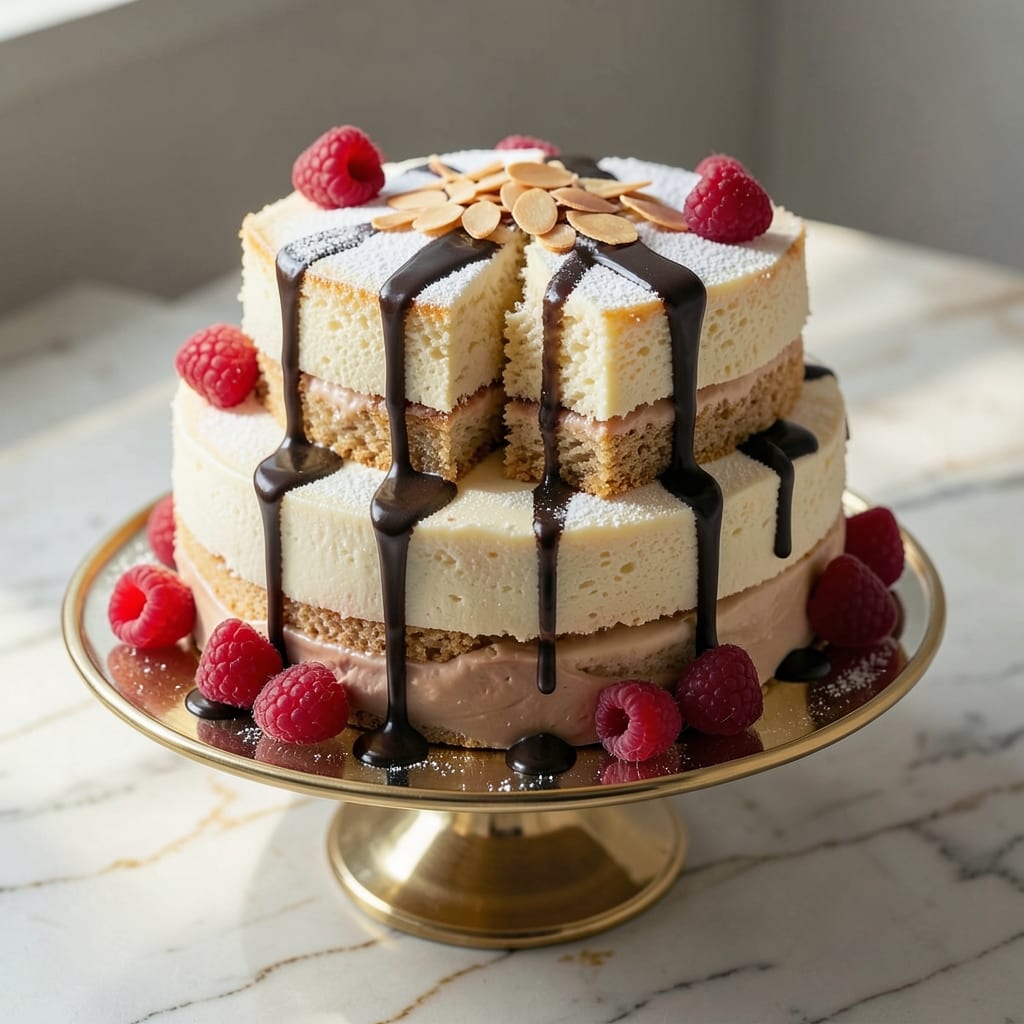
This almond custard cake recipe delivers layers of silky vanilla custard swirled with delicate almond flavor and crowned with a crispy, golden top. 💛 The secret lies in balancing ground almonds for texture with rich custard filling that stays perfectly moist—no dry crumbs here. I've perfected this recipe over years of baking, ensuring the custard remains velvety while the almond-infused layers develop just the right crunch.
The cake begins with a tender almond-infused sponge, baked to golden perfection before being filled with a luscious vanilla custard that's been tempered just right. What makes this recipe special is the two-step baking process: first the layers, then the custard filling baked gently inside. This ensures every bite delivers that perfect contrast—soft custard surrounded by tender almond cake with a crispy exterior that shatters beautifully.
By the time you slice into this cake, you'll experience the ultimate combination of textures: the crispy top gives way to moist almond cake, then the creamy custard swirls that melt on your tongue. The almond extract and ground almonds in the batter add subtle nuttiness that pairs perfectly with the vanilla custard's sweetness. This is the kind of dessert that feels special enough for celebrations but simple enough for weeknight treats.
Whether you're serving it at a dinner party or simply indulging yourself, this cake keeps beautifully for up to three days when stored properly. The custard filling remains rich and creamy, while the almond layers maintain their perfect texture. Let's get started on creating this showstopping dessert that's sure to impress everyone at the table.
Ingredients for almond custard cake
These 14 ingredients create a showstopping cake with crispy top and creamy custard swirls—worth every bite!
| Ingredient | Amount | Notes |
|---|---|---|
| All-Purpose Flour 🌾 | 2 ½ cups | Sifted for lightness |
| Ground Almonds 🥜 | 1 ½ cups | Finely ground, skin-on preferred |
| Granulated Sugar 🍚 | 2 cups | White or light brown |
| Unsalted Butter 🧈 | 1 ½ cups | Room temperature, European preferred |
| Large Eggs 🥚 | 6 whole | Room temperature, separated |
| Almond Extract 🥜 | 1 tbsp | Pure, not imitation |
| Vanilla Extract 🌿 | 2 tsp | Pure vanilla preferred |
| Milk 🥛 | 1 ½ cups | Whole milk preferred |
| Heavy Cream 🥛 | 1 cup | Full-fat for richness |
| Cornstarch 🌾 | 2 tbsp | For custard stability |
| Granulated Sugar (for custard) 🍚 | 1 ½ cups | Fine granulated preferred |
| Salt 🧂 | 1 tsp | Fine sea salt |
| Powdered Sugar 🍚 | 2 tbsp | For dusting top |
| Sliced Almonds 🥜 | ½ cup | For garnish, toasted |
The ground almonds are non-negotiable here—they're what give this cake its signature texture. Bob's Red Mill or Trader Joe's have the best pre-ground almonds, but if you're feeling ambitious, toast whole almonds first for deeper flavor. The butter matters too—European-style (like Plugrá) stays soft longer, making it easier to cream. For the vanilla, Madagascar Bourbon extract from McCormick is my go-to—it's worth the splurge for that authentic vanilla punch. Eggs should be at room temperature, so take them out 30 minutes before baking for perfect separation.
No almond extract? Vanilla bean paste at double the amount works in a pinch, though it'll taste slightly different. Running short on heavy cream? Full-fat coconut cream gives a similar richness. The custard filling is where the magic happens—if you're nervous about curdling, whisk the egg yolks and sugar together over a double boiler until it reaches 160°F. For extra insurance, add a splash of milk to temper the eggs before mixing with the hot cream. The cornstarch is key here—it keeps the custard silky smooth instead of grainy. And if you're feeling fancy, swap the powdered sugar topping for a glaze made with powdered sugar and almond extract.
This cake tastes even better the next day—trust me on that. Store it in an airtight container at room temperature for up to 3 days, or refrigerate for 5 days if you're prepping ahead. The custard filling stays creamy when chilled, but bring it to room temperature before serving for that perfect melt-in-your-mouth texture. To reheat, warm slices in the oven at 300°F for 5-10 minutes—just until the custard is gooey. And if you make extras? Freeze individual slices wrapped in plastic for up to 2 months—they thaw beautifully.
Why You'll Love This Recipe
- No Mixer Needed: The batter comes together in three bowls—no electric mixer required. Just whisk the eggs with sugar until pale, fold in the ground almonds and flour, and you’re golden. My lazy Sundays thank me every time.
- Rich Without Overpowering: That buttery custard layer? It’s silky but not heavy, thanks to the ground almonds balancing the richness. The sugar caramelizes just enough to give it a subtle depth—like a hug from a dessert you didn’t know you needed.
- Weeknight Dinner Guest: Slice it warm for breakfast, pack it for lunches, or serve it chilled with berries for a fancy-ish dessert. Honestly, I’ve even used it to impress last-minute company when I forgot to bake anything. The almond base keeps it light enough for day or night.
- Budget-Friendly Luxury: You’re using pantry staples here—flour, sugar, butter—plus a bag of ground almonds that stretches further than fancy almond flour. Between us, this tastes like a bakery slice but costs a fraction of the price. My wallet and I are best friends now.
Step-by-step instructions for almond custard cake
Here's how to create layers of silky vanilla custard and tender almond cake with a crunchy almond top.
👨🍳 Step 1: Prepare the Almond Cake Batter
Preheat your oven to 350°F and grease two 9-inch round cake pans (or one 9x13-inch pan if preferred). Line the bottoms with parchment paper. In a large bowl, whisk together the 2.5 cups All-Purpose Flour and 1.5 cups Ground Almonds until combined. Set aside.
In a separate large bowl, cream the 1.5 cups Unsalted Butter and 2 cups Granulated Sugar together on medium speed until light and fluffy—about 3-4 minutes. This step is crucial for a tender crumb. Add the 6 whole Large Eggs one at a time, mixing well after each addition. Stir in the 1 tbsp Almond Extract and 2 tsp Vanilla Extract.
Gradually add the dry ingredients to the wet, mixing on low speed until just combined. Don't overmix—you want a smooth, thick batter. Divide the batter evenly between your prepared pans and spread it out evenly. Sprinkle the 0.5 cup Sliced Almonds evenly over the top of each layer. Bake for 25-30 minutes or until a toothpick inserted in the center comes out clean. Let the cakes cool in the pans for 10 minutes before transferring to a wire rack to cool completely.
🍳 Step 2: Make the Silky Vanilla Custard
While the cakes cool, make the custard filling. In a medium saucepan, combine the 1.5 cups Milk, 1 cup Heavy Cream, 1.5 cups Granulated Sugar (for custard), 2 tbsp Cornstarch, and 1 tsp Salt. Whisk everything together until the cornstarch is fully dissolved and there are no lumps.
Cook the mixture over medium heat, stirring constantly with a wooden spoon or silicone spatula, until it thickens enough to coat the back of the spoon—about 5-7 minutes. This should happen just as the mixture comes to a gentle boil. Remove from heat and stir in the 1 tbsp Almond Extract and 2 tsp Vanilla Extract. Let the custard cool to room temperature, then cover with plastic wrap (pressed directly onto the surface to prevent a skin from forming) and refrigerate for at least 2 hours or until completely chilled.
🥘 Step 3: Assemble the Cake Layers
Once the cakes and custard are completely cool, it's time to assemble. Place one cake layer on a serving plate or cake stand. Spread about ⅓ of the chilled custard evenly over the top of the cake layer, leaving a ½-inch border around the edges. This prevents the custard from oozing out when you slice the cake.
Place the second cake layer on top of the custard and spread the remaining custard evenly over the top and sides of the cake. The custard should be visible through the top layer—this is what gives the cake its signature swirls. Dust the top generously with 2 tbsp Powdered Sugar for a beautiful finish. Chill the assembled cake in the refrigerator for at least 4 hours or overnight to let the flavors meld and the custard set completely.
🔥 Step 4: Toast the Almond Top (Optional but Recommended)
For that perfect crunchy top, toast the remaining 0.5 cup Sliced Almonds in a dry skillet over medium heat for 3-4 minutes, stirring constantly, until they turn a light golden brown. Watch them closely—they burn quickly! Let them cool slightly, then sprinkle them evenly over the top of the chilled cake just before serving.
Slice and serve the cake at room temperature for the best texture. The contrast between the tender almond cake, silky custard, and crunchy almonds on top makes every bite magical. Store any leftovers in the refrigerator for up to 3 days, bringing to room temperature before serving again.
Pro Tips For Making Almond Custard Cake
- Sift the Almonds: I learned this the hard way—skipping it makes the texture uneven. Ground almonds clump like stubborn snow when dry, so sift them directly into your dry ingredients with the flour. No food processor? Pulse them in batches until fine, but don’t overdo it—you want texture, not almond dust. ---
- Whisk Eggs Cold: Warm eggs release air bubbles that turn into tunnels in your cake. Crack them straight into an ice bath bowl, then whisk gently while submerged. Even if you’re impatient (yes, even if you’re impatient like me), this guarantees a smooth, tender crumb instead of a Swiss-cheese disaster. ---
- Butter Must Melt Slowly: Dumping cold butter into the batter and hoping for the best? That’s how you end up with greasy pockets. Melt the butter first, then cool it to 100°F (38°C) before folding it into the egg mixture. Too hot, and you’ll scramble the eggs; too cold, and the cake turns dense. Aim for lukewarm. ---
- Weigh the Sugar: Granulated sugar packs differently—spooning it leads to dry, cracked layers. Use a kitchen scale for precision, especially if your recipe calls for more than 1 cup. For every 200g of sugar, pack it lightly into the measuring cup and level it off. Your cake’s moisture balance depends on this.
Common mistakes when making this dish
Overmixing the Batter
I've seen too many cakes turn out dense and tough because someone kept mixing that almond batter like it was a cake mix. The moment you combine the wet and dry ingredients, stop mixing as soon as they're just incorporated. Overmixing develops gluten in the flour, which makes the cake tough instead of tender. Think "fold in" rather than "beat until smooth." Use a rubber spatula and do it gently—your cake will thank you with a perfect crumb. 🥜
Skipping the Cooling Step
One of the biggest mistakes I see is pulling cakes out of the oven and immediately trying to assemble them. Let those almond layers cool completely in their pans for at least 10 minutes, then transfer to a wire rack to cool for another 30-45 minutes. Warm cake layers will melt the custard filling, creating a soggy mess instead of the elegant swirls you're aiming for. Patience here is key—trust me, it's worth the wait. ⏰
Undercooking the Custard
The custard is where the magic happens, but it's also where many people go wrong. If you don't cook it long enough, it won't thicken properly and will end up grainy or watery. Cook it until it reaches 160°F and coats the back of a spoon—this ensures it's silky smooth. And don't rush the cooling step! The custard needs to chill completely before assembling to prevent melting the cake layers. A quick test: if it jiggles slightly when shaken, it's ready. 💛
Not Tempering the Eggs
This is a custard-making secret I wish I'd known earlier. When you mix raw eggs with hot cream, they can curdle and turn grainy. To prevent this, temper the eggs first: whisk the yolks and sugar together, then slowly pour in ¼ cup of the hot milk mixture while whisking constantly. Once it's warmed through, you can safely add it to the rest of the hot cream. This simple step makes all the difference in achieving that perfect velvety texture. 🥚
Using Cold Ingredients
Cold butter, cold eggs, cold milk—any of these can cause problems in your cake and custard. Room temperature ingredients mix together more smoothly and create a lighter texture. Take your butter out 1 hour before baking, and let eggs sit at room temperature for 30 minutes. The custard ingredients should also be at room temperature before combining. This small step prevents lumps and ensures everything blends perfectly. 🌡️
Overfilling the Cake
When assembling, it's tempting to go crazy with that luscious custard, but resist! Overfilling will cause the custard to ooze out when you slice the cake, creating a messy presentation. Spread about ⅓ of the custard on the first layer, then place the second layer on top, and finally spread the remaining custard over the top and sides. This creates those beautiful swirls while keeping everything contained. Leave that ½-inch border—it's your secret weapon for a clean slice. ✨
Nutrition facts
Frequently asked questions
Can I make this cake without almond extract?
Yes, but the flavor will be subtler. Replace the 1 tbsp almond extract with 1 tbsp vanilla bean paste or 1.5 tsp ground almonds mixed into the batter. For extra almond flavor, toast 2 tbsp sliced almonds and sprinkle them between the cake layers instead. The texture will still be great, though the signature nutty aroma will be milder.
How do I prevent the custard from curdling?
Temper the eggs first—whisk the yolks and sugar together, then slowly add ¼ cup hot milk mixture while whisking constantly. Keep stirring over medium heat until the custard thickens to 160°F and coats the back of a spoon. Never let it boil vigorously, and avoid direct heat after adding the eggs. A double boiler works best for sensitive custards.
Can I bake this cake in a different pan size?
Yes, but adjust baking times accordingly. For a 9x13-inch pan, bake for 30-35 minutes at 350°F (cover loosely with foil if browning too quickly). For 8-inch pans, reduce oven temp to 325°F and bake for 20-25 minutes. Always check with a toothpick—it should come out clean. The key is even heat distribution for consistent texture.
Why did my cake turn out dense instead of light?
Overmixing is the most common culprit—stop mixing as soon as dry ingredients are incorporated. Also check your butter (must be room temp) and egg whites (if separated). Another issue could be using cold ingredients or opening the oven too soon. For extra lightness, sift your flour and fold dry ingredients gently with a spatula. A dense cake often means the gluten developed too much during mixing.
How long can I keep this cake before serving?
Assembled cake keeps beautifully for 3 days at room temperature in an airtight container, or 5 days refrigerated. For longer storage, wrap individual slices in plastic and freeze for up to 2 months. Bring frozen slices to room temp before serving—the custard will soften perfectly. The flavors actually improve overnight as the almond and custard meld together.