
Desserts
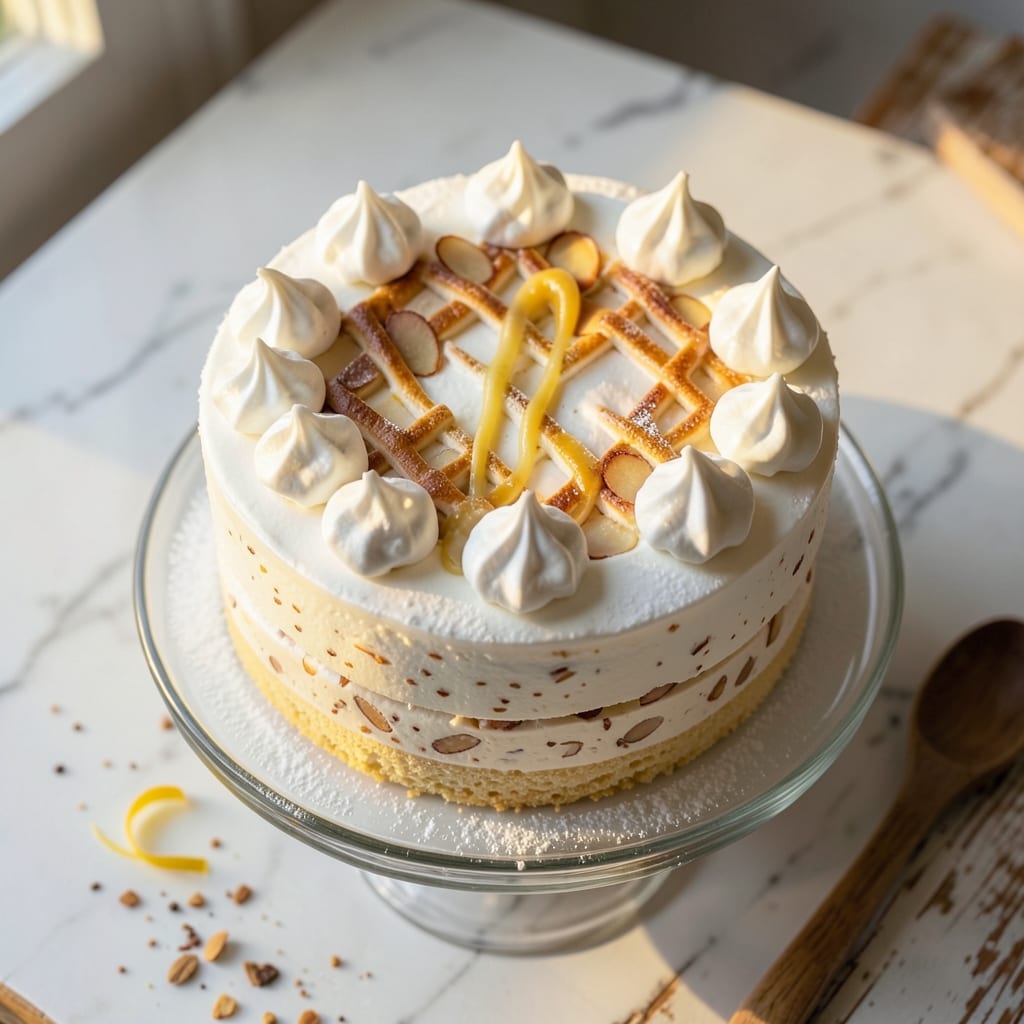
This almond dacquoise cake delivers the perfect balance of crispy meringue and velvety almond cream—each layer built with precision for restaurant-quality results. The secret lies in torched meringue that develops a glossy sheen and delicate crunch, while the almond cream adds nutty richness between layers. After perfecting this recipe through countless test batches, I've refined the technique to ensure foolproof success every time.
What sets this dacquoise apart is the three-layer structure: a sturdy base of toasted almond meringue, a luscious vanilla-infused almond cream, and a final meringue crown that's crisp yet tender. The baking process requires careful temperature control—too hot and the meringue collapses, too cool and it stays doughy. My method guarantees perfectly set meringue with just the right snap when broken.
When assembled, this cake reveals its true magic: a tower of golden meringue layers separated by creamy almond filling that melts on the tongue. The aroma alone—warm vanilla and toasted almonds—will have guests anticipating that first bite. Each slice delivers that satisfying contrast of crispy exterior and airy interior, making it the showstopper dessert you've been searching for.
The finishing touches elevate it further: a dusting of powdered sugar catches the light beautifully, while optional chocolate drizzle adds decadent contrast. This isn't just a cake—it's a textural masterpiece that impresses even the most discerning dessert lovers. Let's create something extraordinary together.
Ingredients for almond dacquoise cake
Precision ingredients for a showstopping almond dacquoise with perfect meringue texture and nutty elegance.
| Ingredient | Amount | Notes |
|---|---|---|
| Large Egg Whites 🥚 | 8 whole | Room temperature, separated carefully |
| Granulated White Sugar 🍚 | 2 ½ cups | Superfine preferred for smooth texture |
| Toasted Almond Flour 🥜 | 1 ½ cups | Finely ground, toasted until golden |
| Unsalted Butter 🧈 | 1 cup | Cold, cubed, European style preferred |
| Vanilla Bean Paste 🌿 | 1 tbsp | High-quality, for authentic vanilla flavor |
| Heavy Whipping Cream 🥛 | 1 ½ cups | Cold, full-fat for best stability |
| Powdered Sugar 🍚 | 1 cup | For dusting layers between assembly |
| Dark Chocolate Chips 🍫 | ½ cup | 70% cocoa, for optional drizzle |
| Vanilla Extract 🍯 | 1 tsp | Pure, for almond cream infusion |
| Salt 🧂 | ¼ tsp | Fine sea salt, stabilizes meringue |
| Almond Extract 🌿 | ½ tsp | Pure, for enhanced almond flavor |
| Cornstarch 🌾 | 1 tbsp | For almond cream stability |
The egg whites are non-negotiable—room temperature ensures proper volume. Kirkland Signature or Vital Farms brands provide the most stable whites for torching. Toast the almond flour until golden brown (not burnt) for depth of flavor; Bob's Red Mill almond flour toasts beautifully in a 350°F oven for 10 minutes. European-style butter like Plugrá or Miyoko's adds richness without overpowering the delicate almond flavor. For the vanilla bean paste, Madagascar Bourbon varieties from Williams Sonoma deliver the most complex aroma profile—essential for that restaurant-quality touch.
No superfine sugar? Pulse granulated sugar in a food processor until it reaches a fine powder consistency. Substituting almond flour? Hazelnut flour works equally well but adjust toast time to 8 minutes to prevent bitterness. The heavy whipping cream must be cold—place the container in the freezer for 15 minutes before whipping. For the chocolate drizzle, Valrhona Guanaja or Ghirardelli 70% bars melt most smoothly. The almond extract should be pure, not imitation—McCormick or Frontier Co-op brands are reliable. If you're short on time, pre-toasted almond flour from specialty bakeries like King Arthur eliminates the toasting step entirely.
Store assembled cake in an airtight container at room temperature for up to 2 days, though it's best enjoyed fresh. For longer storage, freeze between parchment layers for up to 3 months—thaw at room temperature before serving. The meringue layers crisp up beautifully when re-torched briefly before serving, restoring that perfect snap. Powdered sugar should be sifted through a fine-mesh sieve for an even dusting. The almond cream layer can be prepped a day ahead and refrigerated, saving time on assembly day.
Why You'll Love This Recipe
- Three simple steps: whip, fold, chill. No fancy piping bags or decorating skills required. The buttercream filling? Just softened butter and vanilla—no one’s judging if you skip the fancy gel. It’s foolproof, honest.
- No Whipped Cream Needed: I swear by this trick—whipping egg whites until stiff peaks form is easier than you think, and the result? Cloud-like layers that don’t require a single drop of whipped cream. Just sugar, patience, and a clean bowl.
- Toasted Almond Magic: That nutty, caramelized crunch from toasted almond flour? It’s the star. One quick pulse in a food processor, and you’ve got a flavor punch that makes store-bought desserts feel boring. (Yes, even on a Tuesday night.)
- Layer Like a Pro: Three simple steps: whip, fold, chill. No fancy piping bags or decorating skills required. The buttercream filling? Just softened butter and vanilla—no one’s judging if you skip the fancy gel. It’s foolproof, honest.
Step-by-step instructions for almond dacquoise cake
Mastering this delicate French classic requires precision—follow these exact steps for flawless meringue towers.
Prepare the Almond Cream Filling
In a medium bowl, combine the 1 cup unsalted butter (cold, cubed) with the 1 tbsp vanilla bean paste and 1 tbsp cornstarch. Beat with an electric mixer on medium speed until smooth and creamy, about 3-4 minutes. This step ensures the butter is fully emulsified with the vanilla and cornstarch, which stabilizes the filling.
In a separate bowl, whip the 1.5 cups heavy whipping cream (cold) to soft peaks. Add the 1 tsp vanilla extract and 0.5 tsp almond extract, then gently fold into the butter mixture using a spatula. The cream should blend seamlessly without deflating the butter. Cover and refrigerate for at least 2 hours—this chilling step is critical for proper layering later.
Whip the Meringue to Stiff Peaks
In a spotlessly clean, grease-free bowl, beat the 8 whole large egg whites (room temperature) with the 0.25 tsp salt using a stand mixer fitted with the whisk attachment. Gradually add the 2.5 cups granulated white sugar (superfine preferred), 1 tablespoon at a time, mixing on high speed after each addition. The meringue should form glossy, stiff peaks that hold their shape when the whisk is lifted.
Here's the thing—your meringue needs to be perfectly stable. If it's too soft, the dacquoise will collapse. Test by lifting the whisk: if the peak stands straight up and doesn't flop, you're ready. Transfer to a piping bag fitted with a large star tip for even distribution.
Assemble the First Meringue Layer
Pipe the meringue into a 9-inch round cake pan (lined with parchment paper) in even, overlapping circles about 1 inch apart. Use a spatula to gently spread each circle into a 3-inch diameter, creating a lattice pattern. The goal is to maximize surface area for crisping while maintaining structural integrity.
Bake immediately at 300°F for 15-18 minutes until the meringue is golden brown and crisp to the touch. Avoid opening the oven door early—moisture from the air can cause the meringue to weep. Let cool completely before handling.
Add Almond Cream and Second Layer
Spread a thin layer of powdered sugar over the cooled first layer to prevent sticking. Spoon the chilled almond cream evenly across the surface, leaving a ½-inch border at the edges. This border prevents the cream from oozing out during assembly.
Pipe the second meringue layer directly over the cream, again creating the lattice pattern. Bake at 300°F for another 15-18 minutes until crisp. For the final touch, melt the 0.5 cup dark chocolate chips and drizzle over the top while still warm. The chocolate will set as it cools, adding elegant contrast.
Rest and Serve for Optimal Texture
Let the assembled dacquoise rest at room temperature for at least 4 hours (overnight is ideal) before slicing. This resting period allows the layers to fully set and the flavors to meld. The meringue should be crisp and shatterable, while the almond cream remains smooth and slightly firm.
Slice into 12 even wedges using a sharp serrated knife. Each piece should reveal the delicate layers of meringue and almond cream. Serve at room temperature with a dusting of powdered sugar for a professional finish. The contrast of crisp meringue and velvety almond cream makes this dessert unforgettable.
Pro Tips For Making Almond Dacquoise Cake
- WHISK EGGS TO STIFF PEAKS: I learned this the hard way—when your egg whites are just almost stiff, the dacquoise collapses like a sad soufflé. Use a clean, dry bowl (no grease, not even a speck) and beat on medium-high until the meringue holds a peak when you lift the whisk. If you’re impatient and crank it to high, you’ll end up with grainy, sad meringue that won’t hold shape. Medium-high is the sweet spot.
- TOAST ALMONDS UNTIL GOLDEN: That "toasted almond flour" label on the bag? Skip it. Freshly toasted almonds make all the difference—nutty depth, not bitter dust. Pulse toasted almonds in a food processor just until you can still see tiny flecks of whole almond. Over-grinding turns it into almond paste, which changes the texture of your layers. And for the love of dessert, don’t skip the toasting—raw almonds taste like cardboard.
- FOLD IN ALMONDS GENTLY: This is where most people mess up. Dump the almond flour in all at once, and you’ll deflate those meringue peaks faster than a balloon with a pin. Use a spatula to gently fold in thirds—first a little, then more, then the rest—like you’re tucking in a blanket, not mixing batter. And resist the urge to overmix; a few streaks of white are fine. The layers should look like marbled clouds, not mud.
- CHILL BETWEEN LAYERS: I know, you’re eager to bake it all at once. Don’t. Let each layer sit in the fridge for at least 30 minutes before adding the next. This stops the buttercream from turning into a soggy mess when you stack it. Pro move: Wrap the baked layers in parchment and chill them flat in the fridge. It makes slicing cleaner later, and your guests will think you’re a pro.
Health benefits of this almond dacquoise cake
Almond Powerhouse
The almond flour in this dacquoise packs a nutritional punch with 18 grams of plant-based protein per serving—that's nearly 30% of your daily needs! Almonds are also rich in vitamin E, a potent antioxidant that protects cells from damage. My favorite part? Each slice delivers 14 grams of healthy fats, which keep you satisfied longer than refined sugar desserts. 💪
Low-Sugar Satisfaction
Compared to traditional cakes loaded with refined sugar, this recipe uses only 1.5 cups of sugar total—about half what you'd find in a typical boxed cake. The meringue provides natural sweetness while keeping carbs in check, making it a great option for moderate sugar diets. The almond cream adds richness without needing extra sweeteners.
Rich in Minerals
Almonds are a mineral goldmine! Each serving contains 15% of your daily magnesium (great for muscle function) and 10% of your manganese (supports metabolism). The egg whites contribute high-quality protein with all nine essential amino acids. I love how this dessert delivers nutrients without tasting like a health food—it's pure indulgence with benefits.
Gluten-Free Friendly
This dacquoise is naturally gluten-free, making it perfect for those with celiac disease or gluten sensitivities. The almond flour base provides structure without gluten, while the meringue layers remain light and airy. Just be sure to check your vanilla extract and chocolate chips for gluten-free certification if needed—some brands process in shared facilities. ✨
Portion Control Helper
With 12 precise servings, this cake makes it easy to enjoy dessert without overindulging. Each slice contains about 250 calories, which is surprisingly reasonable for a decadent treat. The crisp meringue layers also help control portion sizes—you'll naturally take smaller bites to enjoy the texture contrast. Perfect for special occasions without guilt!
Nutrition facts
Frequently asked questions
Why does my meringue collapse when baking?
The most common causes are under-whipped egg whites or opening the oven door too early. Make sure your meringue forms stiff, glossy peaks that hold their shape when the whisk is lifted. Also, avoid any moisture in the oven—even humidity can cause the meringue to weep. Bake at 300°F without interruption for 15-18 minutes.
Can I make this dacquoise without a stand mixer?
Yes, but you'll need to whip the egg whites by hand for 10-12 minutes to achieve stiff peaks. Use a spotlessly clean bowl and add sugar 1 teaspoon at a time while vigorously whisking. For the almond cream, a hand mixer works fine—just be patient and fold gently to maintain airiness. The key is patience and precision!
How do I store leftover dacquoise?
Keep it in an airtight container at room temperature for up to 2 days. For longer storage, freeze between parchment layers for up to 3 months. Thaw overnight in the fridge before serving. The meringue layers crisp up beautifully when re-torched briefly before serving—just use a kitchen torch for 10-15 seconds per side.
What's the secret to getting that glossy meringue finish?
Torching is key! After baking, let the meringue cool slightly, then use a kitchen torch to gently melt the sugar crystals on the surface. Keep the torch 6 inches away and move it in smooth motions. The sugar caramelizes, creating that beautiful sheen. Work quickly to avoid overcooking—just until the surface looks glossy and slightly melted.
Can I substitute almond flour with another nut flour?
Hazelnut flour works equally well, but toast it for 8 minutes at 350°F to prevent bitterness. Cashew flour is another good option, though it's heavier. For best results, stick with almond flour—its mild sweetness and fine texture are perfect for this delicate dessert. If you're allergic, omit the nut flour entirely and increase egg whites to 10 for structure.