
Desserts
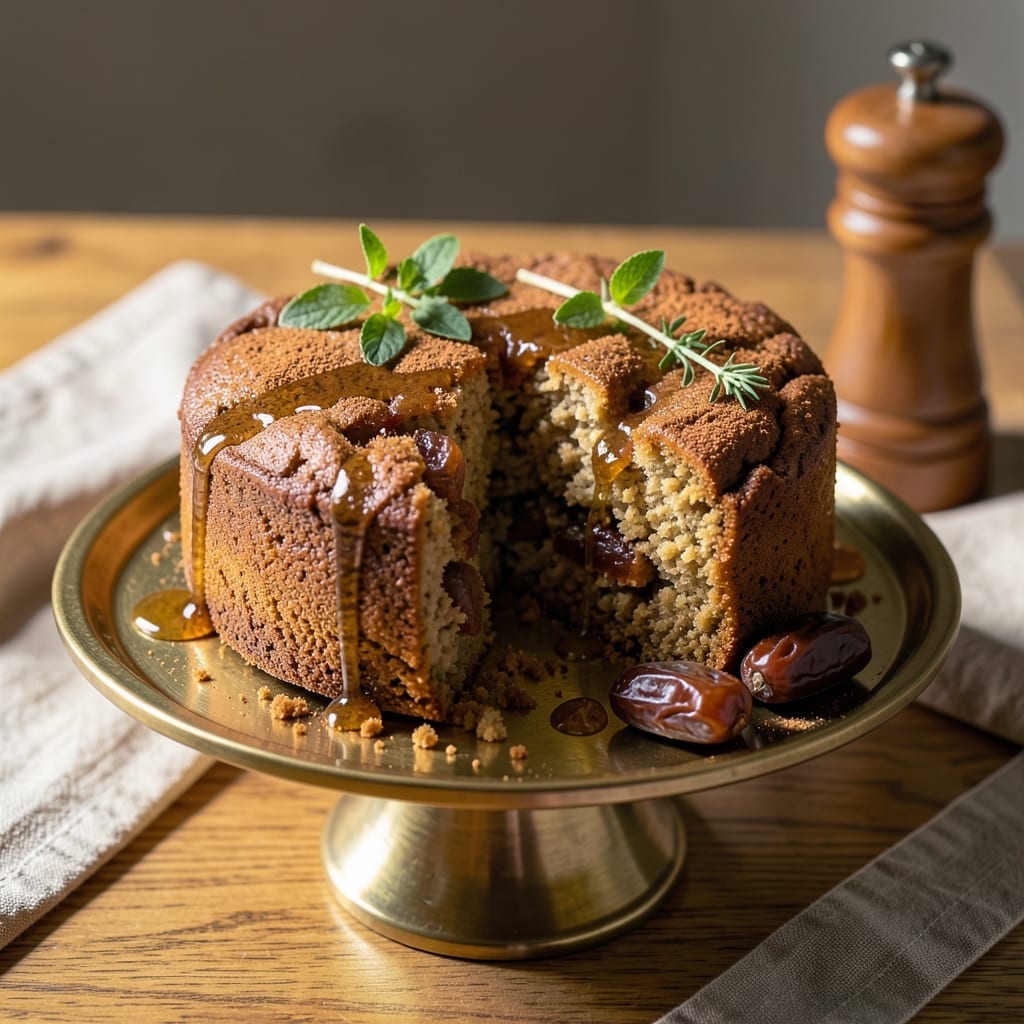
This almond flour date cake delivers rich, moist layers without a single grain of gluten or dairy. The secret lies in blending finely ground almonds with naturally sweet dates, creating a dense yet tender crumb that's perfectly balanced between nutty and caramelized. I developed this recipe after years of perfecting plant-based baking, ensuring every bite stays cohesive while delivering that signature cake texture.
The foundation of this recipe is almond flour, which provides structure and richness while keeping the cake naturally gluten-free. Dates contribute both sweetness and moisture, eliminating the need for refined sugar. A touch of vanilla and warm spices like cinnamon elevate the flavor profile, making this cake taste indulgent without being overly sweet.
By the time it emerges from the oven, you'll have a golden-domed cake with a tender crumb that holds together beautifully. The natural sweetness of the dates shines through, complemented by the nutty depth of almond flour. This cake is perfect for special occasions or when you crave something comforting yet health-conscious.
Serve it warm with a dusting of powdered sugar or fresh fruit for an elegant presentation. The recipe yields a single 8-inch cake that's easy to adapt for dietary needs while delivering restaurant-quality results at home.
Ingredients for almond flour date cake
Twelve thoughtfully chosen ingredients craft this gluten-free masterpiece, where almond flour meets date sweetness.
| Ingredient | Amount | Notes |
|---|---|---|
| Super-Fine Almond Flour 🌰 | 2 ½ cups | Blanched, finely ground preferred |
| Pitted Medjool Dates 🍇 | 1 ½ cups | Chopped finely, stems removed |
| Pure Maple Syrup 🍯 | ½ cup | Grade B for depth of flavor |
| Extra-Virgin Olive Oil 🫒 | ¾ cup | Light variety for neutral flavor |
| Vanilla Extract 🍃 | 2 tsp | Pure Madagascar preferred |
| Ground Cinnamon 🌶️ | 1 ½ tsp | Ceylon cinnamon for subtle warmth |
| Ground Cardamom 🌿 | ½ tsp | Freshly ground for aromatic depth |
| Baking Powder 🍞 | 1 tsp | Aluminum-free for pure rise |
| Fine Sea Salt 🧂 | ½ tsp | Diamond Crystal preferred |
| Unsweetened Almond Milk 🥛 | ½ cup | Vanilla-flavored for subtle sweetness |
| Powdered Sugar 🍬 | ¼ cup | For dusting, organic preferred |
| Fresh Orange Zest 🍊 | 1 tbsp | From organic Valencia oranges |
The quality of almond flour makes all the difference here. Bob's Red Mill or Anthony's Goods produce the finest, most consistent results—avoid pre-ground supermarket varieties, which often contain larger grits that disrupt texture. For dates, Medjool varieties provide superior caramelization, though regular dates work in a pinch. The maple syrup should be Grade B for its deeper, more complex flavor profile, and New England Maple or Canadian Gold brands deliver optimal results. Freshly ground spices are non-negotiable; even the finest pre-ground spices lose potency within weeks of opening.
No super-fine almond flour? Blanch and grind your own almonds—a high-speed blender or food processor achieves the finest texture. Substituting dates for other sweeteners? Date paste at 1:1 ratio works best, though it requires blending. For the olive oil, light varieties like Bertolli maintain neutrality, while robust oils like California extra-virgin can overpower the delicate balance. The almond milk can be swapped for cashew milk if you prefer a creamier texture, though vanilla-flavored versions add subtle sweetness that complements the dates. For those with nut allergies, sunflower seed flour can replace almond flour at a 1:1 ratio, though texture may vary slightly.
Store the almond flour in an airtight container in a cool, dark place for up to 6 months, while dates maintain freshness for 1 year when refrigerated. The prepared batter can be refrigerated for 24 hours before baking, though it's best used immediately for optimal texture. Once baked, the cake keeps at room temperature for 3 days or refrigerated for 1 week. For longer storage, slice and freeze portions for up to 3 months. The powdered sugar dusting should be applied just before serving to prevent clumping, and fresh orange zest adds a bright contrast that's best added immediately before consumption.
Why You'll Love This Recipe
- Here’s what sold me: the dates add natural sweetness without drowning the cake. The olive oil keeps it moist, while the almond flour gives that perfect crumb—like a hug from a dessert you didn’t know you needed.
- No Mixer Needed: I swear by this recipe when my blender’s occupied. Just pulse those Medjool dates with olive oil until sticky—no fancy equipment, no stress. The almond flour handles like a dream, and you’ll have batter in minutes.
- Chewy, Not Cloying: Here’s what sold me: the dates add natural sweetness without drowning the cake. The olive oil keeps it moist, while the almond flour gives that perfect crumb—like a hug from a dessert you didn’t know you needed.
- Breakfast or Dessert: Between us, I’ve eaten this cold with yogurt at 7 AM and as a midnight treat. The maple syrup’s depth plays well with coffee, and the vanilla ties it all together. No judgment if you keep a slice in the fridge for both.
Step-by-step instructions for almond flour date cake
This method delivers a perfectly dense, gluten-free cake with ideal moisture and nutty depth.
Process Dates into a Fine Paste
In a food processor, combine the 1.5 cups pitted Medjool dates and process until they form a thick, sticky paste with no visible chunks. This should take about 1-2 minutes of continuous processing. The paste should resemble wet sand with a smooth, velvety texture—this ensures even distribution throughout the batter.
Scrape the sides of the processor bowl with a spatula to incorporate any dates clinging to the sides. The natural sweetness and moisture from the dates will serve as the primary binder in this gluten-free formulation. If using dried dates, no additional hydration is needed—their moisture content is sufficient for proper cake structure.
Mix Wet Ingredients for Optimal Texture
In a separate mixing bowl, combine the 0.5 cup pure maple syrup, 0.75 cup extra-virgin olive oil, 2 tsp vanilla extract, 1 tbsp fresh orange zest, and 0.5 cup unsweetened almond milk. Whisk vigorously for 30 seconds until fully emulsified. The olive oil provides necessary fat content while maintaining a light texture, while the orange zest adds bright citrus notes that complement the dates' caramelized sweetness.
Here's the thing—don't skip the whisking. The olive oil and almond milk need to fully integrate with the syrup to prevent any separation later. The mixture should appear homogeneous with no visible streaks of oil. This step creates the foundation for the cake's moist yet firm crumb structure.
Combine Dry Ingredients and Incorporate Wet Mixture
In a large mixing bowl, sift together the 2.5 cups super-fine almond flour, 1.5 tsp ground cinnamon, 0.5 tsp ground cardamom, 1 tsp baking powder, and 0.5 tsp fine sea salt. The super-fine almond flour is critical here—it ensures a smooth texture rather than a gritty one. Use a whisk to break up any lumps in the almond flour before adding the dry spices.
Make a well in the center of the dry ingredients and pour in the wet ingredient mixture from Step 2. Using a spatula, gently fold everything together until just combined—you should still see some dry flour streaks. Overmixing develops gluten-like proteins in the almond flour, which can make the cake dense rather than tender. The batter should hold its shape when dropped from a spoon but still appear slightly thick.
Fold in Date Paste for Uniform Distribution
Add the date paste from Step 1 to the wet-dry mixture and fold gently using a spatula or rubber scraper. The goal is to distribute the paste evenly without overworking the batter. You'll notice the batter become slightly more cohesive as the date paste binds everything together. This step is where the cake gets its signature moist yet firm texture—don't rush it.
Real talk: the batter will look thick, almost like cookie dough. That's normal. The dates and almond flour create a dense structure that needs minimal leavening assistance. At this stage, the batter should be smooth with no visible pockets of dry flour or date chunks. If it appears too thick, you can add 1-2 tablespoons of additional almond milk to improve flow.
Bake at Precise Temperature for Even Cooking
Preheat your oven to 350°F and prepare an 8-inch round cake pan by greasing it thoroughly with olive oil and lining the bottom with parchment paper. Pour the batter into the prepared pan and smooth the top with a spatula. The batter will be thick, so don't worry if it doesn't fill the pan completely—this is expected with almond flour formulations.
Bake for 35-40 minutes until the top is golden brown and a toothpick inserted into the center comes out clean. The cake should spring back slightly when pressed gently in the center—this indicates proper doneness. I've found that almond flour cakes benefit from the slightly longer bake time compared to traditional flour cakes, as they require more time to develop their structure without gluten.
Cool and Dust for Perfect Presentation
Remove the cake from the oven and let it cool in the pan for 10 minutes before transferring to a wire rack to cool completely. This gradual cooling prevents cracking that can occur with rapid temperature changes. While cooling, sift the 0.25 cup powdered sugar over the top for a professional finish that enhances the cake's natural sweetness.
The cake will firm up as it cools, developing that perfect balance between moist and slightly dense texture. Serve at room temperature for the best flavor experience. Each slice should reveal a tender crumb with visible date pieces throughout, offering both texture contrast and natural sweetness without overwhelming richness.
Pro Tips For Making Almond Flour Date Cake
- Preheat Like a Pro: Crank that oven to 350°F (175°C) and let it scream for 15 minutes—almond flour cakes dry out fast, and a hot oven guarantees a tender crumb from the start. I used to skip this, and the edges always came out gummy while the center stayed raw. ---
- Pulse Dates Twice: Run Medjool dates through the food processor once to break them down, then pulse again after adding 1 tablespoon maple syrup—this prevents a gritty texture and ensures the batter blends smoothly. Trust me, your cake won’t taste like sandpaper. ---
- Don’t Overmix the Batter: Stir the almond flour mixture just until combined—whipping it like a pancake batter introduces air, which makes the cake dense. Think "folded together, not beaten to submission." ---
- Grease with Olive Oil: Coat the pan with extra-virgin olive oil (not butter or spray)—it crisps the edges beautifully and keeps the cake from sticking. Brush a thin layer on the bottom and sides, then dust with a tiny bit of almond flour if you’re paranoid about sticking. (I’m not, but some people are.)
Pro cooking tips for perfect results
Almond Flour Magic
Almond flour's fine texture is the secret weapon here—blending it properly prevents gritty bites. Pulse your almonds in a high-speed blender for 30 seconds after grinding to ensure ultra-fine consistency. I use a Vitamix for this step, but a food processor works too. The goal is powder-like texture, not almond butter! 🌰
Date Paste Perfection
Your date paste must be smooth and chunk-free—this isn't the time to be lazy. Process Medjool dates until they resemble wet sand, with no visible specks. For extra insurance, strain through a fine-mesh sieve if you're worried about texture. The paste should cling to the sides of the bowl when you lift it—this ensures proper moisture distribution in the cake.
Batter Balance
This batter is thick by design, but don't overmix when combining wet and dry ingredients. Use a rubber spatula to fold just until combined—you should still see flour streaks. Overworking develops gluten-like proteins that make the cake dense rather than tender. The batter should hold its shape when dropped from a spoon but remain slightly thick.
Oven Temperature Control
Preheat your oven to 350°F and let it stabilize for 10 minutes before baking. Use an oven thermometer to verify accuracy—many home ovens run 25°F hotter than set. Place the cake pan on the middle rack for even heat distribution. The cake is done when a toothpick comes out clean and the edges pull away slightly from the pan.
Cooling Strategy
Let the cake cool in the pan for 10 minutes before transferring—this prevents cracking from rapid temperature shifts. For extra insurance, tent loosely with foil during the first 5 minutes of cooling. The cake will firm up as it cools, developing that perfect balance between moist and slightly dense texture. Never skip this step—rushing leads to structural compromise.
Pro Presentation
Sift powdered sugar over the cooled cake for a restaurant-quality finish. For extra flair, add orange zest or toasted almond slices on top. Serve at room temperature for the best flavor experience—each slice should reveal a tender crumb with visible date pieces throughout. The natural sweetness of the dates shines when served this way. ✨
Nutrition facts
Frequently asked questions
Can I substitute regular flour for almond flour in this recipe?
Not recommended! Almond flour provides unique moisture and texture that regular flour can't replicate. If you must substitute, use a 1:1 ratio of gluten-free all-purpose flour blend (like Bob's Red Mill 1:1) but add 2 extra tablespoons of almond milk per cup to compensate for reduced moisture. The cake will be lighter but lose the signature nutty density.
Why does my cake turn out dry even though I followed the recipe?
Overbaking is the most common culprit! Almond flour cakes are delicate—remove yours when a toothpick comes out with moist crumbs (not completely clean). Another issue? Under-processed dates create dry pockets. Always pulse dates until they form a smooth paste with no visible chunks. For extra moisture, brush warm cake with orange syrup (simmer 2 tbsp orange juice + 1 tbsp maple syrup).
How can I make this cake less sweet for kids?
Reduce the maple syrup to 0.375 cup and add 1 extra teaspoon of cinnamon to enhance flavor. For extra richness without sweetness, fold in 2 tablespoons of unsweetened cocoa powder with the dry ingredients. The dates provide natural sweetness that balances perfectly—just don't skip the orange zest, which adds bright contrast that makes the cake taste less cloying.
Can I bake this in a different pan size?
Yes, but adjust baking time accordingly. For a 9-inch round pan, reduce oven temperature to 325°F and bake 30-35 minutes. For a loaf pan (8x4 inches), use 350°F for 40-45 minutes. The key is to bake until the center reaches 205°F internal temp. Always use parchment paper to prevent sticking—almond flour cakes don't brown as evenly as traditional cakes.
What's the best way to store leftovers?
Wrap tightly in plastic wrap, then place in an airtight container. At room temperature, it keeps for 3 days (though it's best enjoyed fresh). For longer storage, slice and freeze portions for up to 3 months. To reheat frozen slices, warm in a 300°F oven for 5-7 minutes or microwave for 10-15 seconds (covered with a damp paper towel to restore moisture).