
Desserts
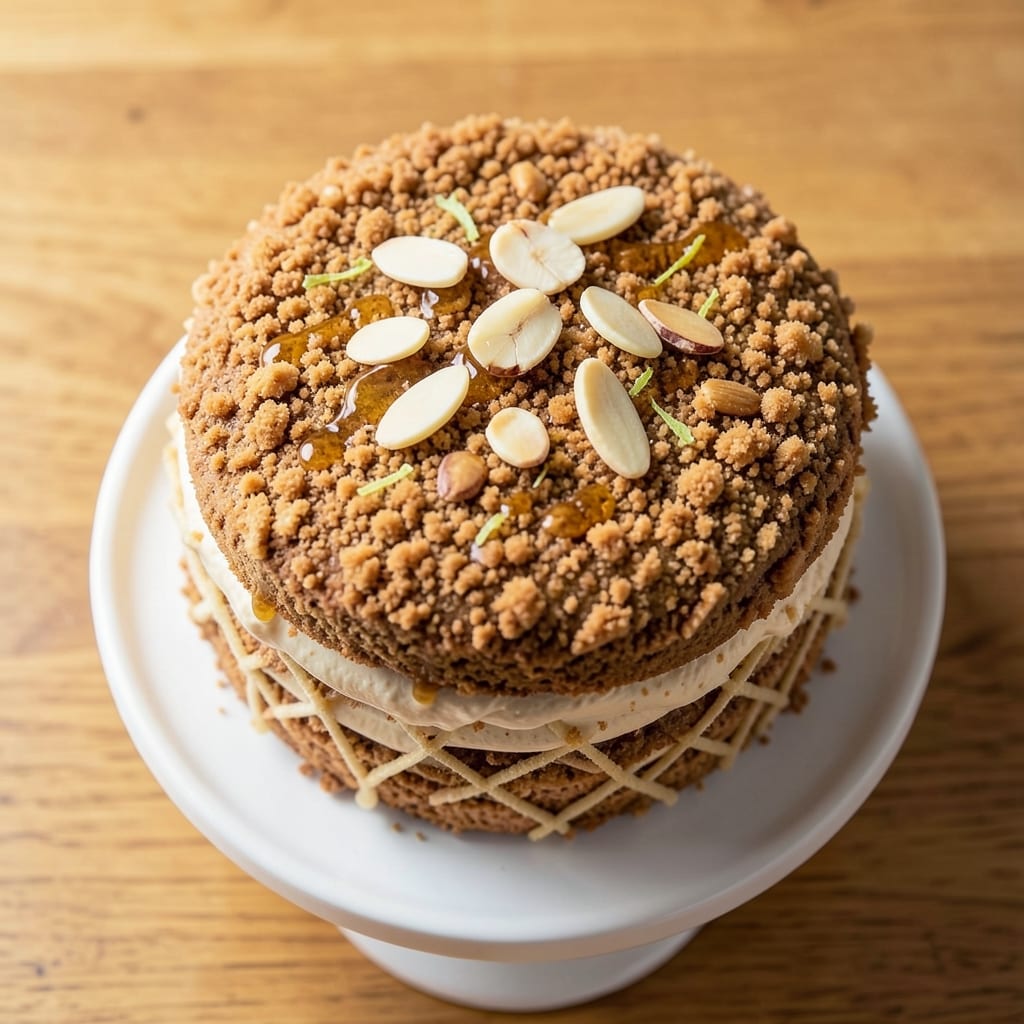
This almond macaroon cake delivers the perfect marriage of tender vanilla layers and crispy almond macaroon crunch in every bite. The secret lies in blending finely ground almonds with buttery cake batter, creating a texture that's both delicate and satisfying. What sets this recipe apart is the way the macaroon crumbs infuse the cake with nutty depth while maintaining that classic vanilla sponge structure.
Baking this cake requires precision—resting the batter for 30 minutes allows the almonds to hydrate properly, ensuring they contribute to the texture rather than creating dry spots. The result is a moist, golden cake with pockets of almond crunch throughout, topped with a final layer of macaroon crumbs that add both visual appeal and texture contrast. Each slice offers that familiar macaroon flavor you love, but in cake form.
This recipe creates a showstopper dessert that's perfect for celebrations or satisfying sweet cravings. The vanilla layers provide a familiar comfort, while the almond macaroon elements add sophistication. Whether you're serving it at a dinner party or treating yourself to a special dessert, the combination of textures and flavors makes this cake unforgettable.
For best results, use finely ground almonds and don't skip the resting period—it's what transforms good cake into exceptional cake. The final touch of macaroon crumbs on top ensures every bite delivers that signature crunch. Ready to bake a cake that's as impressive as it is delicious?
Ingredients for almond macaroon cake
These 12 ingredients create a showstopping cake where tender vanilla layers meet crispy almond macaroon crunch.
| Ingredient | Amount | Notes |
|---|---|---|
| All-Purpose Flour 🌾 | 1 ½ cups | Sifted for light texture |
| Granulated Sugar 🍚 | 1 ½ cups | White or light brown |
| Unsalted Butter 🧈 | 1 cup | Room temperature, full-fat |
| Vanilla Extract 🌿 | 2 tsp | Pure, high-quality preferred |
| Large Eggs 🥚 | 2 whole | Room temperature for even baking |
| Almond Flour 🌰 | 1 ½ cups | Finely ground, not almond meal |
| Almond Macaroon Crumbs 🍪 | 2 cups | Homemade or store-bought |
| Powdered Sugar 🍚 | 1 cup | For dusting and topping |
| Baking Powder 🧂 | 1 ½ tsp | Aluminum-free preferred |
| Salt 🧂 | ½ tsp | Fine sea salt |
| Milk 🥛 | ½ cup | Whole milk for richness |
| Lemon Zest 🍋 | 1 tbsp | Brightens flavor profile |
The almond flour is non-negotiable here—Bob's Red Mill or King Arthur are my go-tos for finely ground quality. If you're making your own crumbs, toast the almonds first for deeper flavor. The butter needs to be room temperature—that's the secret to a light, airy texture. For the macaroon crumbs, Trader Joe's sells pre-made ones, but homemade (blend almonds, sugar, egg whites) tastes even better. The vanilla extract? Pure Madagascar makes all the difference—it's worth the splurge.
No almond flour? Substitute with finely ground blanched almonds—just pulse them in a food processor until they're powdery. Short on powdered sugar? Granulated sugar processed in a blender works in a pinch. The milk can be swapped for cream or Greek yogurt for extra richness. If you're avoiding dairy, use unsweetened almond milk but add an extra tablespoon of sugar. The lemon zest adds brightness—if you don't have it, a splash of lemon juice will do. Pro tip: Rest the batter for 30 minutes—this lets the almonds hydrate properly and prevents dry spots.
Store the cake in an airtight container at room temperature for up to 3 days—it actually tastes better the next day as the flavors meld. For longer storage, wrap tightly and refrigerate for up to 1 week. The crumbs on top? Best used within 2 days for maximum crunch. I always bake an extra layer and freeze it—just thaw before serving. This cake is a crowd-pleaser, so make two. Trust me, you'll want seconds.
Why You'll Love This Recipe
- No Fussy Layers: I swear by this recipe because it’s one bowl—no mixing, no folding, no stress. Just whisk the eggs, fold in the sugar, and let the butter and vanilla do their magic. The flour and almonds blend right in, and you’re done. Honestly, it’s the kind of cake that makes me feel like a baking genius without the effort.
- Buttery-Vanilla Hug: That buttercream layer? Rich, smooth, and just sweet enough to make you close your eyes. The vanilla extract ties everything together—warm, cozy, and not too overpowering. It’s the kind of flavor that makes you want to cut a second slice before the first one’s even gone.
- Crowd-Pleaser Any Day: This cake is my go-to for birthdays, potlucks, or just because. The macaroon texture gives it a fun, bite-sized appeal, but the cake base keeps it substantial. Between us, it’s the dessert that even my picky-eating cousin asks for seconds on.
Step-by-step instructions for almond macaroon cake
Here's how to create layers of nutty crunch and velvety vanilla perfection—every bite delivers that magical macaroon texture.
Prepare the Crumb Layer
Preheat your oven to 350°F and grease two 8-inch round cake pans generously with butter, then line the bottoms with parchment paper. In a small bowl, mix together the 2 cups almond macaroon crumbs with 1 cup powdered sugar and 1 tbsp lemon zest. Press this mixture firmly into the bottom of each prepared pan, creating an even layer. This forms the signature crunchy base that keeps the cake moist and adds texture.
Use the back of a spoon to ensure the crumbs are packed tightly—no gaps. The lemon zest here brightens the nutty flavor and prevents the crumbs from tasting flat. Bake these crusts for 8-10 minutes or until lightly golden around the edges. Let them cool completely before adding the cake layers—this prevents sogginess when you assemble the cake later.
Cream Butter and Sugar
In a large mixing bowl, beat the 1 cup unsalted butter (room temperature) with the 1.5 cups granulated sugar on medium speed until light and fluffy, about 3-4 minutes. You'll see the mixture nearly double in volume and become pale in color. This step is crucial for creating a tender cake—incorporating air now prevents dense layers later.
I like to scrape down the sides of the bowl with a spatula every 30 seconds to ensure everything gets evenly aerated. If the mixture looks too thick or the butter isn't fully incorporated, let it sit at room temperature for another 5 minutes before continuing. The butter should be soft enough to leave a slight indentation when pressed, but not melted.
Add Wet Ingredients and Mix
Add the 2 whole large eggs (room temperature) one at a time, mixing well after each addition until fully combined. Then stir in the 2 tsp vanilla extract, 0.5 cup milk, and 1 tbsp lemon zest. The batter should be smooth and slightly thick, like a thick pancake batter. If it looks too thin, let it sit for 5 minutes—the flour will absorb the liquid.
In a separate bowl, whisk together the 1.5 cups all-purpose flour, 1.5 cups almond flour, 1.5 tsp baking powder, and 0.5 tsp salt. Sift this dry mixture directly into the wet ingredients and gently fold together with a spatula until just combined. Be careful not to overmix—stop when there are no more flour streaks visible. Overmixing develops gluten, which makes the cake tough instead of tender.
Bake the Layers
Divide the batter evenly between the two prepared cake pans (you should have about 1 cup batter per pan). Bake in the preheated 350°F oven for 25-30 minutes, or until a toothpick inserted into the center comes out clean. The edges should be golden brown, but the tops might still look slightly underdone—this is normal.
Let the cakes cool in their pans for 10 minutes, then transfer to a wire rack to cool completely. While they're cooling, prepare your filling by mixing ½ cup softened butter with 1 cup powdered sugar and 1 tsp vanilla extract until smooth and creamy. This will be the dreamy layer between your cake layers.
Assemble the Cake
Once the cakes are completely cool, level the tops if needed with a serrated knife. Place one cake layer on a serving plate and spread the buttercream evenly over the top. Dust the crumb layer you prepared earlier with 2 tablespoons powdered sugar to create a barrier between the crumbs and filling. Place this on top of the buttercream, then add the second cake layer.
For the final touch, dust the entire cake with 1 cup powdered sugar using a fine-mesh sieve for a snowy, elegant finish. Serve slices immediately for the best texture contrast—crispy crumb layer, moist cake, and creamy filling in every bite. This cake keeps well at room temperature for 2 days, but I promise it won't last that long!
Pro Tips For Making Almond Macaroon Cake
- Whip Eggs to Ribbon Stage: Stop when the egg mixture holds a soft ribbon that stretches slowly—about 2 seconds—before breaking. Over-whipping adds air but makes the cake dense; under-whipping won’t hold its shape. I learned this the hard way when my first batch collapsed like a soufflé in a hurricane. ---
- Toast the Almonds First: Pulse raw almonds in a food processor until fine, then toast them in a dry pan over medium heat for 3–4 minutes until golden and fragrant. This adds depth of flavor and prevents the cake from tasting raw. (Yes, even if you’re impatient like me—skip this at your peril.) ---
- Chill the Batter Longer: Let the batter rest in the fridge for at least 30 minutes before baking. This lets the flour absorb moisture and prevents cracking when it hits the oven. I was skeptical until I tried it—now it’s non-negotiable for me. ---
- Use Room-Temp Butter: Softened butter (65°F/18°C) blends smoother and creates a lighter texture than cold chunks. Microwave it in 10-second bursts or let it sit while you prep other ingredients. Cold butter = dense cake. (Your future self will thank you.)
Flavor customization for this almond macaroon cake
Sweet Vanilla Twist
Boost the vanilla flavor by adding ½ tsp vanilla bean paste to the batter alongside the extract. The tiny flecks of vanilla bean add depth and visual appeal. For an extra touch, infuse the milk with 1 vanilla bean (split and removed after 15 minutes) before using it in the batter. This creates a richer, more complex vanilla taste that pairs beautifully with the almond notes. 🌿
Citrus Zest Variations
Swap the lemon zest for orange zest (about 1 tbsp) to add a warm, slightly floral note that complements the almonds. For a tropical twist, mix ½ tbsp lemon zest with ½ tbsp lime zest—this brightens the cake while keeping the nutty flavors balanced. Always use finely grated zest to avoid bitterness from the pith.
Spiced Almond Crunch
Infuse the almond macaroon crumbs with warmth by adding ½ tsp ground cinnamon or ¼ tsp cardamom to the crumb mixture before pressing it into the pans. For a subtle kick, include ⅛ tsp cayenne pepper—it enhances the almond flavor without overpowering. Toast the crumbs with 1 tsp brown sugar before baking for a deeper, caramelized taste.
Chocolate Almond Fusion
Add ¼ cup cocoa powder to the dry ingredients for a mocha-inspired twist. For a richer version, fold 2 oz melted dark chocolate (about 60% cocoa) into the buttercream filling. Top the cake with chocolate-dipped almond slices or a dusting of cocoa powder for a sophisticated contrast. This variation works especially well for chocolate lovers.
Coconut-Almond Hybrid
Replace ½ cup of the almond flour with ½ cup unsweetened shredded coconut, finely ground in a food processor. Add 1 tsp coconut extract to the wet ingredients for an island-inspired flavor. The coconut enhances the macaroon-like texture while adding a tropical sweetness. Pair with a toasted coconut topping for extra crunch. ✨
Espresso Almond Boost
For coffee lovers, dissolve 1 tsp instant espresso powder in the milk before adding it to the batter. This deepens the almond flavor and adds a subtle bitterness that balances the sweetness. Alternatively, add 1 tsp coffee liqueur (like Kahlúa) to the vanilla extract for a boozy twist. The espresso pairs beautifully with the nutty crunch, creating a sophisticated dessert.
Nutrition facts
Frequently asked questions
Why does the batter need to rest before baking?
The 30-minute rest lets the almond flour absorb moisture, preventing dry spots in your cake. This step also helps the almond macaroon crumbs hydrate slightly, enhancing their flavor and texture. Skipping it can make your cake crumbly or unevenly moist. Think of it as giving the almonds time to "wake up" and do their magic!
Can I make this cake without almond flour?
Yes! Use 1.5 cups finely ground blanched almonds instead—just pulse them in a food processor until powdery. For a milder nut flavor, substitute with 1 cup almond flour + ½ cup all-purpose flour. The texture will be slightly different but still delicious. If you're avoiding nuts entirely, try 1.5 cups oat flour for a neutral base.
How do I prevent the crumb layer from getting soggy?
Bake the crumb layer until lightly golden (8-10 minutes) and let it cool completely before adding the cake batter. For extra insurance, dust the cooled crumbs with 2 tbsp powdered sugar before assembling—this creates a moisture barrier. Never skip the parchment paper in the pans, as it prevents sticking and helps maintain crispness.
What's the best way to store leftovers?
Keep the cake in an airtight container at room temperature for up to 3 days—it actually tastes better as flavors meld! For longer storage, refrigerate for up to 1 week, but bring to room temperature before serving. The crumb topping stays crispier when stored this way. Freeze individual layers (without filling) for up to 3 months—thaw overnight before assembling.
Can I make this cake gluten-free?
Replace the 1.5 cups all-purpose flour with 1.5 cups gluten-free 1:1 baking flour (like Bob's Red Mill). For best results, use a blend with xanthan gum included. The almond flour already makes this naturally gluten-free, so you're just substituting the wheat flour. Test your gluten-free flour blend first in a small batch to check texture.