
Desserts
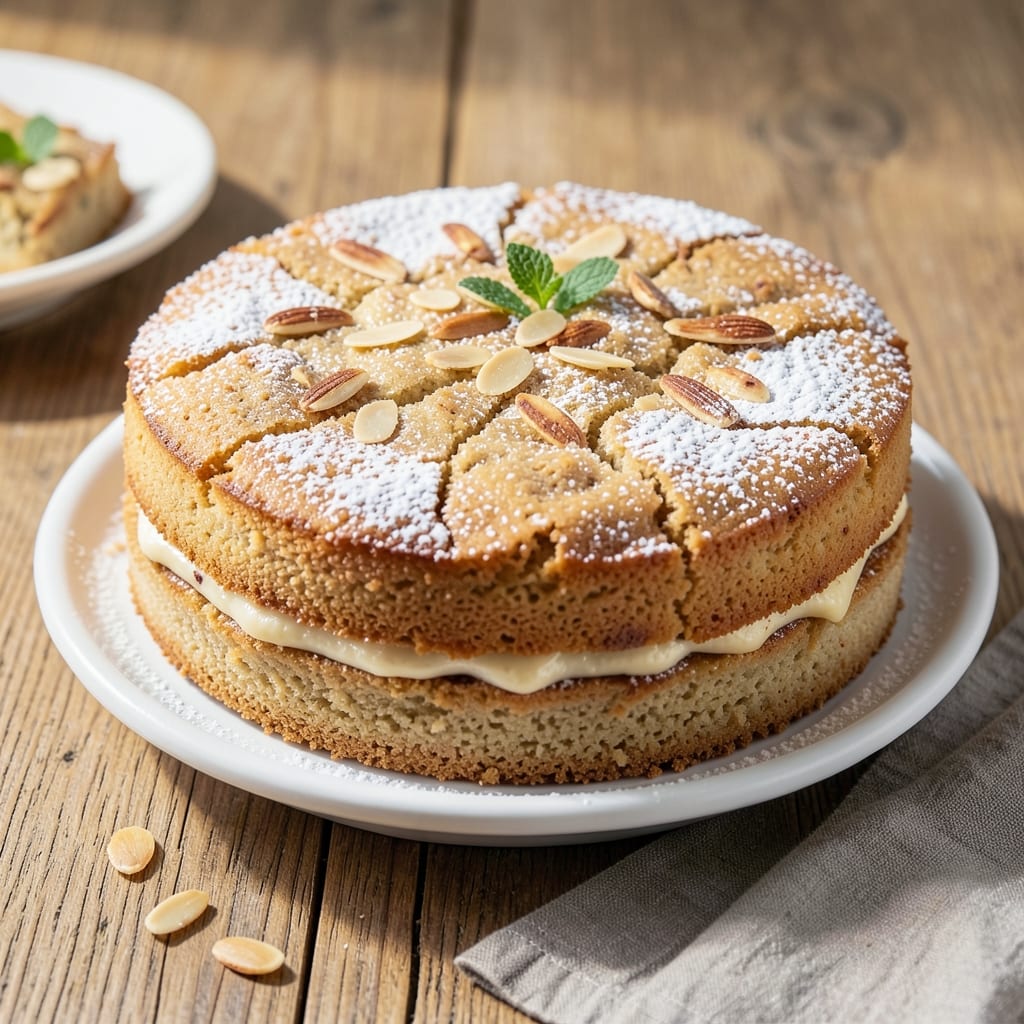
This almond semolina cake recipe delivers a perfect balance of tender crumb and nutty richness, with a golden crust that crackles just enough to satisfy. The semolina creates a subtle graininess that contrasts beautifully with the moist, almond-infused heart—each bite reveals layers of texture and flavor that keep you reaching for another slice. What makes this recipe special is how simple ingredients transform into something restaurant-worthy with minimal effort.
The secret lies in the semolina's ability to absorb moisture while maintaining structure, creating that signature tender-yet-firm texture. Almonds add natural sweetness and a satisfying crunch, while the golden crust forms effortlessly when baked at the right temperature. This cake is foolproof for beginners but impressive enough for special occasions—no fancy techniques required, just precise measurements and patience.
By the time it emerges from the oven, you'll have a cake with a golden crust that's crisp enough to hold its shape, a moist interior infused with almond flavor, and just the right amount of graininess from the semolina. The aroma alone will have everyone gathering around the kitchen, and the first bite delivers that perfect harmony of textures and tastes.
Serve warm with a dusting of powdered sugar or a drizzle of honey-glaze for extra elegance. It pairs beautifully with coffee or tea, making it the ideal dessert for brunch, afternoon treats, or weekend gatherings. Here's how to make it—step by step—so you can enjoy the same results every time.
Ingredients for almond semolina cake
Simple ingredients that transform into a restaurant-quality almond semolina cake with golden crust and nutty heart.
| Ingredient | Amount | Notes |
|---|---|---|
| Almond Flour 🌰 | 1 ½ cups | Blanched preferred for milder flavor |
| Semolina Flour 🌾 | 1 cup | Fine grind for smooth texture |
| All-Purpose Flour 🌾 | ½ cup | For structure and lift |
| Granulated Sugar 🍚 | 1 cup | White or light brown |
| Powdered Sugar 🍚 | ¼ cup | For finishing crust |
| Unsalted Butter 🧈 | ¾ cup | Cold, cubed for creaming |
| Large Eggs 🥚 | 3 whole | Room temperature |
| Vanilla Extract 🌿 | 1 tbsp | Pure, high-quality extract |
| Almond Extract 🌰 | ½ tbsp | For authentic flavor |
| Baking Powder 🧂 | 1 tsp | Fresh for best rise |
| Salt 🧂 | ¼ tsp | Fine sea salt |
| Whole Milk 🥛 | ½ cup | Room temperature |
| Toasted Sliced Almonds 🌰 | ½ cup | For garnish and crunch |
The almond flour is the star here—blanched almond flour from Bob's Red Mill or King Arthur gives the mildest flavor, but any quality brand works. Semolina needs to be fine-ground; Barilla or Durum semolina from Italian markets is ideal. For the butter, Plugrá or Land O'Lakes unsalted sticks are my go-to—they're cold enough straight from the fridge to cube without melting. Eggs should be at room temperature for even baking, so take them out 30 minutes before mixing. The extracts? McCormick or Goya are reliable for consistent flavor.
No almond flour? Substitute with ground almonds—just pulse them in a food processor until finely ground. Running short on semolina? Cornmeal at half the amount adds a similar texture, though it won't be identical. For the sugar, turbinado or coconut sugar works in a pinch, but the cake's golden crust relies on granulated's fine texture. The milk can be swapped for oat or soy milk if needed, though whole milk gives the richest texture. Toasting the almonds yourself (350°F for 5-7 minutes) brings out their flavor, but store-bought toasted almonds save time.
This cake keeps beautifully—3 days at room temperature wrapped in plastic, or 5 days refrigerated for maximum freshness. For longer storage, slice and freeze portions for up to 3 months. The crust stays crisp for about 24 hours, so plan to serve it within that window. Leftovers reheat wonderfully in a 300°F oven for 5 minutes—just long enough to restore that golden crackle. Store the powdered sugar in an airtight container to prevent clumping, and keep the almond extract in a cool, dark place for up to 1 year.
Why You'll Love This Recipe
- No Mixer Needed: I swear by this recipe on days when my mixer’s on strike. The dry ingredients just get folded together—no beating, no fuss—while the almond flour keeps it light without overworking.
- Nutty-Sweet Magic: That first bite? Crispy semolina crust giving way to tender almond cake dusted with powdered sugar? Honestly, it’s the kind of dessert that makes you pause mid-sip of coffee and think, "I need more."
- Weekend or Weeknight: Slice it warm for brunch with yogurt, or pack it for lunch—it holds up way better than most cakes. (Yes, even on a Tuesday night when you’re too tired for fancy.)
- Budget-Friendly Luxury: Almond flour’s pricey, but here’s the hack: mix it with semolina and all-purpose, and you stretch the richness. Leftovers? They disappear faster than I can say "second cup of tea."
Step-by-step instructions for almond semolina cake
This cake delivers a perfect balance of tender crumb and crispy almond crust every time.
Cream Butter and Sugars to Lighten the Base
In a stand mixer fitted with the paddle attachment, beat the 0.75 cup unsalted butter and 1 cup granulated sugar on medium speed for 3-4 minutes. You're looking for a pale, fluffy mixture that nearly doubles in volume—this incorporates air that will create a light texture. The butter should be completely smooth with no graininess remaining.
Here's the thing—I like to scrape down the sides of the bowl with a rubber spatula every minute to ensure even mixing. This prevents any dry ingredients from clinging to the bowl edges when we add them later. The mixture should look like soft whipped butter with a glossy sheen when you're done.
Add Eggs and Extracts for Moisture and Flavor
Add the 3 whole large eggs, one at a time, mixing on low speed for 30 seconds after each addition until fully incorporated. Then add the 1 tablespoon vanilla extract and 0.5 tablespoon almond extract, mixing just until combined. The almond extract might seem like a lot, but trust me—it enhances the natural almond flavor from the flours without being overpowering.
I always use room-temperature eggs for this recipe because they blend more smoothly and create a lighter batter. If your eggs are cold, the mixture will look curdled at first, but it will come together once you add the dry ingredients. The batter should be thick but pourable at this stage—like a very rich cake batter.
Combine Dry Ingredients for Structure
In a separate bowl, whisk together the 1.5 cups almond flour, 1 cup semolina flour, 0.5 cup all-purpose flour, 1 teaspoon baking powder, and 0.25 teaspoon salt. Sift the dry ingredients through a fine-mesh sieve directly into the wet mixture to prevent lumps. With the mixer on low speed, gradually add the dry ingredients to the wet, mixing just until combined—about 30-45 seconds.
Don't overmix here. You should still see some flour streaks in the batter, and it should be thick and slightly grainy. The semolina flour gives this cake its signature tender crumb, while the almond flour adds moisture and richness. The all-purpose flour provides that essential structure to hold everything together.
Fold in Milk and Prepare for Baking
Add the 0.5 cup whole milk and mix on low speed for another 30 seconds until just combined. The batter should be smooth but still thick—almost like a very dense brownie batter. Pour the batter into a 9-inch round cake pan lined with parchment paper and lightly greased with butter.
Smooth the top with a spatula and sprinkle the 0.5 cup toasted sliced almonds evenly over the surface, pressing them lightly into the top half-inch of batter. This creates that beautiful almond crust we're after. Tap the pan gently on the counter to release any air bubbles, then let the batter rest for 10 minutes at room temperature before baking.
Bake to Golden Perfection
Preheat your oven to 350°F and bake the cake for 40-45 minutes, or until a toothpick inserted in the center comes out clean. The edges should be golden brown, and the top should have a beautiful, even crust of toasted almonds. If the top browns too quickly, tent the pan with foil after 25 minutes to prevent over-browning.
I know it seems like a long time, but patience is key here—the cake needs that full baking time to develop its signature texture. The internal temperature should reach 205-210°F when done. Let the cake cool in the pan for 15 minutes, then transfer to a wire rack to cool completely before serving.
Pro Tips For Making Almond Semolina Cake
- SIFT THE FLOURS FIRST: Mix almond flour and semolina separately before combining—this prevents clumps that turn your batter into a science experiment. I learned this the hard way when my first batch looked like concrete batter.
- STOP WHEN IT’S JUST SET: This cake’s magic is in the almost done moment—pull it from the oven when the edges spring back but the center still wobbles slightly. Overbaking turns it into a sad, dry brick.
- WEIGH THE ALMOND FLOUR: Scooping almond flour leads to inconsistent texture. Use a kitchen scale for precision—it’s the difference between a tender crumb and a gritty mouthful. (Yes, even if you’re impatient like me.)
- SWAP SEMOLINA FOR CORNMEAL: Short on semolina? Swap it 1:1 with fine cornmeal—same gritty texture, half the fuss. My grandmother swore by this, and she was right: the cake stays moist without extra effort.
Perfect pairings for this recipe
Coffee Pairings
This cake's nutty depth and subtle sweetness makes it a perfect match for medium-roast coffees like Italian roast or French roast. The almond extract in the cake enhances the caramel notes in the coffee, creating a harmonious flavor bridge. I love serving it with a dark chocolate-dusted espresso—the bitterness cuts through the cake's richness beautifully. 💛
Tea Complements
For tea lovers, Earl Grey with its bergamot notes creates a refreshing contrast to the almond's nuttiness. The tea's citrus brightness balances the cake's richness without overpowering it. Herbal options like chamomile or lavender tea also work wonderfully, especially if you've added a hint of vanilla glaze to the cake. The floral notes complement the almond's natural sweetness.
Wine Pairings
A dry Moscato or Riesling with its crisp acidity and subtle sweetness is ideal for this cake. The wine's fruity notes enhance the almond flavor while cleansing your palate between bites. For a bolder pairing, try a tawny Port—its caramel and nutty undertones mirror the cake's flavors. The wine's slight tannins also help balance the cake's richness. 🍷
Seasonal Variations
In summer, serve this cake with iced matcha latte—the earthy matcha complements the almond's nuttiness perfectly. For winter gatherings, pair it with spiced chai tea or mulled wine to enhance the cozy, comforting vibe. The warm spices in chai or mulled wine create a delightful contrast to the cake's delicate texture.
Dessert Wine Pairings
If you're serving this as a standalone dessert, consider a demi-sec Champagne or Prosecco. The bubbles cleanse your palate while the slight sweetness enhances the cake's almond flavor. For a more decadent option, a late-harvest Riesling with its honeyed notes creates a luxurious pairing that feels special for celebrations.
Non-Alcoholic Options
For a refreshing non-alcoholic pairing, try sparkling almond milk with a splash of vanilla syrup. The effervescence mirrors the cake's light texture, while the vanilla enhances the cake's natural flavors. Another great option is cold brew coffee with a dash of cinnamon—the bold coffee flavor stands up to the cake's richness while the cinnamon adds warmth. ✨
Nutrition facts
Frequently asked questions
Why does this cake have semolina in it?
Semolina adds a unique tender-yet-firm texture that contrasts beautifully with the moist almond-infused heart. It creates that signature grainy crumb while absorbing moisture perfectly, preventing the cake from becoming too dense. The semolina also gives it a subtle golden hue and helps hold the shape during baking.
Can I make this cake without almond flour?
Yes! Replace the 1.5 cups almond flour with 1.5 cups finely ground almonds (pulse in a food processor) or 1 cup all-purpose flour + 0.5 cup ground almonds for a similar texture. The flavor will be slightly less intense, but the cake will still have that lovely almond aroma from the extract. For extra richness, add 1 tablespoon almond butter to the wet ingredients.
How do I know when the cake is fully baked?
Test for doneness by inserting a toothpick into the center—it should come out clean with just a few moist crumbs. The edges should be golden brown, and the top almonds should be toasted but not burnt. The internal temperature should reach 205-210°F. If the top browns too quickly, tent with foil after 25 minutes to prevent over-browning while the center finishes baking.
Can I make this cake ahead of time?
This cake keeps beautifully for 3 days at room temperature wrapped in plastic or 5 days refrigerated. For longer storage, slice and freeze portions for up to 3 months. The texture stays moist, but the crust may lose some crispness after 24 hours. Reheat slices in a 300°F oven for 5 minutes to restore that golden crackle before serving.
What's the best way to serve it?
Serve warm with a dusting of powdered sugar or drizzle with honey glaze for extra elegance. Pair with coffee (especially Italian or French roast) or Earl Grey tea to complement the almond flavor. For a special touch, garnish with extra toasted almonds or a sprinkle of cinnamon—the contrast of warm spices with nutty sweetness is irresistible!