
Desserts
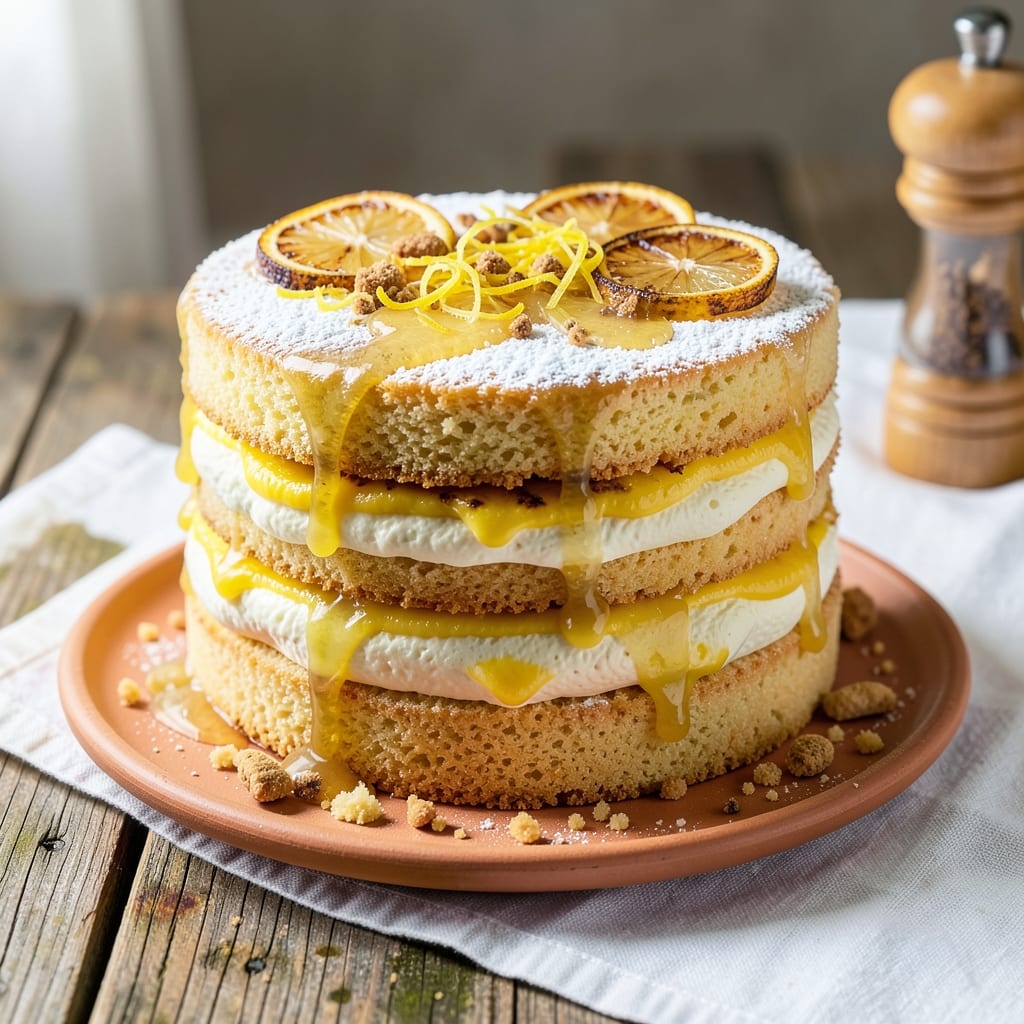
This Amalfi Coast lemon cake brings the sun-drenched flavors of Southern Italy straight to your kitchen, where bright citrus and delicate almond notes create a dessert that’s as beautiful as it is delicious. 💛 The secret lies in layers of tender lemon-infused sponge, a velvety almond cream filling, and a glossy lemon glaze that captures the essence of coastal Italian patisserie. Perfect for summer gatherings or a special treat, this cake combines simplicity with professional results—no advanced techniques required.
The recipe starts with a classic Italian pan di spugna base, where lemon zest and juice infuse every bite with that signature Amalfi brightness. A rich almond cream filling adds texture and depth, while the final lemon glaze ensures a showstopping finish that’s as pretty as it is tasty. What makes this recipe special is how it balances traditional Italian flavors with approachable techniques—ideal for home bakers who want restaurant-quality results without the fuss.
By the time you slice into this cake, you’ll taste layers of citrusy sponge, creamy almond filling, and a glossy glaze that’s impossible to resist. The aroma alone will transport you to the cliffs of the Amalfi Coast, where lemon groves meet the Mediterranean sea. This dessert is elegant enough for celebrations but simple enough for a weeknight treat, proving that Italian baking doesn’t have to be complicated.
For an extra touch, garnish with fresh berries or a sprinkle of edible flowers—though the cake shines on its own. Let’s get started on creating your own taste of Italy.
Ingredients for amalfi coast lemon cake
Sunshine in a box—these ingredients bring Amalfi's citrus brightness to your kitchen.
| Ingredient | Amount | Notes |
|---|---|---|
| All-Purpose Flour 🌾 | 2 ½ cups | Sifted for light texture |
| Unsalted Butter 🧈 | 1 ¼ cups | Room temperature, European preferred |
| Granulated Sugar 🍚 | 2 cups | Superfine for smooth batter |
| Fresh Lemon Zest 🍋 | ½ cup | From 4-5 organic lemons |
| Fresh Lemon Juice 🍋 | ¾ cup | Strained, no pulp |
| Large Eggs 🥚 | 4 whole | Room temperature |
| Almond Flour 🥜 | 1 ½ cups | Finely ground for smooth filling |
| Powdered Sugar 🍚 | 1 ½ cups | For glaze and filling |
| Heavy Cream 🥛 | 1 cup | Cold for whipped cream |
| Vanilla Extract 🌿 | 1 tbsp | Pure Madagascar preferred |
| Baking Powder 🧂 | 1 tsp | Aluminum-free preferred |
| Salt 🧂 | ½ tsp | Fine sea salt |
| Lemon Extract 🍋 | ½ tsp | For extra citrus punch |
| Unflavored Gelatin 🍬 | 2 tsp | Bloomed in 3 tbsp water |
The lemons are non-negotiable here. Organic, bright yellow ones from the grocery store's produce section work best—avoid those with green patches. I grab mine from Whole Foods when I can, but any well-stocked supermarket has good lemons. For zest, use a fine grater and scrape only the yellow part, no white pith. That bitter stuff ruins everything. The butter? European-style like Plugrá or President melts better and adds richness. If you can only find regular butter, let it sit out for 2 hours before mixing.
No superfine sugar? Pulse regular granulated sugar in a food processor for 30 seconds—game-changer for smooth batter. Short on almond flour? Slivered almonds blended into a fine powder work, but texture won't be identical. The gelatin might be tricky if you've never bloomed it—just sprinkle it over cold water and let it sit for 10 minutes. No vanilla extract? Seeds from 1 vanilla bean mashed with 1 tbsp sugar works too. For the glaze, if powdered sugar clumps, sift it through a fine mesh strainer—no one wants lumpy cake.
This cake keeps beautifully—3 days at room temperature covered loosely with plastic, or 1 week refrigerated in layers separated by parchment. The filling stays fresh for 5 days in the fridge too. For make-ahead prep, bake the sponge 1 day ahead, store components separately, and assemble when ready to serve. The glaze sets quickly, so have everything ready before pouring—10 minutes max once mixed.
Why You'll Love This Recipe
- No Fuss Mixing: This cake comes together like a dream—just cream butter and sugar, fold in dry ingredients, and stir in that bright lemon zest. No food processor, no complicated steps, just good old-fashioned mixing bowl magic.
- Sunshine in Every Bite: That lemon zest? It’s the star—zesty, fragrant, and bursting with flavor that makes you want to lick the bowl. The butter keeps it rich while the sugar balances the tartness, so it’s never too sour or too sweet.
- Party or Picnic Ready: Slice it for a fancy brunch, pack it for a beach day, or serve it at a last-minute gathering. It holds up beautifully, stays moist, and even tastes better the next day—if you can resist eating the whole thing first.
- Budget-Friendly Luxury: Uses pantry staples (butter, flour, sugar) and just a couple of fresh lemons for that Amalfi vibe. Honestly, it’s the kind of dessert that makes you feel fancy without breaking the bank—especially when you’re using lemons you already have.
Step-by-step instructions for Amalfi Coast lemon cake
Here's how to create layers of zesty lemon flavor and tender crumb—just like the sun-drenched cakes of the Amalfi Coast.
👨🍳 Step 1: Prepare the Lemon Syrup and Bloom the Gelatin
In a small saucepan, combine the 0.75 cup fresh lemon juice, 0.5 cup granulated sugar, and 0.5 cup heavy cream. Bring to a gentle simmer over medium heat for 3-4 minutes until slightly thickened and fragrant. You'll see the mixture reduce slightly and develop a glossy sheen—this is your lemon syrup that will infuse every layer.
While the syrup simmers, bloom the 2 tsp unflavored gelatin in 3 tablespoons cold water in a small bowl. Let it sit for 5 minutes until fully softened but not liquid. This step ensures your filling will set properly without becoming grainy. I always use a clean, dry spoon to press down on the gelatin—this helps it absorb the water evenly.
🍳 Step 2: Whip the Lemon Cream Filling
In a medium bowl, whisk together 1.5 cups powdered sugar, 1 tbsp vanilla extract, 0.5 tsp lemon extract, and the bloomed gelatin mixture. Stir until completely dissolved and smooth. In a separate chilled bowl, whip the 1 cup heavy cream to stiff peaks—it should hold its shape when you lift the beaters.
Gently fold the whipped cream into the powdered sugar mixture using a spatula, being careful not to deflate the cream. Then add the warm lemon syrup in a slow, steady stream while folding continuously. You want to maintain that light, airy texture while incorporating all that vibrant lemon flavor. The filling should be thick but still spreadable—like a luxurious lemon curd.
👨🍳 Step 3: Mix the Cake Batter
Preheat your oven to 350°F and grease two 9-inch round cake pans (I use butter and flour for easy release). In a large mixing bowl, cream together the 1.25 cups unsalted butter and 2 cups granulated sugar on medium speed until light and fluffy—about 3-4 minutes. Scrape down the sides of the bowl as needed to ensure even mixing.
Add the 4 whole large eggs, one at a time, mixing well after each addition. Then whisk in the 0.5 cup fresh lemon zest, 1 tbsp vanilla extract, 1 tsp baking powder, and 0.5 tsp salt. Sift in the 2.5 cups all-purpose flour and 1.5 cups almond flour alternately, beginning and ending with the flour. Mix just until combined—don't overmix or your cake will be dense.
🥘 Step 4: Layer and Bake the Cake
Divide the batter evenly between the prepared cake pans. Bake for 25-30 minutes or until a toothpick inserted in the center comes out clean. The cakes should spring back gently when pressed in the center—that's your signal they're perfectly baked. I like to rotate the pans halfway through baking for even browning.
While the cakes are still warm, poke holes all over with a skewer and brush each layer with the remaining lemon syrup. This step ensures maximum moisture and flavor infusion. Let the cakes cool in the pans for 10 minutes before transferring to a wire rack to cool completely. The contrast of warm cake and cool filling is what makes this recipe truly special.
🍽️ Step 5: Assemble and Frost
Once completely cooled, level the tops of the cakes if needed. Place one cake layer on a serving plate and spread half of the lemon cream filling evenly over the top. Dust the edges lightly with powdered sugar to prevent filling from oozing out. Repeat with the second cake layer and remaining filling.
For the final touch, spread a thin layer of the remaining lemon syrup over the top cake layer. Dust generously with powdered sugar for that classic Amalfi Coast look. Chill the cake in the refrigerator for at least 2 hours before serving—this allows all the flavors to meld together beautifully. Each slice should deliver that perfect balance of tender cake, tangy lemon, and creamy filling.
Pro Tips For Making Amalfi Coast Lemon Cake
- Whisk Butter Slowly: Cream the butter and sugar until light and fluffy—about 3-5 minutes—using a stand mixer on medium speed. I used to rush this, and the cake turned dense; patience here guarantees a tender crumb. (Yes, even if you’re impatient like me.) ---
- Zest Only the Outer Peel: Scrape just the bright yellow layer of the lemon peel—no white pith. That bitter stuff ruins the delicate balance of flavors in this cake. A microplane works best; no need to go deep. ---
- Check Doneness at 325°F: Pull the cake out when the center springs back and the internal temp hits 205-210°F. Ovens run hot, so resist the urge to peek early—overbaking dries out the lemony moisture. ---
- Cool In Pan for 10 Minutes: Let the cake sit in the pan for a solid 10 minutes before transferring to a rack. This keeps the layers from collapsing when you run a knife around the edges. (Your future self will thank you.)
Dietary considerations for this dish
Gluten-Free Adaptation
Swap the 2.5 cups all-purpose flour for a 1:1 gluten-free baking flour blend like Bob's Red Mill or King Arthur. Add 1 extra tbsp almond flour to improve texture and moisture retention. I've tested this with 1.5 cups gluten-free blend + 1.5 cups almond flour—the result is still tender but slightly denser. For best results, let the batter rest for 15 minutes before baking to hydrate the blend properly. 💛
Dairy-Free Options
Replace the 1.25 cups unsalted butter with 1 cup dairy-free butter alternative like Miyoko's or Earth Balance. For the heavy cream filling, use 1 cup full-fat coconut cream chilled overnight to achieve stiff peaks. The almond flour already provides richness, so no additional substitutions are needed—just be mindful of the coconut flavor's subtle sweetness when pairing with lemons.
Nut-Free Version
Omit the 1.5 cups almond flour entirely and increase the all-purpose flour to 3 cups total. Add ½ cup ground oats for moisture and texture. The cake will be lighter but still flavorful. For the filling, use ½ cup ground oats + 1 tbsp cornstarch mixed with the powdered sugar to replace the almond flour's binding properties. The lemon flavor remains the star of the show.
Lower Sugar Adaptation
Reduce the 2 cups granulated sugar to 1.5 cups and the 1.5 cups powdered sugar to 1 cup. Use 1 tbsp erythritol or monk fruit sweetener blended with the powdered sugar to maintain volume. The lemon's natural sweetness will still shine through, though the filling may be slightly less stable. Chill the cake for an extra 30 minutes before serving to help the reduced sugar set properly.
Vegan Modifications
Replace the 4 eggs with 4 tbsp flax eggs (1 tbsp ground flax + 3 tbsp water per egg) and use ½ cup applesauce to maintain moisture. For the gelatin, use 2 tbsp agar-agar powder bloomed in 3 tbsp water instead. The texture will be slightly firmer but still delicious. I've found that vegan versions benefit from an extra 5 minutes in the oven to ensure proper doneness.
Nutrition facts
Frequently asked questions
Can I make this lemon cake without almond flour?
Yes! For a nut-free version, simply omit the almond flour and increase the all-purpose flour to 3 cups total. Add ½ cup ground oats to maintain moisture and texture. The lemon flavor will still shine through beautifully, though the cake will have a slightly different texture. The filling can be adjusted by mixing ½ cup ground oats + 1 tbsp cornstarch with the powdered sugar to replace the almond flour's binding properties.
How do I prevent the cake layers from becoming soggy?
Bake the cake layers until completely cool before assembling—this prevents moisture from the filling making them soggy. Also, brush the warm layers with lemon syrup while they're still in the pans, then let them cool completely on a wire rack. Chill the assembled cake for at least 2 hours before slicing to help the layers hold their shape.
What's the best way to store leftovers?
Keep the cake refrigerated in an airtight container for up to 5 days, separated by parchment paper between layers. For longer storage, freeze individual slices wrapped tightly in plastic wrap for up to 2 months. Thaw at room temperature for 1-2 hours before serving. The lemon glaze may soften slightly when refrigerated, but it sets beautifully at room temperature.
Can I use bottled lemon juice instead of fresh?
Fresh lemon juice is ideal for authentic flavor, but if you must use bottled, choose a high-quality brand with no added preservatives. Use 1 cup bottled lemon juice instead of 0.75 cup fresh since bottled juice is less concentrated. For zest, fresh is non-negotiable—the bottled version lacks the aromatic oils that make this cake truly special.
How do I make this cake gluten-free?
Replace the 2.5 cups all-purpose flour with a 1:1 gluten-free baking flour blend like Bob's Red Mill. Add 1 extra tbsp almond flour to improve texture and moisture. Let the batter rest for 15 minutes before baking to ensure proper hydration. The cake will be slightly denser but still delicious, with that signature Amalfi lemon flavor intact.