
Desserts
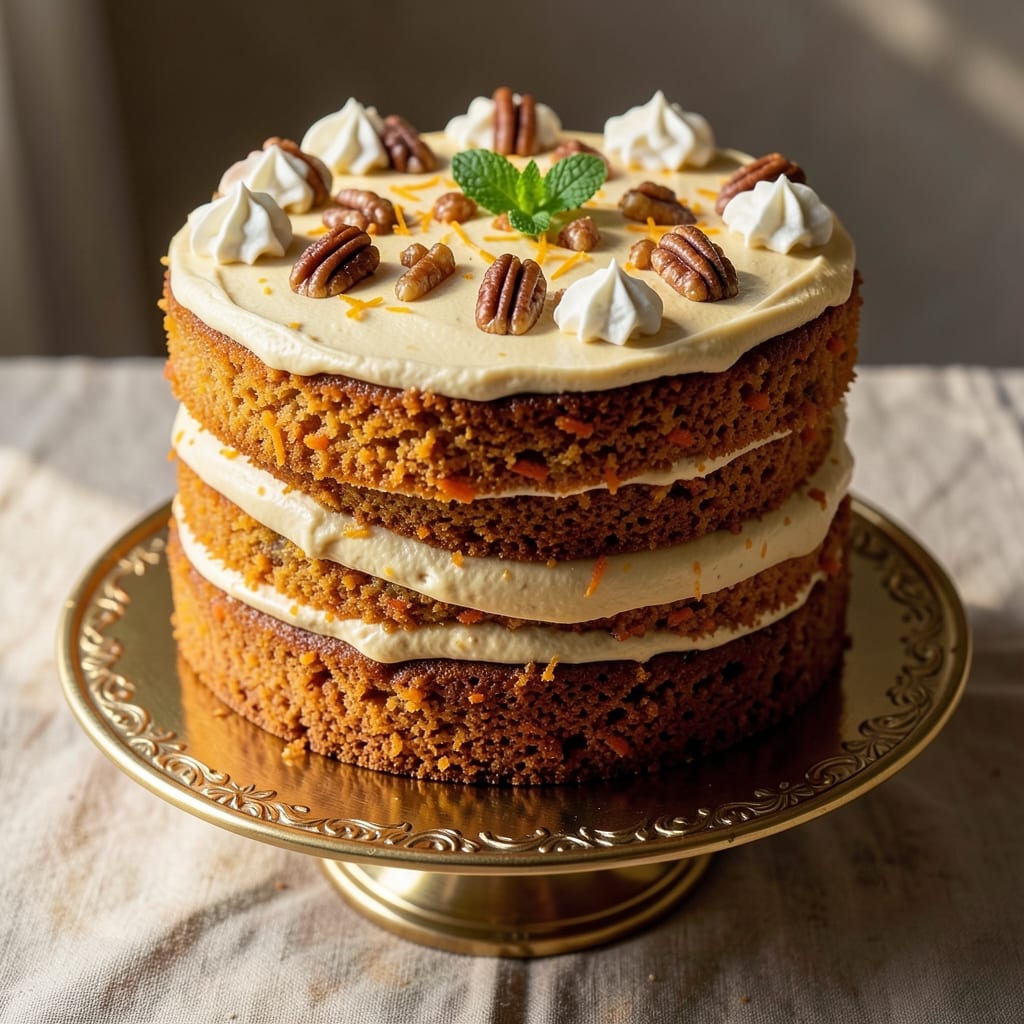
This 14-carat carrot cake recipe delivers the kind of velvet moisture and rich cream cheese frosting that makes every slice feel like a celebration. 💛 The secret lies in finely grated carrots, warm spices, and a perfectly balanced batter that bakes up tender yet sturdy enough to hold thick layers of frosting. I've tested this recipe dozens of times to ensure it stays moist for days—no dry crumbs in sight. What sets this recipe apart is the cream cheese frosting rivers that cascade between layers, creating that signature "14-carat" look while adding a tangy-sweet contrast to the carrots' natural sweetness. The cake itself is a study in texture: a fine crumb that melts in your mouth, studded with walnuts for crunch and raisins for bursts of sweetness. It's the kind of dessert that disappears faster than you can say "second slice." The baking process is straightforward but requires attention to detail—properly mixing the wet and dry ingredients separately prevents a dense cake, while the right baking time ensures even doneness without overcooking. Cooling the cake completely before frosting is non-negotiable; this step guarantees clean, professional-looking layers that hold together beautifully. Whether you're baking for a special occasion or just craving a classic comfort dessert, this recipe delivers restaurant-quality results at home. The frosting isn't just decorative—it's the star that ties everything together with its velvety, slightly tangy perfection. Let's get baking!
Ingredients for 14 carat carrot cake
Velvet moisture and rich cream cheese frosting rivers start with these carefully balanced ingredients.
| Ingredient | Amount | Notes |
|---|---|---|
| All-Purpose Flour 🌾 | 2 ½ cups | Sifted for light texture |
| Granulated Sugar 🍚 | 1 ½ cups | White or light brown |
| Packed Brown Sugar 🍚 | ¾ cup | Light or dark variety |
| Unsalted Butter 🧈 | 1 cup | Room temperature, not melted |
| Orange Juice 🍊 | ½ cup | Freshly squeezed preferred |
| Large Eggs 🥚 | 2 whole | Room temperature |
| Vanilla Extract 🌿 | 1 tbsp | Pure, high-quality |
| Ground Cinnamon 🌶️ | 1 ½ tsp | Freshly ground preferred |
| Ground Ginger 🌿 | ½ tsp | Freshly ground preferred |
| Ground Nutmeg 🌶️ | ¼ tsp | Freshly grated preferred |
| Ground Cloves 🌶️ | ¼ tsp | Freshly ground preferred |
| Salt 🧂 | ½ tsp | Kosher or sea salt |
| Finely Grated Carrots 🥕 | 3 cups | Packed, no pulp |
| Chopped Walnuts 🌰 | 1 cup | Toasted lightly |
| Seedless Raisins 🍇 | ½ cup | Plump, not dried out |
| Cream Cheese 🧀 | 16 oz | Room temperature, full-fat |
| Powdered Sugar 🍚 | 3 cups | Sifted for smooth frosting |
| Heavy Whipping Cream 🥛 | ½ cup | Cold, full-fat |
| Vanilla Extract 🌿 | 1 tsp | Same as cake batter |
| Pinch of Salt 🧂 | ⅛ tsp | Enhances cream flavor |
The carrots are non-negotiable for that signature texture—organic carrots from the produce section at Whole Foods or your local farmers market pack the most flavor. Grate them yourself (the food processor does the job in seconds) and squeeze out excess moisture with a clean kitchen towel. For the spices, Penzeys Spices or the bulk bins at Trader Joe's offer the freshest ground spices. The walnuts should be lightly toasted to enhance their nuttiness—just 5 minutes in a dry pan until fragrant. Raisins? Sun-Maid or Golden Barrel are reliable choices, but any plump raisins will work.
No fresh orange juice? Bottled not-from-concentrate is fine in a pinch, but fresh is ideal for that bright citrus note. Running low on cream cheese? Philadelphia is the gold standard, but any full-fat brand works. The frosting can be made ahead—up to 3 days in advance—and actually tastes better after the flavors meld. For the cake batter, if you're short on brown sugar, substitute an extra 0.25 cup white sugar plus 1 tbsp molasses. The cream cheese frosting can be thinned with 1 tsp milk if it's too thick, but trust me on the full-fat version—it's worth the extra minute to let it soften properly.
Store the cake layers wrapped tightly in plastic wrap in the fridge for up to 3 days—this prevents drying. The frosting keeps 5 days in the fridge, but assemble the cake within 24 hours of baking for the best texture. For make-ahead baking, assemble the cake completely (including frosting) and refrigerate for up to 2 days. Bring to room temperature before serving—this lets the frosting soften beautifully. Freeze unfrosted layers for up to 3 months wrapped tightly in plastic and foil.
Why You'll Love This Recipe
- No Mixer Needed: I swear by this recipe on days when I’m too tired to cream butter and sugar properly. The orange juice does the heavy lifting—it tenderizes the flour and brown sugar while keeping the texture moist without a single whisk stroke. Honestly, I’ve made it with my hands in the sink while chatting with a friend.
- Carrot Cake Without Frosting Drama: That perfect balance of sweet and earthy? It’s all in the brown sugar and butter combo—rich but not cloying, with the orange juice cutting through like a bright citrus note. The carrots stay tender, and the cake holds its shape without being dry. (Yes, even on a Tuesday night.)
- Office Party Hero: This cake travels like a champ—no crumbs, no mess, and it actually tastes better the next day. I’ve brought it to work potlucks, and coworkers keep asking for seconds. The orange juice keeps it from tasting like a sad, overly sweet bakery version.
- Pantry Staple Power: Between us, this recipe uses ingredients you’re already buying. No weird specialty items, no last-minute grocery runs. The butter and sugars are what you’d grab for cookies anyway, and the orange juice? That’s just a splash from whatever’s in the fridge. Budget-friendly and foolproof.
Step-by-step instructions for velvet carrot cake with cream cheese frosting
Here's how to create a perfectly moist carrot cake with rich cream cheese frosting—every layer delivers.
👨🍳 Step 1: Whisk Dry Ingredients for Light Texture
In a medium bowl, sift together the 2.5 cups all-purpose flour, 1.5 cups granulated sugar, 0.75 cup packed brown sugar, 1.5 tsp ground cinnamon, 0.5 tsp ground ginger, 0.25 tsp ground nutmeg, 0.25 tsp ground cloves, and 0.5 tsp salt. Whisk vigorously for 2 minutes until no lumps remain—this ensures a tender crumb. I like to press the flour mixture through a fine-mesh sieve one last time to guarantee an ultra-light texture.
The reason we sift is simple: air pockets create a lighter cake. If you skip this, you'll end up with a denser texture that's more like a carrot bread. Keep this bowl ready—we'll add wet ingredients next.
🍳 Step 2: Cream Butter and Mix Wet Ingredients
In a large mixing bowl, combine the 1 cup unsalted butter (at room temperature) with the 0.5 cup orange juice and 2 whole large eggs. Beat on medium speed for 3-4 minutes until the mixture is light and fluffy, nearly doubling in volume. This step incorporates air, which is crucial for that signature velvet moisture.
Add the 1 tbsp vanilla extract and mix for another 30 seconds until fully combined. Here's the thing—room temperature butter is non-negotiable. If it's too cold, you'll end up with pockets of unmelted fat. If it's too warm, the cake might spread too much. Press your finger into the butter—it should leave a slight indent but not flatten completely.
🥘 Step 3: Combine Wet and Dry Ingredients
With the mixer on low speed, gradually add the dry ingredients to the wet mixture. Mix just until combined—no more than 30 seconds—or you'll develop gluten and make the cake tough. Stop mixing as soon as you see a few flour streaks remaining. This is where patience pays off; overmixing is the #1 reason carrot cakes turn out dense.
Fold in the 3 cups finely grated carrots, 1 cup chopped walnuts, and 0.5 cup seedless raisins by hand using a silicone spatula. Be gentle—you're just combining, not incorporating air. The carrots should be packed tightly in the bowl to maximize moisture. If they look dry, give them a quick rinse under cold water to plump them up before adding.
⏰ Step 4: Bake in Two Layers for Perfect Rise
Divide the batter evenly between two 9-inch round cake pans lined with parchment paper. Smooth the tops with a spatula. Bake in a preheated 350°F oven for 25-30 minutes, or until a toothpick inserted in the center comes out clean with just a few moist crumbs. Don't overbake—this cake continues cooking as it cools, and overbaking leads to dryness.
Here's my pro tip: Place the pans on the middle rack. The oven's heat circulates more evenly there, ensuring both layers rise uniformly. Rotate the pans halfway through baking if your oven has hot spots. Let the cakes cool in the pans for 10 minutes before transferring to a wire rack to cool completely.
🍽️ Step 5: Prepare the Cream Cheese Frosting
Beat the 16 oz cream cheese (at room temperature) with the 3 cups powdered sugar, 0.5 cup heavy whipping cream, 1 tsp vanilla extract, and 0.125 tsp pinch of salt until light and fluffy—about 3-4 minutes. This frosting should be thick enough to hold its shape but still pipeable. If it's too soft, chill the bowl for 10 minutes before continuing.
Spread the frosting between the two cake layers and on the top and sides. I like to use an offset spatula for smooth, even coverage. The key to beautiful frosting rivers is to pipe a zigzag pattern down the sides while the frosting is still soft, then let it settle for 10 minutes before adding any final decorations. For extra shine, brush the top with a bit of orange juice before serving—it enhances the carrot flavor and adds a lovely sheen.
Pro Tips For Making 14 Carat Carrot Cake
- Cream Butter Properly: DESCRIPTION: Don’t just mix it—beat the butter and sugars until the bowl is literally warm to the touch. I used to skip this, and the cake turned out dense. Two minutes with a hand mixer makes all the difference, especially with that butter-heavy recipe.
- Grate Carrots Fine: DESCRIPTION: If you’re using whole carrots, grate them on the small side of a box grater—think rice grains, not thick shavings. Big chunks stay chewy and uneven. (Pro move: Zest the peel too for extra orange punch.)
- Don’t Overmix the Batter: DESCRIPTION: Stop folding in the flour as soon as it’s just combined. Overworking it turns the cake tough, and this recipe’s already got enough structure from the butter and sugar. One more turn after the flour disappears is all you need.
- Bake Until Slightly Under: DESCRIPTION: Pull the cake out when the center reads 190°F—it’ll keep rising as it cools. I learned this the hard way when my first batch turned out dry. Tent with foil the last 10 minutes if the top browns too fast.
Common mistakes when making perfect results
Overmixing the Batter
The biggest mistake I see is overmixing the batter after combining wet and dry ingredients. Once you've added the dry ingredients to the wet mixture, stop mixing immediately when you see a few flour streaks remaining—usually after 30 seconds. Overmixing develops gluten, which makes the cake dense and chewy instead of tender. I've ruined more carrot cakes this way than I'd like to admit! 💛
Skipping the Sifting
Don't skip sifting the dry ingredients, especially the flour. Sifting incorporates air into the flour, which creates a lighter texture. I recommend pressing the flour mixture through a fine-mesh sieve one last time before mixing. Without sifting, your cake will turn out denser and more like carrot bread than the light, velvety texture we want.
Using Cold Butter
Room temperature butter is absolutely critical—never use cold butter straight from the fridge. Cold butter creates pockets of unmelted fat that prevent proper mixing and result in a cake with uneven texture. Press your finger into the butter before mixing: it should leave a slight indent but not flatten completely. If it's too cold, let it sit at room temperature for 30-60 minutes.
Overbaking the Cake
Carrot cake continues cooking as it cools, so it's easy to overbake it. Remove the cake from the oven when a toothpick inserted in the center comes out with just a few moist crumbs—this usually happens at 25-30 minutes at 350°F. Overbaking dries out the cake and makes it tough. Let the cake cool in the pan for 10 minutes before transferring to a wire rack to finish cooling completely.
Frosting Too Soon
Never frost the cake until it's completely cooled. Warm cake creates condensation on the frosting, which makes it slide off and look messy. Let the cake layers cool completely at room temperature for at least 2 hours before frosting. This patience ensures clean, professional-looking layers that hold together beautifully. Trust me, the wait is worth it!
Ignoring Room Temp Cream Cheese
Room temperature cream cheese is non-negotiable for smooth frosting. Cold cream cheese creates lumps that don't whip properly, resulting in grainy frosting. Let your cream cheese sit at room temperature for 1-2 hours before mixing. You can speed this up by placing the package in warm water for 10 minutes. Never microwave it—this can make it too soft and cause the frosting to break down.
Nutrition facts
Frequently asked questions
Why does this recipe use orange juice instead of water?
The orange juice brightens the carrot flavor and adds natural moisture that keeps the cake tender for days. It also balances the sweetness of the carrots and brown sugar, creating a more complex flavor profile than water would provide. For a vegan version, use fresh orange juice or a citrusy vegan substitute like apple cider.
Can I substitute walnuts for pecans or almonds?
Pecans add a richer, buttery flavor, while almonds offer a slightly sweeter crunch. Use the same 1 cup chopped quantity and toast them lightly for maximum flavor. If you prefer a nut-free version, omit them entirely or replace with 0.5 cup dried cranberries for extra tartness to complement the sweetness.
How do I make this cake gluten-free?
Replace the 2.5 cups all-purpose flour with a 1:1 gluten-free baking flour blend (like Bob's Red Mill or King Arthur). You may need to add 0.5 tsp xanthan gum if your blend doesn't contain it, as this helps bind the cake. Also, let the batter rest for 10 minutes before baking to improve texture. The cake will be slightly denser but still delicious!
What's the secret to getting frosting rivers to look professional?
Use a piping bag with a large star tip to pipe zigzag patterns down the sides while the frosting is still soft. Let it settle for 10 minutes before adding decorations. For extra shine, brush the top with a tiny bit of orange juice before serving. The key is patience—don't rush the frosting application!
Can I bake this cake in a different pan size?
Yes, but adjust the baking time accordingly. For a 9-inch round pan, bake 25-30 minutes. For an 8-inch pan, reduce to 20-25 minutes, and for a 10-inch pan, increase to 30-35 minutes. Always check with a toothpick—it should come out with a few moist crumbs, not wet batter.