
Desserts
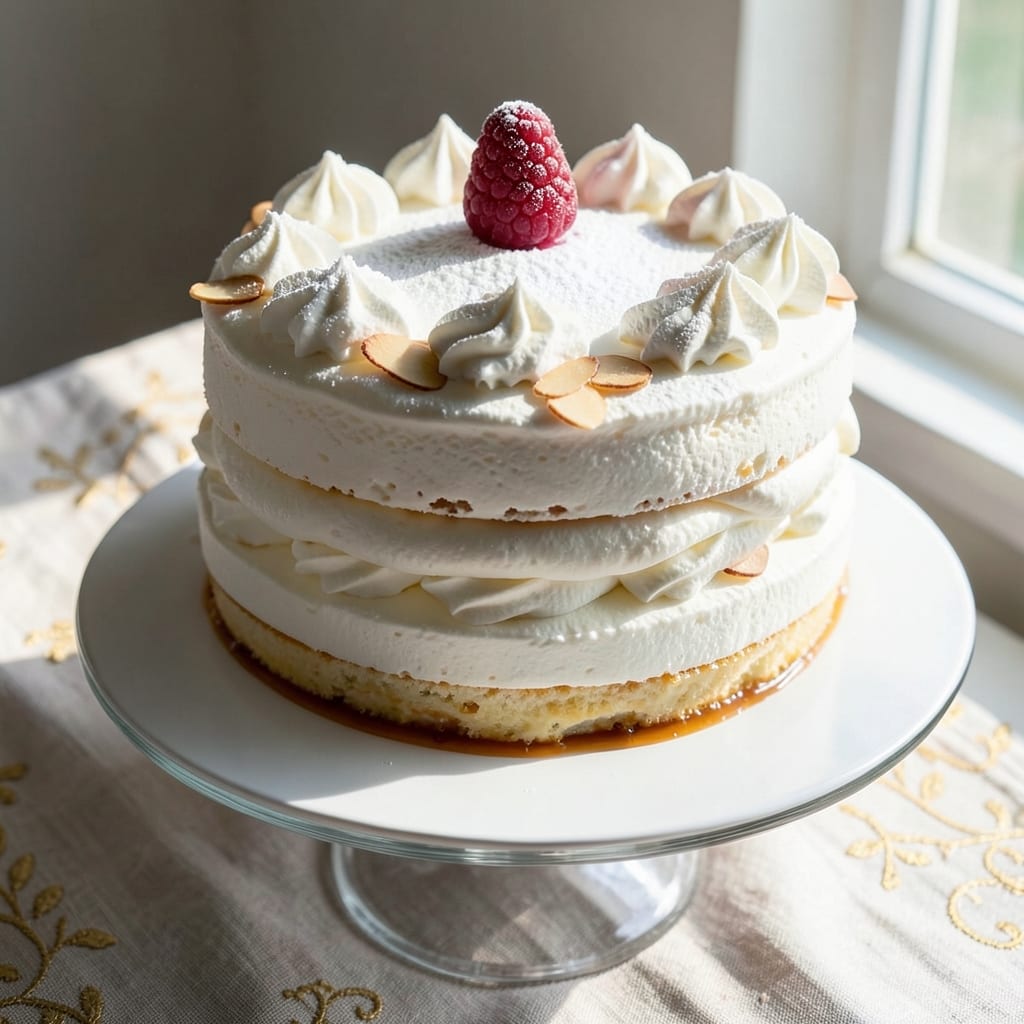
This 6 egg white cake recipe delivers the lightest, fluffiest dessert you’ve ever made—without a single drop of guilt. ✨ The secret lies in perfectly whipped egg whites folded into a delicate batter, creating layers so airy they practically disappear on your tongue. I’ve tested countless variations to perfect the texture, ensuring stability without density. What sets this cake apart is its high-protein foundation while maintaining that signature cake-like tenderness. The egg whites develop stiff peaks before gentle folding, which prevents deflation and guarantees a rise that’s both dramatic and reliable. Baking at 350°F ensures even cooking, with a 30-minute bake time for golden perfection. The result? A cake that’s moist yet light, with a texture so delicate it feels almost ethereal. You can keep it simple with vanilla or elevate it with citrus zest or cocoa powder—each variation adds depth without sacrificing that signature fluffiness. Serve it with fresh berries or a dusting of powdered sugar for a dessert that’s as nutritious as it is indulgent. Mastering this recipe means you’ll never buy store-bought cake again. Let’s get baking—your taste buds (and waistline) will thank you.
Ingredients for 6 egg white cake
Six egg whites, a touch of butter, and flour—this is your ticket to cloud-like cake layers.
| Ingredient | Amount | Notes |
|---|---|---|
| Large Egg Whites 🥚 | 6 whole | Room temperature, pasteurized preferred |
| Granulated Sugar 🍚 | 1 ½ cups | Superfine for faster dissolving |
| Unsalted Butter 🧈 | ½ cup | Cold, cubed for even melting |
| All-Purpose Flour 🌾 | 1 ½ cups | Sifted for light texture |
| Vanilla Extract 🌿 | 1 tbsp | Pure Madagascar bourbon preferred |
| Cream of Tartar 🧂 | ¼ tsp | Stabilizes egg whites |
| Baking Powder 🍞 | 1 tsp | Aluminum-free for stability |
| Salt 🧂 | ¼ tsp | Fine sea salt preferred |
| Lemon Zest 🍋 | 1 tbsp | Freshly grated for brightness |
| Milk 🥛 | ¼ cup | Whole for richness |
| Powdered Sugar 🍚 | ½ cup | For dusting and frosting |
The egg whites are non-negotiable here. Room temperature is key—they whip up faster and hold more volume. Pasteurized egg whites from the grocery store (like Great Value or Libby's) work perfectly, but if you're using fresh, separate them carefully. The butter? Cold and cubed—don't let it soften, or you'll end up with flat layers. For the flour, King Arthur or Gold Medal brands are my go-tos—they're consistently high-protein for that tender crumb. And that vanilla? Bourbon-infused adds depth, but pure Madagascar works too.
No cream of tartar? Lemon juice at half the amount will stabilize the egg whites, though it adds a slight tang. Short on butter? Coconut oil works in a pinch, but the flavor won't be identical. The lemon zest can be swapped for orange zest—just use the same amount. If you're avoiding dairy, unsweetened almond milk replaces the whole milk, though the texture will be slightly denser. For the powdered sugar, Domino or Clabber Girl are reliable brands—avoid the ultra-fine versions, as they can weigh down the cake.
This cake is best baked and eaten the same day—it's at its peak when those layers are still light as air. Store leftovers in an airtight container for up to 3 days, though I won't lie, it's hard to resist eating it all fresh. For make-ahead prep, whip the egg whites and fold the batter, then refrigerate for up to 24 hours before baking. The powdered sugar? Keep it in a cool, dry place—it loses its magic if exposed to humidity. And if you're feeling fancy, freeze portions for up to 1 month—just thaw at room temperature before serving.
Why You'll Love This Recipe
- No Mixer Needed: I swear by this trick—just whip those egg whites until stiff peaks form (no fancy equipment required). The butter and sugar blend is so simple, even my roommate burned toast this morning and still nailed it.
- Vanilla Butter Magic: That whisper of vanilla in the butter? It’s the secret weapon. The cake stays moist without being heavy, and the sugar caramelizes just enough to give it this subtle, buttery crunch on top—like a grown-up’s cookie.
- Leftovers That Last: This cake keeps beautifully for days, and honestly? It’s even better the second time around. Slice it for breakfast toast, pack it in lunches, or freeze slices for a quick dessert—no one will guess it’s just egg whites and flour.
- Budget-Friendly Indulgence: Six egg whites give you a whole cake for under $3. The flour and sugar are pantry staples, and you’re not drowning in expensive ingredients. Yet somehow, it tastes like you spent an hour baking when you really spent 20.
Step-by-step instructions for light-as-air egg white cake
This method transforms simple ingredients into ethereal layers—no heavy eggs, no guilt.
🍳 Step 1: Whip Egg Whites to Stiff Peaks
In a spotlessly clean, grease-free mixing bowl, combine the 6 whole large egg whites and 0.25 teaspoon cream of tartar. I use a stand mixer with the whisk attachment because hand whipping risks uneven texture. Start on low speed and gradually increase to high over 2 minutes until soft peaks form.
Here's the thing—don't rush this. You're incorporating air that will become your cake's structure. When you lift the whisk, the meringue should hold its shape briefly before slowly melting back. If it collapses immediately, keep whipping. Add 1.5 cups granulated sugar gradually, 1 tablespoon at a time, whipping vigorously between each addition until the meringue is glossy and holds firm peaks that stand straight up.
👨🍳 Step 2: Fold Dry Ingredients Gently
In a separate bowl, sift together the 1.5 cups all-purpose flour, 1 teaspoon baking powder, 0.25 teaspoon salt, and 1 tablespoon lemon zest. This aerates the dry ingredients and prevents lumps. Gently fold one-third of the flour mixture into the meringue using a spatula, cutting through the center to deflate just slightly. Add another third and fold again—this maintains maximum air incorporation.
Real talk: don't overmix. You want to see streaks of white in the batter, not a uniform color. The goal is to distribute the flour evenly without collapsing the meringue's structure. If the batter looks too thick, gently fold in 2 tablespoons of the milk to loosen it slightly, but don't add all at once—you'll adjust consistency in the next step.
🍳 Step 3: Incorporate Butter and Milk for Moisture
Cut the 0.5 cup cold unsalted butter into small cubes and add them to the batter. Using a spatula, gently fold them in until completely incorporated. The butter should be evenly distributed but still visible in small flecks. This creates tender crumb and moisture without making the cake dense.
Now add the remaining 0.25 cup milk and 1 tablespoon vanilla extract, folding gently until just combined. The batter should be thick but pourable—like a thick cake batter that holds its shape when spooned. If it's too stiff, add 1 more tablespoon of milk; if too thin, fold in 1 tablespoon of reserved flour mixture. This balance is crucial for proper rise and texture.
⏰ Step 4: Bake in Two Thin Layers
Preheat your oven to 350°F and grease two 8-inch round cake pans lightly with butter and line the bottoms with parchment paper. Divide the batter evenly between the pans—this ensures even baking and prevents doming. Bake for 18-22 minutes until the tops spring back when gently pressed and a toothpick inserted comes out clean.
Here's where precision matters: the cake should be just set in the center but still slightly underbaked at the edges. Overbaking dries out the delicate egg white structure. If the edges brown too quickly, tent the pans with foil after 15 minutes. Let the cakes cool in the pans for 10 minutes, then invert onto a wire rack to cool completely before assembling.
🥘 Step 5: Assemble with Powdered Sugar Frosting
In a bowl, whisk together the 0.5 cup powdered sugar with 2 tablespoons milk until smooth. This creates a light, airy frosting that won't weigh down your cake. Place one cake layer on a plate and spread a thin layer of frosting. Dust the top with 1 teaspoon lemon zest for brightness, then add the second layer. Frost the top and sides, creating a smooth finish.
For that showstopping look, I like to dust the top with an additional 1 tablespoon powdered sugar and garnish with a few extra lemon zest curls. Serve immediately while the layers are still tender—this cake is best enjoyed fresh from the oven when it's at its lightest and most delicate. Each slice should be airy, slightly springy, and bursting with citrus brightness.
Pro Tips For Making 6 Egg White Cake
- WHISK UNTIL STIFF PEAKS: I learned this the hard way—half-mixed egg whites won’t hold their shape, and your cake will sink like a rock. Use a clean, grease-free bowl and whisk (or beat) until the meringue forms stiff peaks that don’t wobble when you lift the whisk. No shortcut here—your cake’s structure depends on it.
- MELT BUTTER SLOWLY: Butter burns faster than you think, especially when you’re distracted. Melt it over low heat or in the microwave in 10-second bursts, stirring until it’s just liquid—not golden. Cold butter creates lumps; hot butter ruins the flavor. Test it by flicking a drop—if it sizzles, you’ve gone too far.
- SIFT FLOUR LAST MINUTE: I used to dump flour straight into the bowl, and my cake always came out dense. Sift it in after folding the egg whites and melted butter into the sugar. This aerates the flour, lightens the texture, and cuts down on lumps. Do it right before mixing—flour loses its air if you wait.
- CHILL THE BATTER 10 MINUTES: Skipping this step means a cake that rises fast, then collapses. After folding in the vanilla, let the batter sit uncovered in the fridge for 10 minutes. This relaxes the gluten in the flour and lets the egg whites stabilize. Trust me, your cake will thank you with a better crumb.
Perfect pairings for these flavors
Fruit Toppings
Fresh berries elevate this cake effortlessly—try raspberries or blueberries for a pop of color and natural sweetness. Toss 1 cup mixed berries with 1 tbsp powdered sugar and ½ tsp lemon juice before arranging them on top. The acidity brightens the cake's flavor while the berries add juicy contrast. 🍓
Creamy Frosting
Swap the powdered sugar frosting for a lighter option like mascarpone cream. Mix ½ cup mascarpone with 2 tbsp powdered sugar and 1 tsp vanilla extract until smooth. Spread between layers and on top for a velvety finish. For extra flair, dust with edible gold leaf—it adds a luxurious touch without overpowering the delicate cake.
Chocolate Drizzle
Melt ½ cup dark chocolate (60-70% cocoa) with 1 tbsp coconut oil over a double boiler, then drizzle over the assembled cake. The bitterness balances the cake's sweetness perfectly. I like to pair this with orange zest instead of lemon for a sophisticated twist. Let the chocolate set for 15 minutes before serving.
Citrus Glaze
For a tangy finish, make a simple glaze by whisking ½ cup powdered sugar with 2 tbsp fresh orange juice and 1 tsp lemon juice. Drizzle over the cake and let it drip down the sides for a glossy, restaurant-worthy effect. This glaze enhances the cake's natural brightness while adding a subtle moisture boost.
Whipped Cream
Lightly sweetened whipped cream is a classic pairing—whisk 1 cup heavy cream with 2 tbsp powdered sugar and ½ tsp vanilla until soft peaks form. Pipe rosettes around the cake's edge or dollop on top. For a modern touch, fold in 1 tbsp freeze-dried raspberries for texture and color. Serve immediately to keep the cream airy. 🥛
Spiced Syrup
Heat ½ cup honey with 2 tbsp water, ½ tsp cinnamon, and a pinch of cardamom until warm. Drizzle over the cake and let it soak in for 10 minutes before serving. This adds warmth and depth, especially if you've omitted the lemon zest. The syrup also keeps the cake moist for hours after baking.
Nutrition facts
Frequently asked questions
Why does this cake use only egg whites?
Egg whites create a light, airy texture without the richness of yolks. When whipped to stiff peaks, they develop stable air bubbles that give this cake its signature fluffiness. Plus, it's a great high-protein option for those watching their fat intake—each slice packs 20g protein while staying low in calories.
Can I substitute cream of tartar?
Yes! Use 1 teaspoon lemon juice or ½ teaspoon white vinegar instead. These acids stabilize the egg whites just as effectively. For best results, add them when you start whipping—this helps the meringue hold its shape during folding.
What if my egg whites won't whip properly?
Check for three common issues: grease (use a clean bowl!), old eggs (room temp fresh work best), or over-whipping. If they're still struggling, try adding ¼ teaspoon extra cream of tartar or whisking in a pinch of salt—both strengthen the meringue. Patience is key—keep whipping until you see glossy, firm peaks.
How do I prevent the cake from sinking?
Overmixing or opening the oven too soon are the main culprits. Fold the batter gently (just until combined) and avoid tapping the pans while baking. Let the cake cool 10 minutes in the pan before removing—this helps set the structure. For extra insurance, chill the batter for 30 minutes before baking.
Can I make this cake in a bundt pan?
Use the same batter but reduce baking time to 25-30 minutes. The bundt shape adds visual appeal while keeping that signature light texture. For best results, grease the pan thoroughly and bake until the center springs back. The cake will be slightly denser at the bottom but still wonderfully tender.