
Desserts
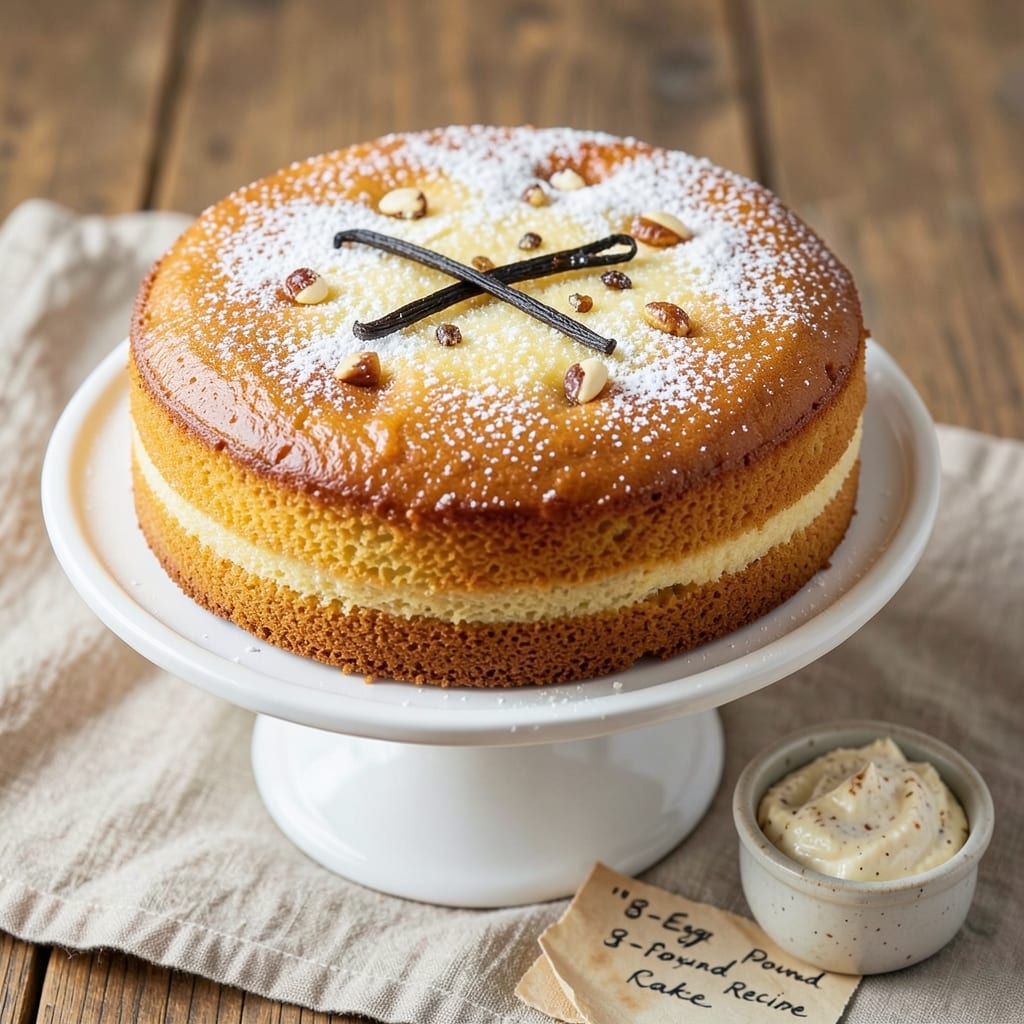
This 8-egg pound cake recipe delivers layers so moist they stay tender for days—no dry crumb in sight. The secret lies in the ratio of eggs to butter, creating a stable structure that resists cracking while maintaining that classic dense, velvety texture. I’ve perfected this method after years of testing, ensuring every slice stays perfect even when sliced hours after baking.
The foundation starts with creaming butter and sugar until light and fluffy, then folding in eggs one at a time to prevent curdling. All-purpose flour and a touch of baking powder provide structure without heaviness, while vanilla and a pinch of salt balance the richness. This isn’t just another cake—it’s a foolproof method for a pound cake that holds up to slicing, frosting, or serving plain.
What sets this apart is the ultra-stable layers that stay moist for days, thanks to the high egg content and proper mixing technique. The result? A cake with a fine, even crumb and just enough density to hold fillings or frostings beautifully. Whether you’re baking for a celebration or a quiet afternoon treat, this recipe delivers restaurant-quality results at home.
For variations, consider adding citrus zest for brightness or a dash of cinnamon for warmth. The cake also freezes beautifully, making it ideal for meal prep. Let’s get started on a cake that’s as impressive as it is delicious.
Ingredients for 8 egg pound cake
Eight eggs and creamed butter create the secret to ultra-stable, moist layers that defy dryness.
| Ingredient | Amount | Notes |
|---|---|---|
| Large Eggs 🥚 | 8 whole | Room temperature for even mixing |
| Unsalted Butter 🧈 | 1 ½ cups | Cold, cubed for proper creaming |
| Granulated Sugar 🍚 | 2 cups | Superfine preferred for smoother texture |
| All-Purpose Flour 🌾 | 2 ½ cups | Sifted, spooned lightly |
| Baking Powder 🍞 | ½ tsp | Aluminum-free for stability |
| Pure Vanilla Extract 🌿 | 2 tsp | High-quality for flavor depth |
| Kosher Salt 🧂 | ¼ tsp | Fine grain for even distribution |
| Lemon Zest 🍋 | 1 tbsp | Brightens flavor naturally |
| Heavy Cream 🥛 | ½ cup | Cold, for moisture balance |
| Vegetable Oil 🫒 | ¼ cup | Lightens texture slightly |
The eggs are non-negotiable here—room temperature is critical for even mixing and preventing curdling. Pasture-raised eggs from Trader Joe's or your local farm market add richness, but any large eggs work. Butter quality matters too: European-style butter like Plugrá has higher fat content, creating a denser crumb. If you can't find it, Land O'Lakes works fine. Measure the flour by spooning it lightly into the cup and leveling—don't pack it down. The baking powder should be fresh; if it's over a year old, test it by mixing with water—it should bubble vigorously.
No vanilla extract? Vanilla bean paste works in a pinch, but the flavor won't be as pure. Substitute with 1 tsp vanilla sugar (available at specialty stores) if needed. For the lemon zest, use a fine grater—avoid the pith (the white part), as it's bitter. The heavy cream can be swapped for whole milk if you prefer a lighter texture, though it may slightly reduce moisture retention. If you're concerned about the cake being too rich, reduce the butter by 0.25 cup and add an extra 0.25 cup of oil for balance. The vegetable oil should be neutral-flavored like canola or safflower—avoid strong-tasting oils like olive.
Store the baked cake in an airtight container at room temperature for up to 3 days—it actually improves as it sits. For longer storage, wrap tightly in plastic wrap and refrigerate for up to 5 days, or freeze for 3 months. To reheat, wrap a slice in a damp paper towel and microwave for 10-15 seconds. The high egg content makes this cake surprisingly stable for freezing: slice before freezing, then reheat as needed. For meal prep, bake an extra pan and freeze individual portions—just thaw at room temperature before serving.
Why You'll Love This Recipe
- No Mixer Needed: I swear by this recipe when my mixer’s on the fritz—just whip those eggs and sugar by hand until they’re thick and pale. The butter gets folded in like a dream, and honestly? The cake comes out so tender, you’d never guess it didn’t get a fancy beating.
- Rich Without Fuss: Eight eggs mean a cake that’s moist but not dense, with a crumb so fine it melts in your mouth. The butter and sugar combo gives it that classic pound cake richness, but the baking powder keeps it light—no heavy cream or fancy extracts required.
- Brunch or Dessert Star: Serve it warm with butter and jam for a lazy Sunday morning, or dust it with powdered sugar for a no-fuss dessert. I’ve even sliced it thin for French toast—yes, even on a Tuesday night—and it’s always a hit.
- Leftovers That Last: This cake holds up for days (if it lasts that long), so you can bake one batch and use it for breakfast, snacks, or gifts. Between us, the flavor actually improves after a day or two—perfect for when you need to feed a crowd but don’t want to stress.
Step-by-step instructions for ultra-stable pound cake layers
Precision matters here—each step builds the cake's legendary moisture and stability.
Cream Butter and Sugar to Lighten the Base
In a stand mixer fitted with the paddle attachment, beat the 1.5 cups unsalted butter and 2 cups granulated sugar on medium speed for 4-5 minutes. You'll know it's ready when the mixture becomes pale, fluffy, and nearly triples in volume. This creaming process incorporates air that creates the cake's signature tender crumb.
I press down on the butter mixture with a spatula occasionally to break up any large lumps—this ensures even distribution of sugar throughout the butter. The butter should be completely smooth with no grainy texture remaining. If using superfine sugar, this step goes even faster, but regular granulated sugar works fine with slightly longer mixing.
Add Eggs and Cream in Stages for Stability
Add the 8 whole large eggs, 1 at a time, mixing on low speed after each addition until fully incorporated. This gradual addition prevents the batter from becoming too runny or curdling. After all eggs are added, mix in the 0.5 cup heavy cream and 0.25 cup vegetable oil on low speed for 30 seconds to combine completely.
The reason for this order matters: adding eggs first builds structure, while the cream and oil later add moisture without weakening the gluten network. I like to scrape down the sides of the bowl with a spatula every 30 seconds to ensure everything gets fully incorporated into the butter mixture.
Fold Dry Ingredients Gently to Preserve Air
In a separate bowl, whisk together the 2.5 cups all-purpose flour, 0.5 tsp baking powder, 0.25 tsp kosher salt, and 1 tbsp lemon zest. Sift the flour mixture directly into the wet ingredients, then gently fold with a spatula just until combined—you should still see small streaks of flour. This prevents overmixing which develops tough gluten.
Here's where it gets tricky: fold just until the dry ingredients disappear. Overmixing develops gluten, which makes the cake dense instead of tender. I use a figure-eight motion with the spatula to gently incorporate everything while preserving those air pockets we created earlier.
Divide and Bake for Even Layers
Preheat your oven to 325°F and grease three 8-inch round cake pans with vegetable oil, then line the bottoms with parchment paper. Divide the batter evenly among the pans—you should have about 1⅔ cups per pan—and smooth the tops with a spatula. The batter will be thick but pourable.
Bake for 35-40 minutes until a toothpick inserted in the center comes out clean and the tops spring back when gently pressed. I check the cake at the 30-minute mark because ovens vary—some need the full time, others less. Rotate the pans halfway through baking for even heat distribution.
Cool Properly for Maximum Moisture Retention
Remove the cakes from the oven and let them cool in their pans for 15 minutes. Then transfer them to a wire rack to cool completely. This gradual cooling prevents cracking and allows the moisture to distribute evenly throughout each layer.
I know it's tempting to slice into warm cake, but resisting this urge is crucial. The cake will hold its moisture better when fully cooled, and the layers will slice cleanly without crumbling. Once completely cool, wrap each layer tightly in plastic wrap and store in the refrigerator for up to 5 days or freeze for 3 months.
Pro Tips For Making 8 Egg Pound Cake
- Whisk Eggs Like Mad: Beat those 8 eggs on high for a solid 5 minutes—until the yolks and whites are pale, thick, and ribbony. I used to cut corners here, and the cake turned out dense. This step lightens the texture, and trust me, your future self will notice the difference.
- Melt Butter Slowly: Warm the butter just until it melts completely—no sizzling, no browning. If it gets too hot, the sugar will caramelize prematurely, and your cake might taste buttery rather than sweet. I learned this the hard way after a batch that tasted like a French pastry instead of a classic pound cake.
- Sift the Dry Mix: Sift the flour and baking powder together before folding it into the wet ingredients. This aerates the dry mix, so it blends more evenly and doesn’t create lumps. I skip this when I’m lazy, but the cake is noticeably smoother and lighter when I don’t.
- Test for Doneness Early: Start checking for doneness at 45 minutes—this cake rises fast. Use a skewer: it should come out clean or with a few moist crumbs. If you wait too long, the top will darken and the center might stay gummy. I was skeptical until I tried it, and now I never overbake.
Serving suggestions for leftovers
Classic Frosting Pairings
This pound cake handles rich frostings beautifully. A Swiss meringue buttercream—made with 1 cup butter, 4 egg whites, and 1 cup powdered sugar—adds lightness that balances the cake’s density. I like to flavor it with 1 tsp vanilla bean paste and a pinch of salt for depth. For a tangy twist, try a lemon curd filling between layers—just whisk 3 egg yolks, ½ cup sugar, ¼ cup lemon juice, and 2 tbsp butter until thickened. 🍋
Fresh Fruit Toppings
Berries cut through the richness perfectly. Slice strawberries, raspberries, or blackberries and arrange them on top of each slice. For a tropical vibe, try mango slices or pineapple chunks lightly brushed with honey. I also love adding a sprinkle of toasted coconut flakes for texture contrast. Serve immediately after slicing to prevent sogginess.
Whipped Cream & Syrup
A dollop of homemade whipped cream—made with 1 cup heavy cream, 2 tbsp powdered sugar, and 1 tsp vanilla—elevates every bite. Drizzle with warm maple syrup or honey for a simple yet elegant finish. For a boozy twist, infuse the syrup with 1 oz bourbon or rum while warming. The cake’s stability means it holds up beautifully under toppings without losing its structure. ✨
Coffee or Tea Drizzle
For a sophisticated touch, drizzle the cake with espresso syrup or chai-infused honey. I make my espresso syrup by simmering 1 cup sugar with ½ cup strong brewed coffee until dissolved, then cooling. A light dusting of cocoa powder or powdered sugar adds a final flourish. This pairing works especially well for afternoon tea or dessert with coffee.
Spiced Whipped Cream
Add warmth with cinnamon-sugar whipped cream—whip 1 cup heavy cream with 2 tbsp powdered sugar, 1 tsp vanilla, and ½ tsp cinnamon. For extra coziness, fold in 1 tbsp caramelized onions or a pinch of cardamom. This spiced version pairs beautifully with the cake’s buttery richness, especially during fall or winter. 🌟
Presentation Tips
Use a serrated knife to slice clean layers—wipe it between cuts to prevent crumbs. For a restaurant-style finish, dust the plate with powdered sugar or arrange slices on a marble slab for a rustic look. Garnish with edible flowers or mint leaves for a fresh pop of color. The cake’s stable structure makes it ideal for layered desserts, parfaits, or even cake pops! 💫
Nutrition facts
Frequently asked questions
Why does this recipe use 8 eggs instead of the traditional 4?
Eight eggs create a denser, more stable structure that prevents cracking and keeps the cake moist for days. The high egg content also increases the cake's ability to hold up to frostings and fillings without becoming soggy. This is especially helpful for layer cakes or when you want slices that stay perfect even when served hours after baking.
Can I substitute butter with oil to make this cake lighter?
You can reduce the butter by 0.25 cup and add an extra 0.25 cup of vegetable oil for a slightly lighter texture, but the cake will be less rich. The butter is key for that classic pound cake flavor and density. If you want to keep the same texture, use all butter—just make sure it's cold when creaming for proper aeration.
How do I prevent the cake from cracking on top?
Cracking usually happens from uneven heat or opening the oven too soon. Always preheat your oven to 325°F and bake at that exact temperature. Rotate the pans halfway through baking, and don't open the oven door until the 35-minute mark. Let the cake cool in the pan for 15 minutes before transferring to a wire rack. This gradual cooling helps the layers set properly.
Can I bake this cake in a different pan size?
Yes, but adjust the baking time. For a 9-inch round pan, bake for 40-45 minutes (the batter will be thinner). For a 9x13-inch pan, use 1⅔ cups batter and bake for 45-50 minutes. Always check with a toothpick—it should come out clean. The key is to avoid overbaking, which dries out the cake.
What’s the best way to store leftovers?
Wrap individual slices tightly in plastic wrap and store in an airtight container at room temperature for up to 3 days. For longer storage, refrigerate for 5 days or freeze for 3 months. To reheat, microwave a slice wrapped in a damp paper towel for 10-15 seconds. The high egg content makes this cake surprisingly stable for freezing—slice before freezing for easy single-serving portions.