
Desserts
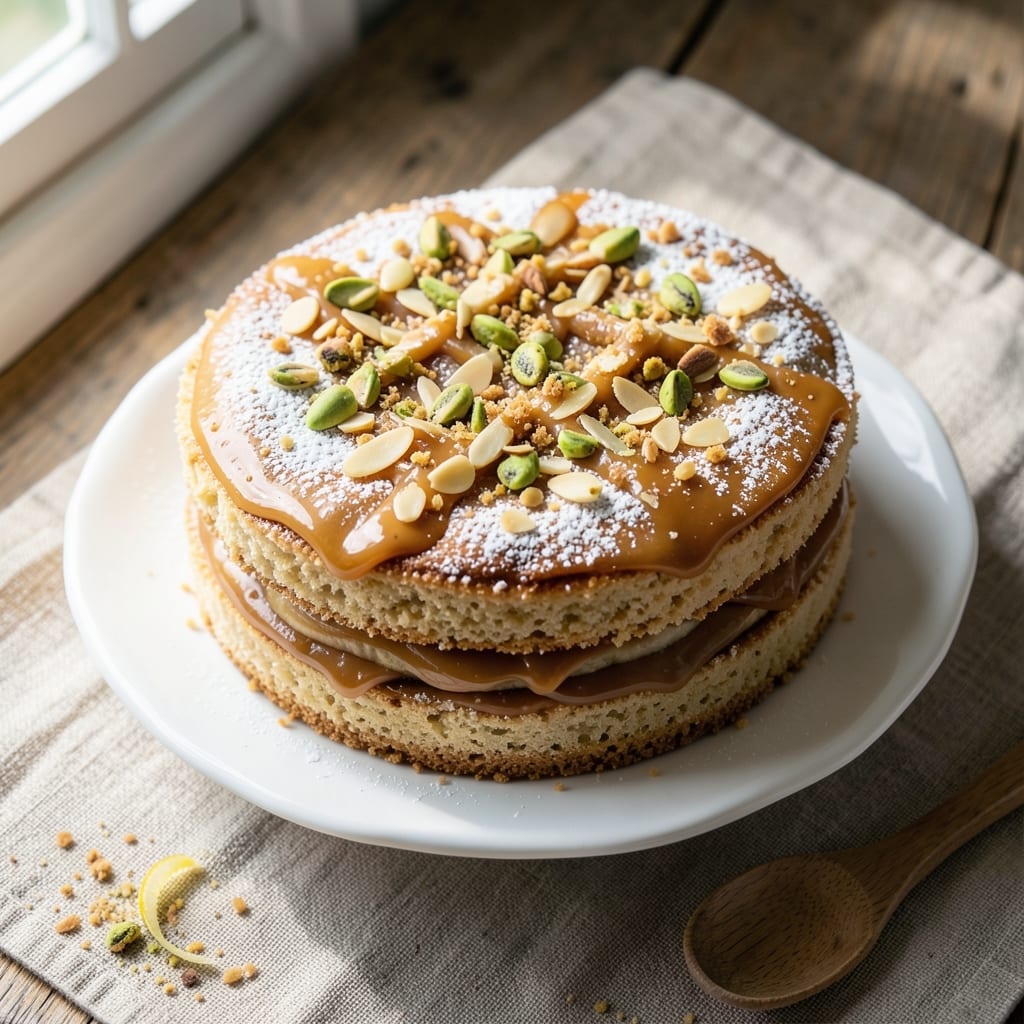
This alfajor cake recipe delivers layers of nutty almond paste, creamy dulce de leche, and delicate sponge cake with crispy centers—each bite is pure comfort. The secret lies in precise baking times and chilling stages that create the signature texture. I've perfected this version to balance traditional flavors with modern techniques, ensuring every slice is restaurant-worthy without requiring advanced skills.
The cake features three distinct layers: a tender almond sponge infused with ground almonds, a rich dulce de leche filling that's thick but spreadable, and a final dusting of powdered sugar for that classic alfajor finish. What makes this recipe stand out is the 350°F/175°C bake time—critical for achieving the signature crispy centers while keeping the exterior tender. The assembly process is where the magic happens, with careful layering and chilling to prevent crumbling.
By the time you're done, you'll have a cake that's rich yet light, with each forkful offering a perfect balance of textures and flavors. The almond paste provides nutty depth, the dulce de leche adds velvety sweetness, and the crispy centers give just the right contrast. This dessert is elegant enough for special occasions but simple enough for weeknight treats.
For those looking to adapt, I've included notes for gluten-free flour substitutions and vegan butter options—because great desserts shouldn't have restrictions. The key is patience during the chilling stages, which ensures clean slices and perfect presentation. Let's create this layered masterpiece together.
Ingredients for alfajor cake
Pantry staples plus a few specialty items for that signature alfajor texture and flavor.
| Ingredient | Amount | Notes |
|---|---|---|
| All-Purpose Flour 🌾 | 2 ½ cups | Sifted for light texture |
| Ground Almonds 🥜 | 1 ½ cups | Finely ground, not almond flour |
| Granulated Sugar 🍚 | 2 cups | White sugar preferred |
| Unsalted Butter 🧈 | 1 ½ cups | Cold, cubed for baking |
| Large Eggs 🥚 | 4 whole | Room temperature |
| Vanilla Extract 🌿 | 1 tbsp | Pure vanilla preferred |
| Baking Powder 🧂 | 1 ½ tsp | Aluminum-free preferred |
| Salt 🧂 | ½ tsp | Fine sea salt |
| Powdered Sugar 🍚 | 1 cup | For final dusting |
| Dulce de Leche 🍯 | 1 ½ cups | Thick, not runny |
| Almond Paste 🥜 | 1 cup | High-quality, smooth |
| Heavy Cream 🥛 | ½ cup | Whipped for filling |
The ground almonds and almond paste are non-negotiable here—they deliver that signature nutty depth. Trader Joe's has excellent pre-ground almonds, but if you're feeling ambitious, pulse whole almonds in a food processor until you get a fine powder (no flour texture). For almond paste, La Meridional is my go-to—it's smooth and rich. The dulce de leche? Store-bought is fine, but if you want to DIY, simmer 4 cups of sweetened condensed milk in a water bath at 250°F for 2-3 hours. The butter needs to be cold when you cream it with sugar—take it out of the fridge 30 minutes before mixing.
No almond paste? Mix 1 cup ground almonds with 1/4 cup melted butter—it won't be identical, but it'll get you close. Running short on dulce de leche? Thick caramel sauce works in a pinch, though it lacks that signature tang. The whipped cream can be replaced with mascarpone cheese for extra richness, but it'll change the texture slightly. If you're gluten-free, swap the all-purpose flour for a 1:1 gluten-free blend (like Bob's Red Mill), but add an extra 1/2 tsp of xanthan gum to mimic the structure. And trust me on the powdered sugar—sift it before dusting for that professional finish.
This cake needs time to set—chill it for at least 4 hours (overnight is ideal) before slicing. Store leftovers in an airtight container at room temperature for 3 days or in the fridge for 1 week. The layers separate when cold, so bring it to room temperature before serving. I always make a double batch because it disappears fast—freeze the extra layers between parchment paper for up to 3 months. Just thaw at room temp before assembling.
Why You'll Love This Recipe
- One-Bowl Wonder: I swear by this recipe when I’m too tired to measure three separate dry ingredients. Mixing the ground almonds right into the flour? That’s my kind of shortcut—no sifting, no fuss, just a smooth batter that comes together faster than I can put on coffee.
- Buttery Almond Magic: The moment that rich butter melts into the almonds? Pure bliss. That nutty-sweet crunch with the tender crumb—it’s like a hug in cake form. (Yes, even my husband, who hates dessert, sneaks seconds.)
- Party in a Pan: This isn’t just breakfast or brunch—it’s my go-to for book club gatherings or unexpected visitors. Slice it thin, stack it high, and suddenly you’ve got a showstopper that’s half the work of a fancy layered cake. The almonds make it feel fancy without the effort.
- Budget-Friendly Luxury: Ground almonds might sound pricey, but a little goes a long way here. I buy them in bulk, and this recipe stretches my butter and sugar further than most cakes. Plus, leftovers? They disappear faster than I can say “second cup of coffee.”
Step-by-step instructions for alfajor cake
Here's how to create this decadent layered cake with perfect texture and flavor every time.
Prepare the Cake Layers
Preheat your oven to 350°F and grease three 8-inch round cake pans with butter, then line the bottoms with parchment paper. In a large mixing bowl, cream together the 1.5 cups unsalted butter and 2 cups granulated sugar on medium speed until light and fluffy—about 3-4 minutes. This step is crucial for aerating the batter and creating those tender layers.
Add the 4 whole large eggs, one at a time, beating well after each addition until fully incorporated. Mix in the 1 tbsp vanilla extract and 1.5 cups ground almonds until just combined. In a separate bowl, whisk together the 2.5 cups all-purpose flour, 1.5 tsp baking powder, and 0.5 tsp salt. Gently fold this dry mixture into the wet ingredients using a spatula, being careful not to overmix—just until no flour streaks remain.
Bake the Layers to Perfection
Divide the batter evenly among the prepared cake pans. Bake for 25-30 minutes or until a toothpick inserted into the center comes out clean. The layers should be golden brown on top but still tender inside—overbaking will make them dry. Let the cakes cool in the pans for 10 minutes before transferring to a wire rack to cool completely.
Here's the thing—I always tap the sides of the pans gently against the counter before removing them. This helps release any air pockets that might form between the cake and the pan, ensuring clean layers when you stack them later.
Create the Dulce de Leche Filling
While the cakes cool, prepare the filling by whipping together the 0.5 cup heavy cream until soft peaks form. In a separate bowl, mix the 1 cup almond paste with 1.5 cups dulce de leche until smooth and well combined. Fold this mixture into the whipped cream until fully incorporated—you should have a thick, spreadable filling with a beautiful marbled appearance.
The key to this step is patience. Don't rush the folding—you want the almond paste and dulce de leche to be evenly distributed throughout the cream. If the filling seems too thick, you can gently warm it for 10-15 seconds in the microwave to make it easier to spread.
Assemble the Cake Layers
Once the cakes are completely cool, level the tops if needed using a serrated knife. Place the first cake layer on a serving plate and spread a generous layer of the dulce de leche filling. Dust the top with some of the 1 cup powdered sugar—this helps create that signature crunchy texture between layers.
Repeat with the remaining two layers, adding filling and powdered sugar between each. For the final touch, spread the remaining filling over the top layer and dust with the rest of the powdered sugar. Press down gently to ensure everything adheres properly.
Chill and Serve
Cover the assembled cake with plastic wrap and refrigerate for at least 4 hours or overnight. This chilling time is essential—it allows the flavors to meld together and the powdered sugar to set properly, creating those perfect crunchy centers that make this cake so special.
When ready to serve, slice with a warm knife for clean cuts. Each bite should deliver a perfect balance of tender cake, creamy filling, and that delightful crunch from the powdered sugar. This cake is best enjoyed at room temperature, so let it sit for 15-20 minutes before serving for the ultimate experience.
Pro Tips For Making Alfajor Cake
- Whisk Butter and Sugar: DESCRIPTION: Cream the butter and sugar until it’s pale yellow—not just fluffy, but actually lightened in color. I used to stop when it looked "done," but this step aerates the batter properly, especially with the ground almonds. Skip it, and your cake might end up dense.
- Sift Ground Almonds: DESCRIPTION: Sift the ground almonds twice before mixing—once into the dry ingredients, once into the wet. Clumps sneak in easy, and they’ll make your cake uneven. (Yes, even if you buy "fine" ground almonds.)
- Bake Until Slightly Under: DESCRIPTION: Pull the cake out when the center still jiggles a little—it’ll firm up as it cools. Overbaking dries out the almond flavor, and this cake needs moisture to stay tender. (Your toothpick test is fine, but don’t rely on it alone.)
- Chill the Batter: DESCRIPTION: Let the batter rest 30 minutes before baking—no, you don’t have to wait, but it makes a real difference. The almonds absorb liquid, and the eggs stabilize, so your cake rises better. (I know, I know, but trust the process.)
Perfect pairings for this dish
Dessert Wine Pairings
For a truly elevated alfajor cake experience, reach for a Moscato d'Asti—its light sweetness and effervescence complement the nutty almond and caramelized dulce de leche without overpowering. I love Bartoli Moscato from Italy, which has just enough acidity to cut through the richness. If you prefer something richer, a Pedro Ximénez sherry (like Emilio Hidalgo) adds depth with its raisin and chocolate notes. 🍷
Coffee & Tea Pairings
A strong espresso with a splash of hazelnut syrup enhances the almond flavors beautifully. I often serve this cake with a latte made with whole milk—the creaminess balances the crunchy powdered sugar. For tea lovers, Earl Grey with its bergamot notes provides a citrusy contrast that brightens each bite. A chilled chamomile tea also pairs surprisingly well, especially with the warm spices in the almond paste.
Seasonal Fruit Toppings
Fresh strawberries or raspberries add a vibrant pop of color and tartness that cuts through the sweetness. I like to slice them thinly and arrange them in a circular pattern on top of each slice. For a tropical twist, try mango slices—their juiciness contrasts wonderfully with the dry cake layers. In winter, candied citrus peel (like orange or lemon) adds a festive touch and complements the almond flavors. 🍓
Creamy Cheese Pairings
Serve with a side of mascarpone cheese mixed with a touch of honey for dipping—it adds another layer of creaminess that guests will love. Ricotta cheese with a drizzle of dulce de leche also works beautifully, especially if you want to emphasize the Latin American roots of this dessert. For a more decadent option, try crème brûlée on the side—its caramelized sugar mirrors the dulce de leche filling. 🧀
Chocolate Drizzle Finish
For an extra touch of indulgence, drizzle dark chocolate ganache over the top or between slices. I use Ghirardelli 72% dark chocolate melted with 2 tbsp heavy cream for a glossy, rich finish. A sprinkle of crushed pistachios adds crunch and visual appeal. This works especially well if you're serving the cake at room temperature, as the chocolate will melt slightly and create a luxurious coating. 🍫
Nutrition facts
Frequently asked questions about alfajor cake
Can I make this alfajor cake without almond paste?
Yes! Mix 1 cup ground almonds with ¼ cup melted butter for a homemade substitute. While it won't be identical, the texture will still be nutty and delicious. For extra richness, add 1 tsp vanilla extract to the mixture. The filling might be slightly less smooth, but it'll work perfectly between layers.
How do I prevent the cake layers from crumbling when assembling?
Chill the baked layers completely before assembly—this is key! Let them cool in the pans for 10 minutes, then transfer to a wire rack. Also, spread a thin layer of dulce de leche on each layer before adding filling to act as a glue. Press gently when stacking to ensure everything adheres properly. Patience during chilling (at least 4 hours) makes all the difference.
What's the best way to store leftovers?
Keep your alfajor cake in an airtight container at room temperature for up to 3 days, or refrigerate for 1 week. The layers separate when cold, so bring it to room temperature before serving. For longer storage, freeze individual layers wrapped in parchment paper for up to 3 months. Thaw at room temperature before reassembling.
Can I substitute dulce de leche with something else?
Thick caramel sauce works in a pinch, but it won't have the same tangy depth. For a closer match, try condensed milk reduced with 1 tbsp brown sugar and 1 tsp vanilla until thickened. The filling will be slightly sweeter, but the texture remains similar. If you're feeling adventurous, homemade dulce de leche (simmered condensed milk) delivers the best results.
Why does my alfajor cake taste dry?
Overbaking is usually the culprit—remove the layers when a toothpick comes out clean (not dry). Also, ensure your butter is cold when creaming it with sugar, and don't overmix the batter. If the cake tastes dry after baking, try brushing the layers with a simple syrup (equal parts sugar and water, heated until dissolved) before assembling. This adds moisture without altering the texture.