
Desserts
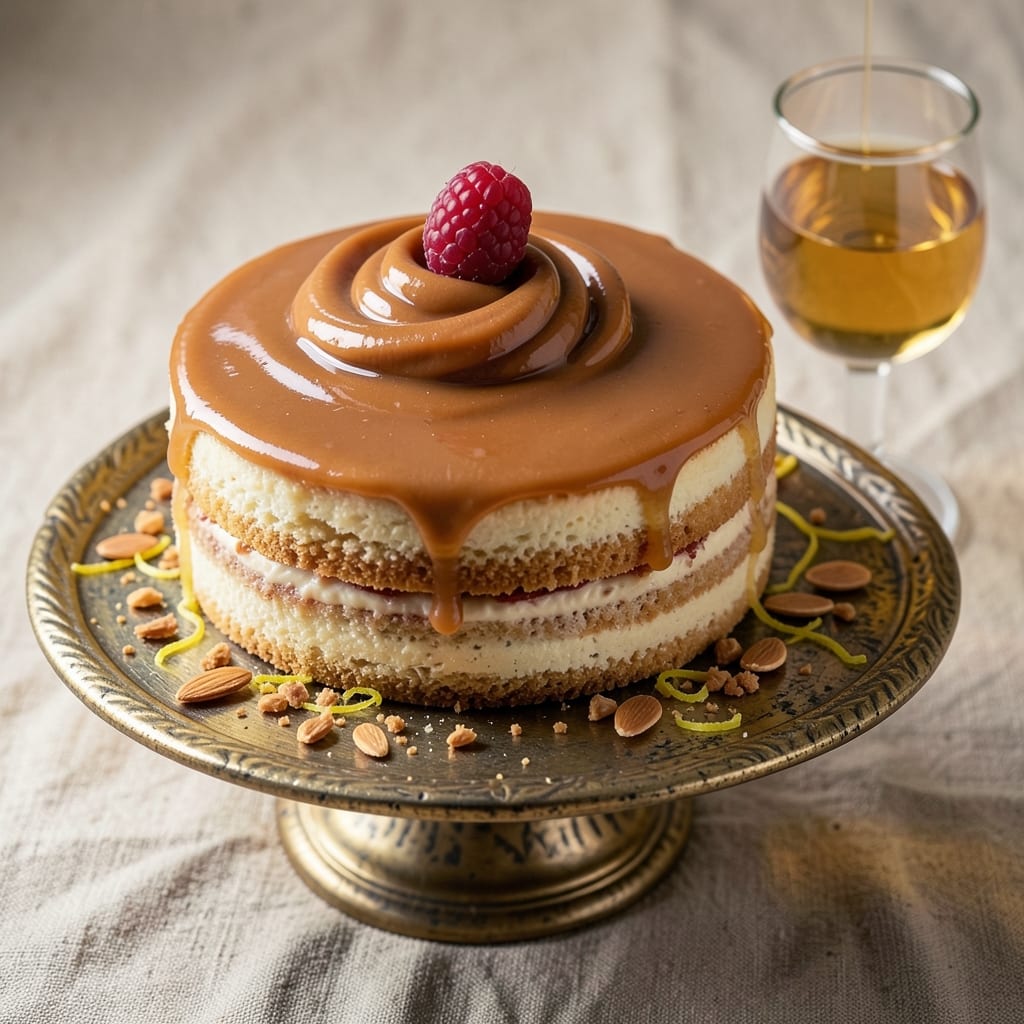
This amaretto sour cake delivers the perfect balance of rich vanilla layers, tangy citrus, and nutty almond crunch—all with just the right boozy kick. 💛 The secret lies in a homemade amaretto-lemon filling that infuses every slice with bright, complex flavors, while toasted almonds add texture that keeps this dessert exciting. What makes it special is the careful alcohol ratio—enough amaretto to enhance, not overpower, the delicate cake layers.
The recipe starts with a tender vanilla cake baked in two layers, each infused with a hint of almond extract for depth. Between the layers comes the star: a silky amaretto-lemon filling made with fresh citrus juice, simple syrup, and just enough amaretto liqueur to create that signature boozy sweetness. The filling needs time to set, ensuring clean slices every time.
Once assembled, the cake gets a final touch of toasted almonds pressed into the sides for crunch, followed by a light dusting of powdered sugar or a drizzle of extra amaretto glaze. The result is a dessert that feels luxurious yet approachable—ideal for celebrations or a cozy night in. Each bite delivers layers of flavor that linger, making it a showstopper without being overly complicated.
Perfect for those who love dessert with a little sophistication, this cake strikes the balance between homemade charm and restaurant-worthy presentation. The alcohol content is measured precisely, so you get that signature amaretto flavor without it becoming overwhelming. Let's get baking!
Ingredients for amaretto sour cake
Boozy, nutty, and tangy—these ingredients bring the cake to life with layers of flavor.
| Ingredient | Amount | Notes |
|---|---|---|
| All-Purpose Flour 🌾 | 2 ½ cups | Sifted for light texture |
| Granulated Sugar 🍚 | 1 ½ cups | Divided for cake and filling |
| Light Brown Sugar 🍚 | ½ cup | Packed for moistness |
| Unsalted Butter 🧈 | 1 cup | Room temperature, full-fat |
| Large Eggs 🥚 | 4 whole | Room temperature for even baking |
| Pure Vanilla Extract 🌸 | 2 tsp | High-quality for rich flavor |
| Almond Extract 🌿 | ½ tsp | Pure, not imitation |
| Baking Powder 🍞 | 2 tsp | Freshly measured |
| Salt 🧂 | ½ tsp | Fine sea salt |
| All-Purpose Flour 🌾 | ½ cup | For dusting cake pans |
| Fresh Lemon Juice 🍋 | ½ cup | Freshly squeezed |
| Simple Syrup 🍯 | ½ cup | 1:1 sugar to water ratio |
| Amaretto Liqueur 🍷 | ¼ cup | High-quality, 24% ABV |
| Slivered Almonds 🥜 | 1 ½ cups | Toasted for crunch |
| Powdered Sugar 🍚 | ½ cup | For dusting |
The amaretto liqueur is where the magic happens. Grab a good bottle from Trader Joe's or Total Wine—the Disaronno brand is a solid choice, but any quality amaretto will work. If you're feeling fancy, look for one with almond bits for extra texture. The lemon juice should be freshly squeezed—bottled juice lacks that bright punch. For the almond extract, McCormick or Goya are reliable brands. Toast your slivered almonds until golden—this adds that crunchy texture that makes the cake feel special.
No amaretto? Substitute with 2 tbsp almond extract plus 1 tbsp orange liqueur—it’s not the same, but it’ll get you close. Short on lemon juice? Lime juice works in a pinch, but the flavor won’t be identical. The simple syrup can be made ahead—just heat equal parts sugar and water until dissolved, then cool. If you don’t have slivered almonds, chop regular almonds into thin strips and toast them. The cake batter needs to be smooth, so sift the flour and baking powder to avoid lumps. Room-temperature butter is key—it mixes better and gives a lighter texture.
The cake keeps well for 3 days at room temperature, covered loosely. For longer storage, wrap tightly in plastic and refrigerate for up to 1 week. Freeze for up to 3 months by wrapping each layer separately. Let it come to room temperature before serving—this helps the filling soften and the flavors meld. If you’re making it ahead, assemble the cake a day in advance so the filling has time to set properly. The extra amaretto glaze can be made the day of serving—just mix powdered sugar with a splash of amaretto and drizzle over the top.
Why You'll Love This Recipe
- One-Bowl Wonder: I swear by this recipe—just toss everything into one bowl, mix, bake. No fancy steps, no extra dishes. The butter and sugars cream together so smoothly, even if you’re not a mixing master.
- Almond-Orange Magic: That amaretto twist turns a classic cake into something special. The brown sugar keeps it rich while the amaretto adds a nutty, boozy depth—like dessert in every bite, but still feels like a treat you’d serve guests.
- Weeknight or Celebration: Same batter works for a quick coffee cake or a showstopper with a drizzle of glaze. Honestly, I’ve made it for birthdays, just-because Sundays, and even as a last-minute office potluck. It never lets me down.
- Budget-Friendly Luxury: Uses pantry staples—flour, butter, eggs—and stretches to feed four or six. The leftovers? Still moist days later, and I’ve reheated slices in the microwave without judgment. (Yes, even on a Tuesday night.)
Step-by-step instructions for amaretto sour cake
Here's how to bake this showstopper with perfect layers and boozy swirls.
👨🍳 Step 1: Prepare the Cake Batter and Almond Topping
Preheat your oven to 350°F and grease two 9-inch round cake pans with the 1 cup unsalted butter, then dust with the 0.5 cup all-purpose flour reserved for dusting. Set aside. In a large mixing bowl, whisk together the 2.5 cups all-purpose flour, 2 tsp baking powder, and 0.5 tsp salt. Sift to remove any lumps - this ensures a light, airy texture.
In a separate bowl, cream the 1 cup unsalted butter with the 1.5 cups granulated sugar and 0.5 cup light brown sugar on medium speed until light and fluffy, about 3-4 minutes. Add the 4 whole large eggs, one at a time, mixing well after each addition. Stir in the 2 tsp pure vanilla extract and 0.5 tsp almond extract - this combo gives that signature almond-amaretto flavor.
For the almond topping, toast the 1.5 cups slivered almonds in a dry skillet over medium heat for 3-4 minutes until golden brown. Watch closely so they don't burn - you want them fragrant and nutty. Set aside to cool while you prepare the filling.
🍳 Step 2: Make the Lemon-Amaretto Filling
In a small saucepan, combine the 0.5 cup fresh lemon juice and 0.5 cup simple syrup over medium heat. Bring to a gentle simmer and cook for 2-3 minutes until slightly reduced. Remove from heat and stir in the 0.25 cup amaretto liqueur. Let this mixture cool completely - the alcohol will cook off slightly during baking, leaving just enough boozy flavor to complement the cake.
Here's the thing - the filling needs to be at room temperature when you assemble the cake. If it's still warm, place it in the refrigerator for 10 minutes to thicken slightly. This ensures clean layers when you slice through the cake later. The lemon cuts through the richness of the butter and amaretto, balancing the flavors perfectly.
🥘 Step 3: Assemble and Bake the Cake Layers
Divide the cake batter evenly between the two prepared pans. Bake for 25-30 minutes or until a toothpick inserted in the center comes out clean. The edges should be golden brown while the tops may still look slightly underdone - they'll set as they cool. Let the cakes cool in the pans for 10 minutes, then transfer to a wire rack to cool completely.
Once cooled, level the tops of the cakes if needed using a serrated knife. Place the first cake layer on a serving plate and spread an even layer of the cooled lemon-amaretto filling. Top with the second cake layer, pressing gently. Dust the top and sides with the 0.5 cup powdered sugar and sprinkle the toasted almonds evenly over the top. This creates that beautiful crunchy contrast we love in sour cakes.
⏰ Step 4: Chill and Serve for Perfect Texture
Refrigerate the assembled cake for at least 2 hours before serving. This chilling time is crucial - it allows the filling to fully set and the flavors to meld together. When you're ready to serve, slice through the center to reveal those beautiful boozy swirls. Each bite should deliver moist cake, tangy lemon, almond richness, and a hint of amaretto.
Real talk: if you're impatient and slice too soon, the filling might be too runny. Trust the process - the wait makes it worth it. Serve with a dollop of whipped cream or a scoop of vanilla ice cream to enhance the flavors even more. The contrast of warm cake with cold topping is pure magic.
Pro Tips For Making Amaretto Sour Cake
- Cream Butter Properly: DESCRIPTION: Don’t just mix the butter and sugars—beat them on medium-high until the butter is pale yellow and fluffy. I used to rush this, and the cake turned out dense. Take the extra 30 seconds; it’s worth it for that tender crumb.
- Measure Flour Right: DESCRIPTION: Spoon the flour into the measuring cup, then level it with a knife—don’t scoop directly from the bag. Packing it in tight makes the cake dry. I learned this after a batch came out like a brick.
- Don’t Overmix the Batter: DESCRIPTION: Stop folding in the dry ingredients as soon as they’re just combined—no streaks, but no extra mixing either. Overworking it develops gluten, and your cake will turn out tough instead of light. I know, it’s tempting to get it "perfect."
- Use Room-Temp Eggs: DESCRIPTION: Cold eggs can curdle the butter mixture, leading to a weird texture. Let them sit in warm water for 5 minutes before cracking them in. It’s a small step that makes a real difference in how the cake holds together.
Regional styles of these flavors
Southern Italian Roots
The amaretto sour cake traces its lineage to Southern Italian desserts, where almonds and citrus have long been celebrated. In regions like Sicily and Calabria, almond-flavored pastries like frutta martorana (marzipan fruits) and amaretti cookies showcase the nut's versatility. The sour element comes from traditional lemon preserves used to balance sweetness—just like our lemon-amaretto filling. I love how this cake mirrors those Italian classics while adding a modern boozy twist. 🌶️
Midwestern Twist
In the American Midwest, this cake became a hit in diners and bakeries during the 1950s, where it was often served as a "sour cake" with a whiskey or bourbon glaze. The Midwest's love for layered cakes (think German chocolate cake) made it a natural fit. Many Midwestern recipes swap amaretto for bourbon or rye whiskey, but I prefer the almond depth—it’s what makes this version truly special. The toasted almonds on top are pure Midwest comfort food.
Modern Fusion Adaptations
Today, chefs are reimagining this classic with global flavors. In New Orleans, you’ll find versions with cherry brandy instead of amaretto, paired with praline topping. Meanwhile, California bakeries infuse the filling with lavender syrup for a floral twist. I’ve even seen a matcha-amaretto variation—earthy green tea balances the boozy sweetness beautifully. The key is keeping the cake’s signature layers while letting creativity shine.
European Café Influence
European cafés often serve this cake with a whipped cream drizzle or a dusting of cocoa powder for contrast. In Parisian patisseries, it’s sometimes presented as individual portions with a side of raspberry coulis. The French also love adding a chocolate ganache between layers for extra richness. I adore how this cake adapts to different cultures while staying true to its boozy, nutty soul. The presentation is just as important as the taste!
Regional Alcohol Variations
Amaretto isn’t the only boozy option—regional preferences change the game. In Texas, mesquite-infused whiskey replaces amaretto for a smoky kick. Up north, maple syrup swaps out simple syrup, and Canadian whisky adds depth. Even Mexican bakeries use mezcal for a spicy-sweet twist. The alcohol choice defines the cake’s personality—play with it! 🍷
Nutrition facts
Frequently asked questions
Can I make this cake without alcohol?
Yes! Replace the 0.25 cup amaretto liqueur with 2 tbsp almond extract plus 1 tbsp orange liqueur (like Cointreau). For a non-alcoholic version, use 2 tbsp almond extract plus 1 tbsp lemon extract. The flavor won't be identical, but it'll still taste delicious with that almond-citrus balance. The filling will be slightly less boozy but still tangy and nutty.
How do I prevent the cake layers from crumbling when slicing?
Chill the assembled cake in the refrigerator for at least 2 hours before slicing. This lets the filling set properly. Also, make sure your lemon-amaretto filling is fully cooled before spreading it between layers. If the cake still feels fragile, brush the tops with a simple syrup (equal parts sugar and water) before adding the second layer for extra stability.
What's the best way to store leftovers?
Keep the cake covered at room temperature for up to 3 days. For longer storage, wrap it tightly in plastic and refrigerate for up to 1 week. Freeze for up to 3 months by wrapping each layer separately. Let it come to room temperature before serving—this helps the filling soften and the flavors meld beautifully. The extra amaretto glaze can be made fresh the day of serving.
Can I use store-bought lemon curd instead of making the filling?
Swap the homemade lemon-amaretto filling with 1 cup store-bought lemon curd and add 2 tbsp amaretto liqueur to it. Mix well and let it sit for 10 minutes before using. This shortcut still delivers that tangy, boozy flavor without the effort. Just note that store-bought curd may be slightly thicker, so you might need to thin it with a splash of milk if needed.
Why does my cake taste dry?
Dry cake usually means overbaking or not enough moisture in the batter. Check your baking time—25-30 minutes at 350°F is perfect. If your cake dried out, try adding 2 tbsp milk or sour cream to the batter next time for extra moisture. Also, ensure your butter is room temperature and don't overmix the batter. A slightly underbaked cake (with a toothpick that has moist crumbs) often tastes better as it cools.